Utility rates: Where is it more expensive?
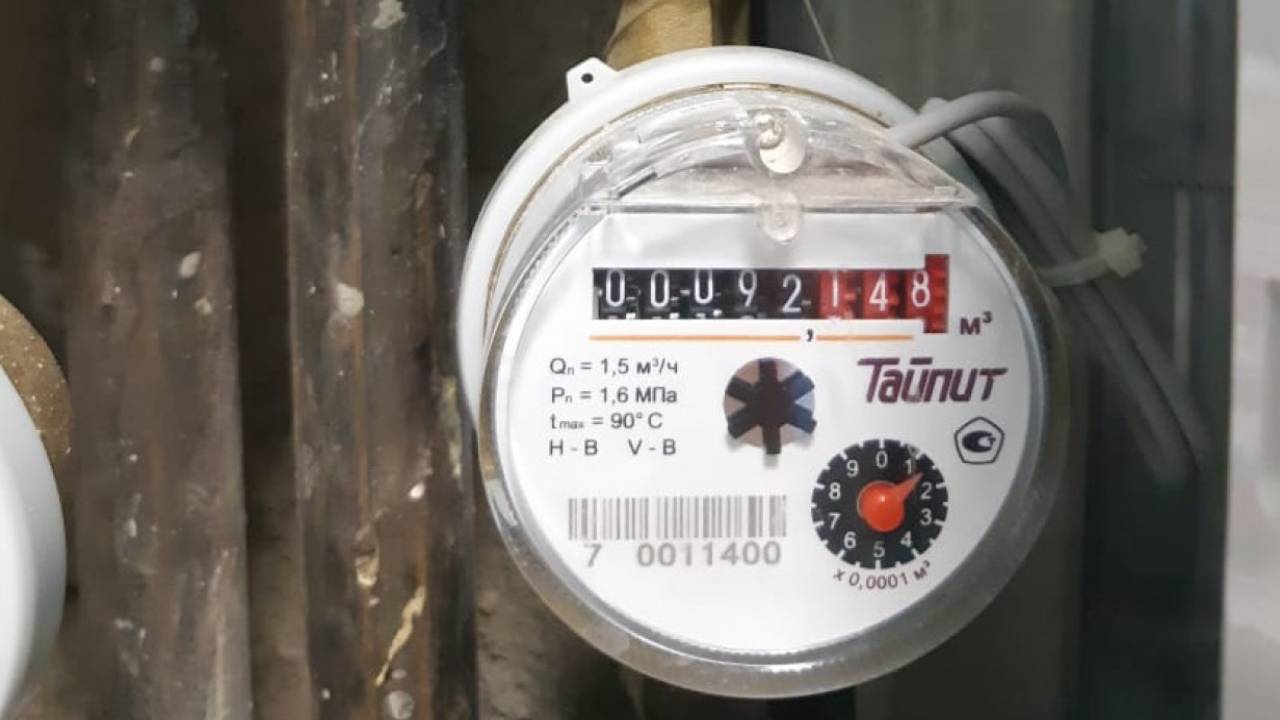
It became known how expensive utility tariffs are in Kazakhstan, and whether Kazakhstanis are really forced to spend most of their income on housing and communal services, reports zakon.kz.
Deputy Chairman of the Ministry of National Economy of the Republic of Kazakhstan Yerbolat Ibraykhanov told Business Kazakhstan that the formation of tariffs is based on achieving a balance of interests of consumers and subjects of natural monopolies with a balance between economic and social components.
At the same time, the level of tariffs for housing and communal services for the population in Kazakhstan in comparison with the countries of the near and far abroad shows the social orientation of the tariff policy pursued by the government of the country. For example, the cost of electricity in Kazakhstan (Nur-Sultan) is 11.93 tenge per 1 kWh, which is lower compared to other EAEU member states: Armenia (40.92 tenge), Russia (32.63 tenge) and Belarus (27.97 tenge). The lowest tariff in Kyrgyzstan is about 5.18 tenge per 1 kWh.
At the same time, according to statistics from Eurostat, tariffs for the population are characterized by a rather large differentiation across the EU countries and range from 41.95 tenge/kWh in Hungary to 105.67 tenge/kWh in Ireland.
Tariffs for water supply services in Kazakhstan (Nur-Sultan) are 44.8 tenge per 1 m3. At the same time, in Russia – 243.4 tenge, in Armenia – 165.7 tenge, in Belarus – 150.2 tenge, slightly cheaper in Kyrgyzstan – 42.4 tenge. Among the countries under consideration, the lowest tariff for drinking water is paid by the population of Tajikistan – 21.2 tenge and Uzbekistan-23.8 tenge.
At the same time, tariffs for thermal energy in the EAEU countries are more expensive than in Kazakhstan, including in Belarus it is equivalent to 3522.4 tenge/Gcal, in Kyrgyzstan – 5905.2 tenge/Gcal, in Russia – 14 017.0 tenge/Gcal.
In comparison with the countries of Europe, the heat supply of the population in the Republic of Kazakhstan is cheap.
We see that the tariffs in the housing and utilities sector in Kazakhstan remain among the lowest compared to the CIS and European countries. Moreover, the Committee for the Regulation of Natural Monopolies, starting from the end of 2018, is working to curb the growth of utility tariffs for the population. At the end of 2018, tariffs were reduced by an average of 9%,–. – At the end of 2019, the planned increase in tariffs for 2020 was restrained from an average of 15.5% to 0.5%. And during the state of emergency imposed in the country, tariffs were reduced by an average of 7.4%. - said Yerbolat Ibraikhanov
Thus, the share of the population's expenditures on utilities, in contrast to other costs associated with household expenses, has not changed in recent years.
Source: https://www.zakon.kz/5056923-tarify-na-kommunalku-gde-dorozhe.html