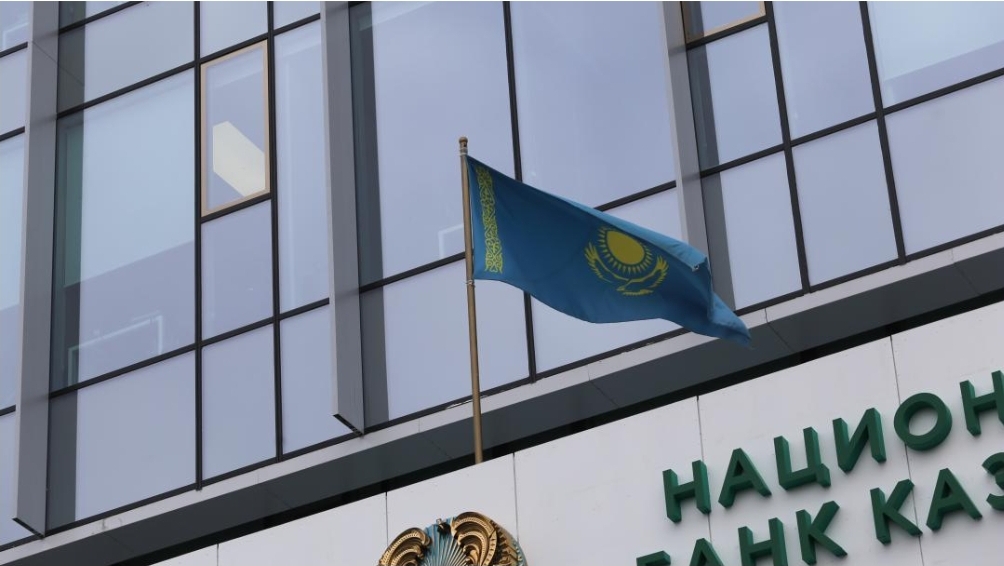
The National Bank told about the measures taken to prevent the growth of inflation in Kazakhstan
The pandemic contributed to a reduction in economic activity...
At the beginning of 2020, there was a significant expansion of the geography of the spread of the COVID-19 coronavirus, which became the main factor in the deterioration of the prospects for economic development of Kazakhstan and the countries that are the main consumers of Kazakhstan's exports, “Kazinform” reports.
In addition, the price of Brent crude oil fell sharply on March 9, 2020 as a result of the failure of the participants of the OPEC+ meeting to reach agreements on the terms of a deal to reduce oil production.
"Under these conditions, from March 10, 2020, the National Bank decided to significantly increase the base rate to the level of 12% per annum, which allowed limiting the emerging inflationary risks and protecting the value of tenge assets," the National Bank reported.
Nevertheless, as a result of the implementation of external shocks, there was an increase in inflationary processes in Kazakhstan. Since March 2020, inflation has exceeded the limits of the established target range of 4-6% and led to the need to revise the forecasts of the National Bank for 2020. In the following months, the base rate was maintained at the level necessary for inflation to enter the established target range of 4-6% in 2021.
On April 3, 2020, the National Bank made an extraordinary decision to reduce the base rate to 9.5% per annum. The last decision to reduce the base rate in 2020 was made on July 21. The National Bank set it at 9%.
The decision was due to the weakening of pro-inflationary risks and a stronger-than-expected reduction in economic activity in the first half of 2020.
The reduction of the base rate allowed to mitigate the impact of the consequences of measures to tighten the quarantine on the Kazakh economy, supporting the process of its gradual recovery. In all subsequent decisions, the base rate remained at the level of 9%.
According to the National Bank's estimates, this level corresponds to the balance of inflationary risks, allowing for a gradual decrease in inflation and its entry into the established target of 4-6% next year.
According to the forecasts of the National Bank, by the end of 2020, inflation will be in the range of 7.3-7.5%.
In 2021, annual inflation is expected to gradually slow down to the upper limit of the target range of 4-6% by the end of 2021, against the background of continuing disinflationary effects from domestic demand and its formation within this corridor until the end of the forecast period.
Annual inflation since March 2020 exceeds the established target range of 4-6%, having formed at the level of 7.3% by the end of November 2020.
The main contribution to inflation is made by the rise in the price of food products. The annual growth in prices for non-food products and services amounted to 5.7% and 4.1%, respectively, in November 2020.
The main factor in the restrained growth of service inflation was a temporary reduction in tariffs for regulated utilities for the period of the state of emergency, as well as a decrease in prices for air transport services and tourist services.
Meanwhile, in recent months, there has been an acceleration in the growth of tariffs for regulated utilities. In November 2020, there was a significant acceleration of annual inflation for the services of garbage trucks (up 20.5%), electricity (up to 6.6%).
"To curb the acceleration of inflation in the period of coronaries contributed to the government's measures to limit the export of certain commodity positions on the incident, the threshold prices for a number of socially important food products and a temporary reduction in VAT on these goods," said the National Bank
Earlier it was reported that the National Bank resumed the exchange of some old banknotes. Because some citizens, for one reason or another, did not have time to exchange old banknotes in time. After February 1, 2021, the replacement of these banknotes will be impossible...
Source: https://kursiv.kz/news/finansy/2021-01/v-nacbanke-rasskazali-o-prinyatykh-merakh-po-nedopuscheniyu-rosta-inflyacii-v