Flood control: Kumar Aksakalov and Ramil Kamalov checked the readiness of the Karasu district
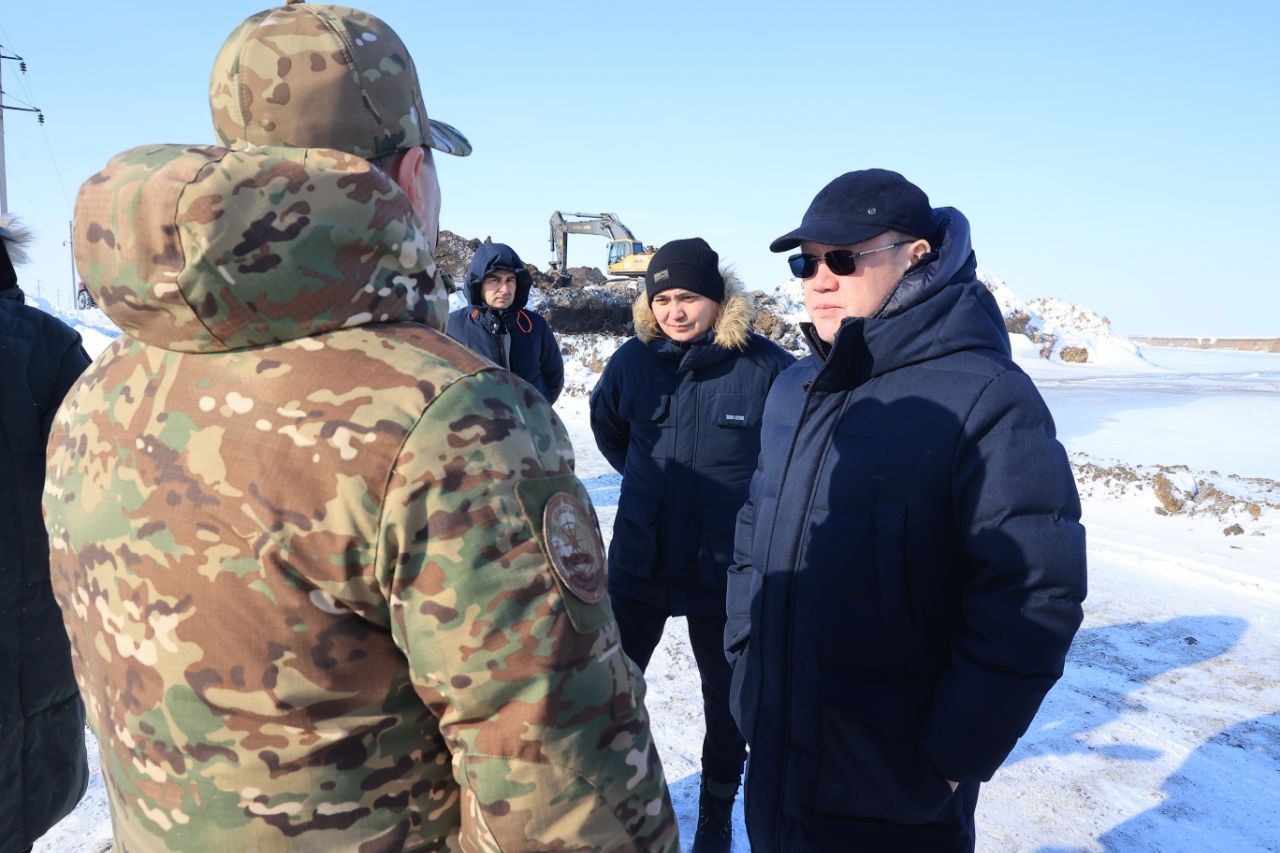
Akim of Kostanay region Kumar Aksakalov together with Vice Minister of Emergency Situations Ramil Kamalov visited Karasu district, where they conducted a comprehensive check of flood control measures. The working trip included an inspection of hydraulic engineering facilities, an analysis of the current state of the flood situation, as well as a discussion of additional measures to protect settlements.
Drainage channel: the main obstacle in the way of water
One of the key facilities where the delegation went was the drainage channel, created to reduce the threat of flooding. As a result of the spring flood of 2024, the Kaybagor, Zhanshura and Alabota lakes were significantly filled and merged, which put the settlements of Karasu, Vostok and Zhumagul at risk.
To prevent flooding, an artificial drainage channel was built, which since October 2024 has been discharging water from Lake Alabota into the Kunduzdy River. According to experts, its water consumption is 12.2 m3/s, and the daily discharge volume reaches 1 million m3. To date, over 775.5 million m3 of water has already been redirected through the canal.
Cleaning and deepening works are carried out around the clock at the facility, 10 excavators, a front loader, a tractor and 25 specialists are involved. A mobile headquarters is in place for operational control.
Karamyrza village: strengthening flood protection
Special attention was paid to the village of Karamyrza. During the visit, it was decided to urgently begin construction of a new branch canal on the right bank of the Tyuntyugur River with a length of at least 3 km. This project is aimed at significantly reducing the threat of flooding in the upcoming flood season. The head of the region instructed the local responsible authorities to carry out these works as a matter of urgency.
Expansion of the Ubagan riverbed and work on the Kunduzdy
Another point of the working trip was to inspect the work on widening the Ubagan riverbed. This is an important site, as the main water flow passes here, connecting several rivers of the region. Since 2023, a drainage canal has been under construction in the Karasu district, which receives water from Lake Alabota and directs it to Kunduzdy and then to Ubagan.
Currently, the contracting organization Euro-Joba LLP is carrying out round-the-clock cleaning and deepening of the Ubagan and Kunduzdy riverbeds. The total length of the already treated areas is about 12 km.
Special attention is paid to the condition of the Kunduzda River, through which water is discharged. In the near future, additional engineering works will begin here aimed at increasing the capacity and stabilizing the water level. This will reduce the load on the lower sections of the river and minimize the risks for the settlements located below.
Roads: Disaster recovery
As part of the trip, Kumar Aksakalov and Ramil Kamalov also inspected the restored section of the Karasu–Bolshaya Churakovka road. After the water level on Lake Alabota dropped, a large-scale reconstruction was carried out here. The contracting organization Euro-Joba LLP laid 12 culverts, which increased the capacity of the road and made it possible to avoid its destruction in case of new floods.
Conclusions and further steps
Following the inspection, Kumar Aksakalov noted the importance of continuing the work that had begun and instructed local executive authorities to strengthen flood monitoring. He also stressed the need to accelerate the implementation of projects for the construction of new drainage channels and the clearing of existing riverbeds.
Ramil Kamalov, in turn, emphasized the importance of timely response to threats and suggested strengthening interagency cooperation to promptly eliminate the consequences of floods.
The situation in the Karasu district remains under control. Responsible services continue to work around the clock to minimize risks to the public and infrastructure.