Measures to combat locusts are being intensified in Aktobe and Kostanay regions
To start large-scale cultivation of land in regions with the largest predicted volumes of locust spread, equipment and the necessary supply of pesticides are already at hand. Temporary workers are recruited en masse.
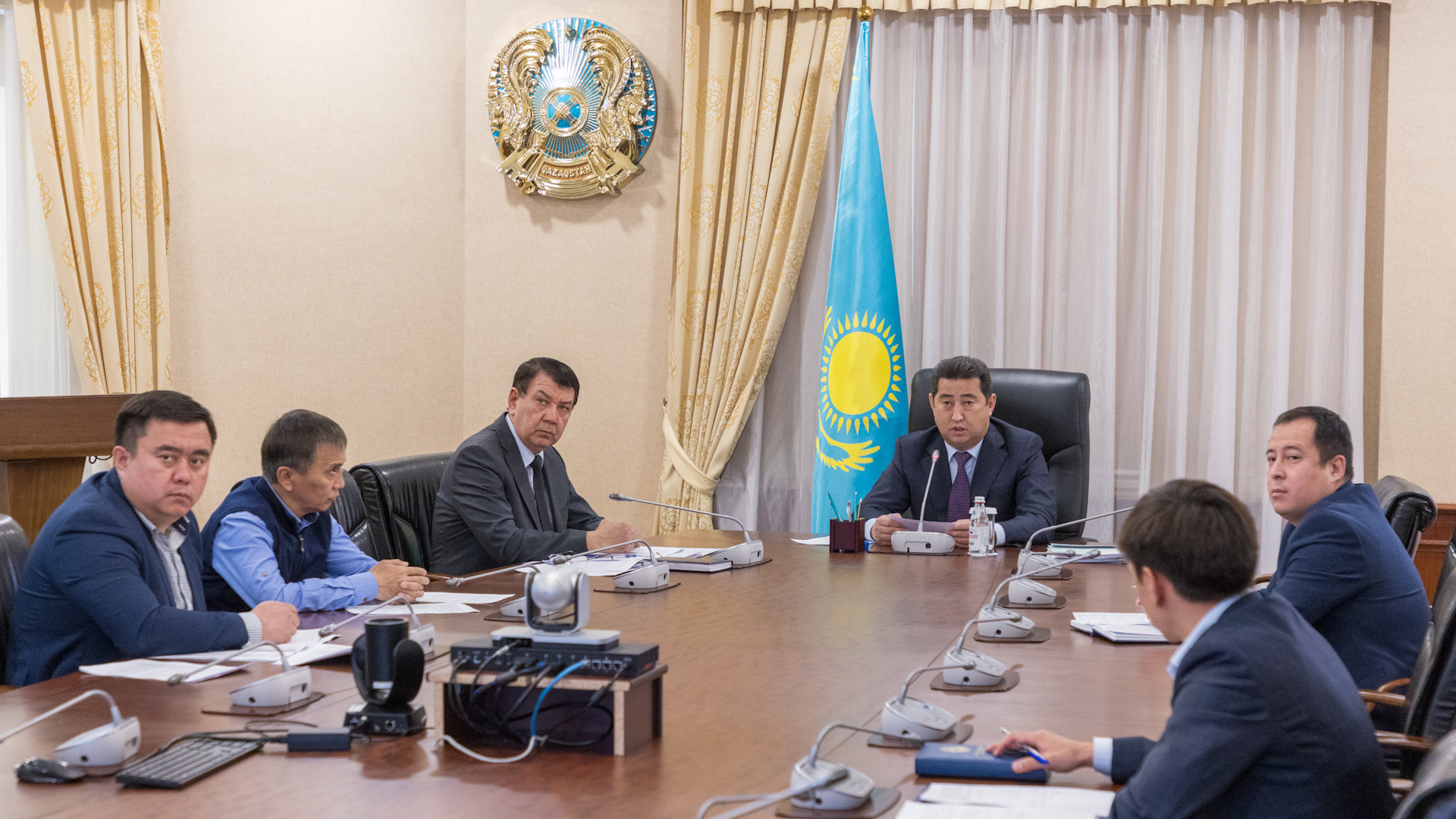
The current situation in the fight against insect pests was discussed in the Government on June 1 at the third meeting of the republican operational headquarters for coordinating protective measures against locusts. The Minister of Agriculture Aidarbek Saparov presided.
As of May 31, the Turkestan region carried out treatment against Moroccan locust larvae on an area of 259.3 thousand hectares. This is 95.5% of the predicted volume. In the Zhambyl region, protective measures have been completely completed: 9.8 thousand hectares, or 100%, have been processed.
Protective measures against the Italian locust have begun. Of the 2.2 million hectares, 144.1 thousand hectares were processed in Aktobe, Almaty, Atyrau, Zhambyl, West Kazakhstan, Kostanay, Kyzylorda regions and Zhetisu regions. In other regions, chemical treatment against the Italian locust will begin as larval hatching sites are identified. Pesticides have already been delivered to all regions in the required volume.
Chemical treatment against Asian locusts has begun in the Zhetisu region. Here, 200 hectares out of 950 hectares have already been processed.
The largest areas to be treated against locusts are located in Aktobe (784.4 thousand hectares) and Kostanay (775.6 thousand hectares) regions. According to akimats, right now in the southern regions of these regions the phase of active hatching of Italian locust larvae is beginning. However, the regions are ready for this. For example, in the Kostanay region, processing will be carried out in 15 out of 17 districts. 72 units of equipment will be used for this. Monitoring activities to determine the exact locations of hatching are planned over an area of almost 5 million hectares. 129 examiners will be involved in these works. In addition, temporary workers are recruited and trained to carry out chemical processing in each rural district. 326 people have already been recruited.
Following the meeting, Aidarbek Saparov instructed the regional headquarters to inform the territorial divisions of the State Inspection Committee on a daily basis about the current state of the work being carried out. Where it is necessary to immediately transfer additional equipment and use as many temporary workers as possible. In the Turkestan region, carry out additional cleaning.