HEROIN SERPANTINE
This war, unleashed in different parts of our planet, kills silently. More and more people are dying from drug use, and not only in Afghanistan, which produces about 90 percent opium, distributed throughout the world, but also in countries far from this Southern-Asian region. Every year hundreds of tons of heroin are exported from here, the bulk of this deadly cargo ends up in Russia and Europe. In turn, the money from the sale of drugs goes to finance organized crime across all continents and continents. The proximity of the world source of drugs imposes its own specifics on the working days of Kazakhstani border guards.
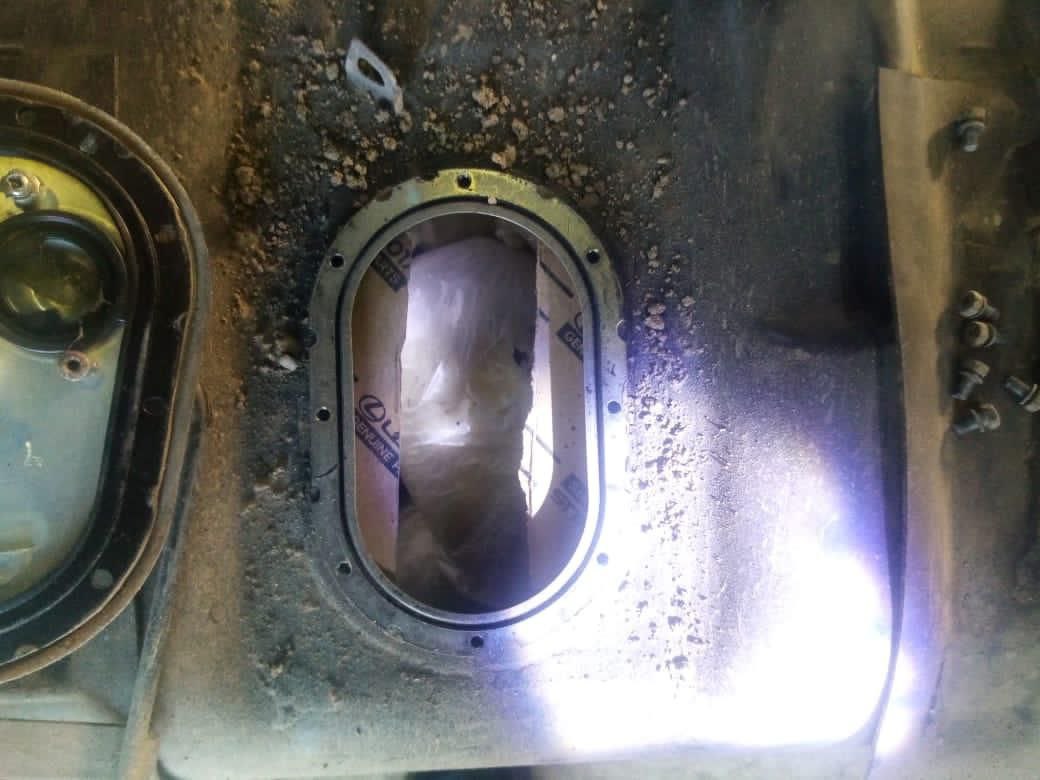
Border guards detained a large batch of heroin at the border with Kyrgyzstan. It happened on December 10, 2020 at a car checkpoint. They tried to smuggle drugs in, as is often the case, in a Toyota Prado SUV.
On that day, junior sergeant Maksat Dautayev, senior technician of the inspection and inspection complex of the Border Directorate for the Kordai region, routinely took up military service in the border control department «Kordai». When inspecting a Kazakh car traveling from Kyrgyzstan, an X-ray machine showed an object hidden in the bowels of the car.
Taught by many years of experience, the border guard realized that they had hidden the cargo so carefully for a reason, and decided to send the vehicle that aroused his suspicion for an in-depth examination. A service dog named Jack smelled heroin, as it turned out later, weighing more than 60 kilograms.
By a presidential decree, Junior Sergeant Maksat Dautayev was awarded a state award for his vigilance - the Order of Aibyn, III-rd degree.
This is not his first arrest. In 2017, he stopped an attempt to smuggle 2.5 kg of heroin and 16.7 kg of marijuana across the border, for which he was awarded the departmental medal «For excellence in guarding the State Border.»
***
During inspection at checkpoints, service dogs show themselves as irreplaceable helpers. In March of this year, at the «Syrym» (automobile) border control department, the night shift checked a Renault Magnum car, the driver of which, on his way from Bishkek to Samara in transit through Kazakhstan, was towing a «Foton» car on a rigid coupling. Senior instructor junior sergeant Kanat Tulenov conducted an examination with a service dog named Lady. The four-legged friend never let its partner down, so when the dog lay down at the rear wheels, whined, then jumped up, wagged its tail, the senior instructor became alert.
During an in-depth inspection with the use of special technical means of border control when opening one wheel, the border guards found a cache equipped in the cavity of the tire. It contained briquettes wrapped in plastic wrap, and there was a specific smell in the air. As the examination showed, the detainee tried to smuggle 39 kilograms of heroin and 96 kilograms of hashish across the border.
Experienced border guards emphasize attentiveness and good memory among the main qualities that a controller should have. After all, the guys in green caps must have time to study the documents and to get accustomed to people. And, vigilance at the same time is never superfluous.
Messages from the state border are becoming an informational occasion for many Kazakhstani media. Most of all, in the electronic media they like to relish incidents with the seizure of hard drugs. «Pen Sharks» competently cite exotic names of narcotic substances, indicate the weight of the arrested potion, but a rare correspondent takes the trouble to grasp the essence of what happened. Meanwhile, behind the bright wrapping of sensational material, the daily work of the «green caps» and their four-legged assistants remains unnoticed. They try to tempt the border guards with bribes, sometimes they threaten - but, every border guard knows, the border must remain «locked.»
And our examples are evidence of this.