«Content and application of the customs transit procedure»
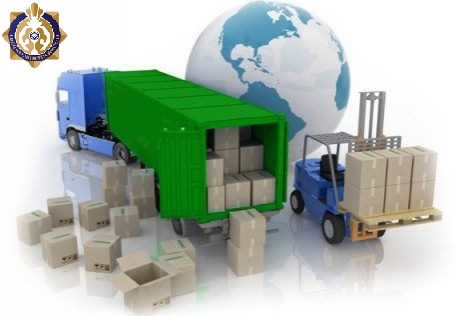
In the modern world, when the competitive environment is very developed in the field of cargo transportation, It is of great importance for Kazakhstan to expand its transit potential. Fortunately, the country has vast resources for this, however, they need to be developed in the right direction.
Many participants of foreign economic activity faced with the need for transit movement of goods for the first time do not quite understand the content and the spirit of this procedure.
At the same time, the main regulatory act regulating the customs procedure of customs transit is the Code of the Republic of Kazakhstan « On customs regulation in the Republic of Kazakhstan » (hereinafter – the Code).
Thus, according to the Code, the customs transit procedure is a customs procedure in accordance with which goods are transported (moved) from the customs authority of departure to the customs authority of destination without payment of customs duties, taxes, special, anti-dumping, countervailing duties, subject to the conditions of placing goods under this customs procedure.
At the same time, the basic conditions for placing goods under the customs procedure of customs transit for their traffic (transportation) through the customs territory of the Eurasian Economic Union are:
1) enforcement of paying import customs duties and taxes in accordance with Article 226 of the Code - regarding foreign goods;
2) enforcement of paying special, anti-dumping, countervailing duties in accordance with Article 226 of the Code in cases determined by the Commission - regarding foreign goods;
3) providing the option of identifying goods by the methods provided for in Article 427 of the Code;
4) compliance of an international transport vehicle with the requirements specified in Article 28 of the Code, if the goods are transported in cargo spaces (compartments) of the vehicle, which are subject to customs seals and stamp;
5) compliance with prohibitions and restrictions according to the Article 8 of the Code.
When placing goods under the customs transit procedure, the customs authority of departure establishes the period of customs transit (is determined by assuming that there are no more two thousand kilometers per one month), determines the place of delivery of goods, and also identifies goods and documents for them. The place of delivery of goods is the customs control zone located in the zone of activity of the customs body of destination.
In transit (by transporting) goods in accordance with the customs transit procedure, the carrier, regardless of whether he is a declarant of goods placed under such a customs procedure, except for the case specified in paragraph 2 of Article 230 of the Code, is obliged to:
1) deliver the goods and their accompanying documents within the time period established by the customs authority of departure to the place of delivery of the goods, along designated transit routes of traffic(transportation) of goods, if it is established;
2) to ensure the safety of goods, customs seals and seals or other means of identification, if they were used;
3) to prevent unloading, overload (transshipment) and other cargo operations with goods carried (transported) in accordance with the customs transit procedure, as well as the replacement of vehicles carrying such goods, without the permission of customs authorities, except for the case provided for in paragraph 2 of Article 228 of the Code.
In an accident, force majeure or other circumstances impeding the carrier compliance with obligations provided for by the Code, the carrier is obliged to take all measures to ensure the safety of goods and vehicles, immediately inform the nearest customs authority about these circumstances and the location of the goods, as well as transport the goods or ensure their traffic (transportation) (if the vehicle is damaged) to the nearest customs authority or other place specified by the customs authority.
The effect of the customs transit procedure ends after the delivery of goods to the place of delivery of goods determined by the customs authority of departure.
In case of non-delivery of all goods placed under the customs transit procedure and their accompanying documents to the place of delivery of goods, the persons specified in Article 230 of the Code bear responsibility established by the laws of the Republic of Kazakhstan.
Leading specialist of c/p «Bakhty» of SRD for EKR
Akhmetkaliev А.K.