Principles and procedure of customs inspection.
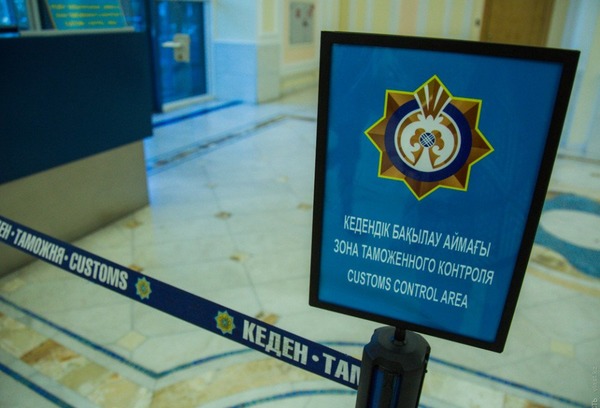
Customs inspection - a form of customs control, consisting in the inspection of goods and vehicles, in which the removal of seals, seals and other means of identification of goods, opening the packaging of goods or the cargo space of the vehicle or containers, containers and other places where the goods are or may be located.
During the inspection, vehicles, cargo spaces, containers and packaging may be opened, seals, seals and other means of identification may be removed. In order to detect the facts of open movement of goods during a customs inspection, cargo packages and design features of vehicles are checked in order to detect caches in which individual items may be hidden.
When conducting a customs inspection, the customs authority proceeds from the principle of selectivity. When choosing this form of customs control, a risk management system is used.
The basis for conducting a customs inspection is:
- triggered risk profiles or a random selection method of the risk management system that provides for customs inspection;
- the presence of the stamp of the Inspection and examination complex (IEC) "Control of the IEC, under suspicion»
- availability of information about the potential risk
- need to identify goods during customs clearance in accordance with the conditions of the declared customs procedure provided for by the legislation of the EEU and the Republic of Kazakhstan, except for the customs procedures "Free Customs Zone" and " Free Warehouse»;
- presence of signs of violation of the customs legislation of the EEU and the Republic of Kazakhstan
When conducting customs inspection, officials of the customs body should be guided by the provisions of the customs legislation, which enshrine the principle of the inadmissibility of causing undue harm during customs control.
As a general rule, the customs inspection is carried out after the customs declaration is accepted. Before the adoption of the customs declaration, customs inspection in respect of imported goods may be carried out in the following cases::
- to identify goods for customs purposes;
- if there is information on a violation of customs legislation (the inspection is carried out to verify such information);
- to conduct customs control based on a random check.
After deciding on the beginning of the inspection, the customs authority is obliged to notify the declarant or other person with authority in respect of goods and vehicles. Such a duty is imposed on the customs authority if the declarant or the person with authority over the goods and vehicles is known.
The presence at the customs inspection is the right of the specified persons and their representatives, however, if the customs authority insists on it, such right is transformed into an obligation.
If the customs inspection is carried out at the stage of transportation of goods under customs control, the issue of notifying these persons and the possibility of their presence during the customs inspection is often acute. In the absence of a representative specially authorized by the carrier, such is the individual driving the vehicle.
In accordance with the principle of selective customs control, only a part of the goods specified in the customs declaration as goods of the same name may be subjected to customs inspection. At the same time, the results of the customs inspection can be extended to all goods specified in the customs declaration (including goods that have not been inspected). The results of the customs inspection are drawn up in a special act, which is drawn up in two copies. The first copy remains with the customs authority, and the second is handed over to the person who has authority over the goods, or to his representative if this person is known. The act must contain information about the officials of the customs authority who conducted the customs inspection, about the persons who were present during it, and also reflect the results of the customs inspection. If the customs inspection was carried out in the absence of the declarant or a person with authority over the goods, the relevant reasons must be indicated in the act.
The procedure for conducting customs inspection in the Republic of Kazakhstan is regulated by the "Rules for conducting customs inspection and inspection", approved by the Order of the Minister of Finance of the Republic of Kazakhstan dated 14 February 2018, No. 188
"Semey" Customs Post