Space communication for two decades: RCCS JSC celebrates its anniversary
Space Communications of Kazakhstan: how the Mission Control Center works
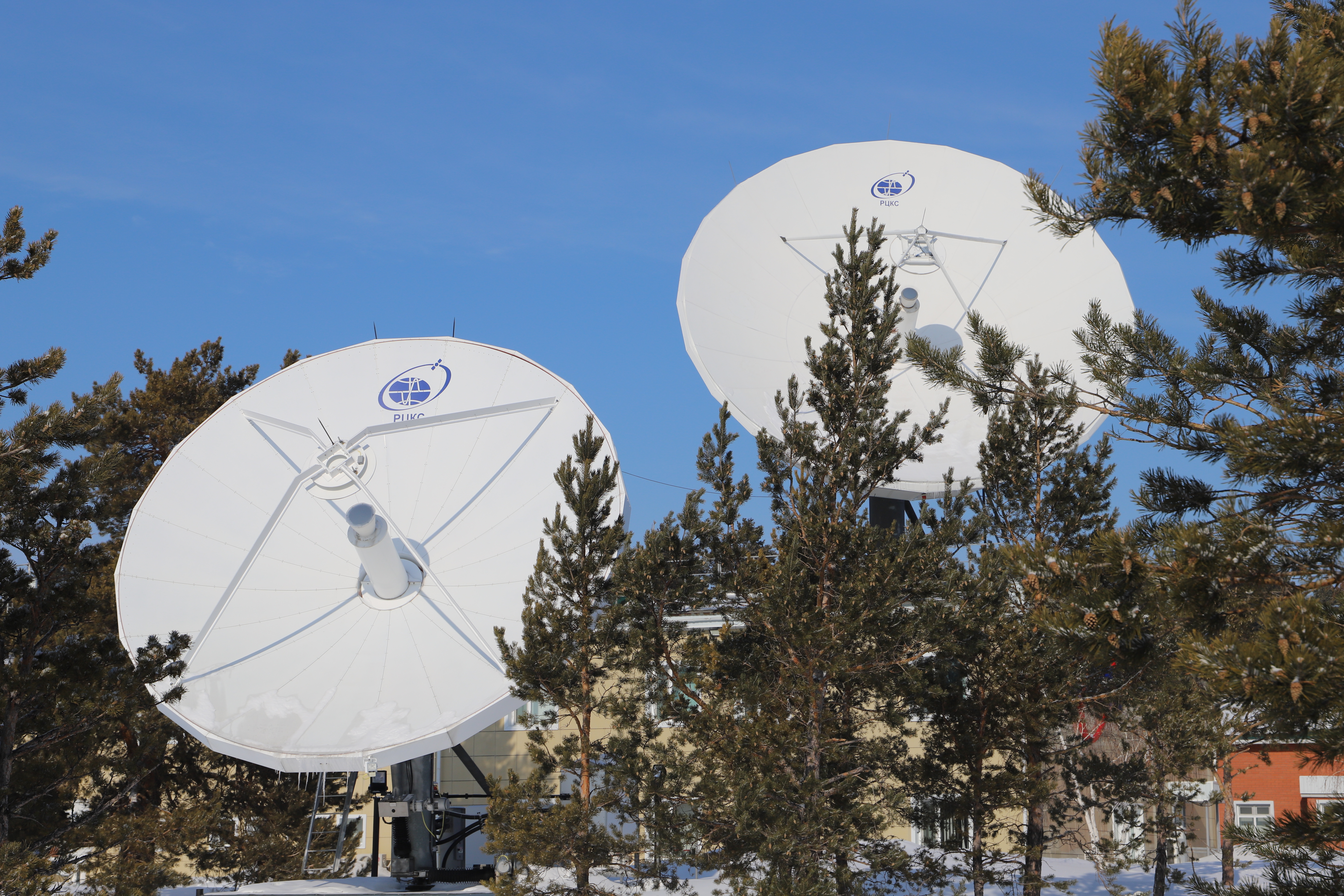
In March 2024, JSC Republican Space Communications Center (RCCC), which became the first enterprise in the country to create its own ground-based space infrastructure, celebrates its 20th anniversary. The main object of the RCCS is the Akkol Space Communications Center (CCS), located on the territory of the Akkol district of the Akmola region. It is from there that Kazakhstan's Kazsat communications and broadcasting satellites are managed. About how the main division of the CCS "Accol" - the Mission control Center (MCC) works.
"The MCC consists of three departments - the Department of Mission Control (OUP), the Department of Flight and Technical Condition of spacecraft (OOPiCTS) and the Department of Ballistic Navigation Support (DEA). Each of them has their own special, responsible tasks," said Bekbolot Azaev, director of the MCC and deputy head of the Accol Central Space Station, a reserve officer who passed an excellent service school at the Baikonur cosmodrome.
The Flight Control Department is the first department not only of the Accol Central Control Center, but also of the entire RCCC, it was established in March 2004, since the establishment of the enterprise itself. He was engaged in the documentation of the first spacecraft, the ground complex. The head of the OUP, Arshidin Islamov, is also a reserve officer, who was one of the first to be hired by the RCCC.
"We need a ballistics specialist, where does it say "ballistics" in your diploma," Viktor Dmitrievich Lefter, the head of the new enterprise, asked me at the interview. Considering that I served in the artillery troops – and this is ballistics, I was accepted into the first team. It turned out that the competition was huge. Out of more than a thousand people, 60 suitable specialists were selected, of which only 30 were hired. I was among those lucky ones," recalls A.Islamov.
According to the head of the department, the engineers of the OUP, and there are 10 of them today, conduct continuous monitoring and management of Kazakhstani communication and broadcasting spacecraft. Over the years, tens of thousands of communication sessions have been conducted with the issuance of radio commands and command and program information to the spacecraft of the Kazsat series. The specialists of the department have countered many emergency situations that arose as a result of the impact of space factors.
"From the very beginning, our department, which has grown into a friendly team of highly qualified space communications specialists, has set itself the task of ensuring the accuracy of space flight coordination and information security of communications. With the development of technology and experience, the OUP has rapidly adapted to new challenges and standards in the field of mission control, establishing itself as a reliable center for coordination and control of spacecraft. In a military way, iron discipline, order, responsibility are our credo," said Arshidin Islamov, who is also the deputy head of the MCC.
"We can hear the heart of Kazsat beating!
Bolat Egeubaev, head of the Flight Support and Technical condition Control Department of the MCC, said that the specialists of the department not only monitor the technical condition, analyze the functioning of on-board systems, but also plan work on spacecraft.
"During the years of operation of the Kazsat space communication and broadcasting system, the employees of our department, which employs five people, have not committed a single technological violation. The main motto of the team is the personal responsibility of each specialist in the management of spacecraft. Mentoring is also very important for us. For example, the leading engineer of the department, Kaysar Duzelov, is a veteran of the RCCS and represents the first detachment of space communications engineers in Kazakhstan. And at the same time, we can already be proud of our young specialist Daria Komarova, who has been working for only three years and is proving her responsibility in practice. In an interview, she accurately and figuratively said: "We hear the beating heart of Kazsat and treat our companions with the same care and attention as living beings." Indeed, the management of satellites, which are the most complex living mechanism operating in a high orbit of 40 thousand kilometers, is both an art and a great responsibility," said the head of the Flight support and technical condition Control department of the MCC.
During the operation of the satellites, the department's specialists have witnessed more different situations that remain in their piggy bank of experience. One of them occurred in 2015. Increased solar activity has led to a large number of accidents on various satellites. Our satellite KazSat-2 did not escape this fate either. Thanks to the knowledge, skills, perseverance and responsibility of the department's employees, it was possible to return the satellite to full-time management.
Who protects the satellite from danger
This work is carried out by the Department of Navigation and Ballistic Support (DEA), which employs three people, two of them Aibek Tleuliyev, head of the department, and Alexander Stytsura, a leading veteran engineer of the enterprise. "Techies" do not like to talk about their work, it is easier for them to show their knowledge in practice, and in this sense, the DEA is the most experienced in the MCC.
"In simple and understandable words, our task is to ensure the safe and reliable operation of the satellite in an aggressive space environment," says Aibek Tleuliyev.
The specialists of the department are engaged in calculating the motion parameters of the spacecraft based on measurements of current navigation parameters, developing a general strategy for planning maneuvers based on the requirements of keeping the satellite at the operating point of the geostationary orbit with a given accuracy, minimizing fuel consumption. This includes monitoring the execution of maneuvers and calibration of spacecraft engines, developing a strategy for correcting its orbit in order to minimize potential dangerous approaches to other space objects and ensure safe flight.
DEA specialists, including Karina Pankereeva, a young specialist in the department, said that in order to ensure the safe operation of the satellite, it is necessary to receive information in advance about dangerous approaches to other spacecraft and space debris and data on their orbits. Such information, for example, is provided by one of the American companies that controls systems designed to detect, track and identify all artificial objects in Earth orbit.
"Each report of a dangerous approach (more than 10 cm in diameter) is checked by specialists of the department of ballistic and navigation support for relevance and reliability and a decision is made to calculate and conduct a special evasion maneuver," says Karina.
"We observe the frequency of occurrence of dangerous approaches of our spacecraft with other satellites and other objects, there are already statistics on such devices, which allows us to predict their appearance in the holding area of Kazsat satellites in the future. This gives us the opportunity to plan ahead for the upcoming control cycles, avoid dangerous approaches and significantly save fuel," said Alexander Nikolaevich Stytsura, a veteran of the RCCC, mentor of youth.
And the head of the DEA added that "working on the development of innovative methods of motion control, taking into account the peculiarities of the space environment and the requirements of specific missions, allows us to increase the operational life of satellites in orbit."
On February 26, 2024, the Accol Space Communications Center, and the entire staff of RCCS JSC, celebrated, so to speak, the rebirth of the Kazsat-2 satellite. The fact is that on this day the period of active existence (SAS) of the second Kazakh communications satellite, launched in July 2011, ended. But, thanks to the high professionalism, careful attitude to the equipment of the engineers of the Accol CSC and especially the specialists of the MCC, the period of active existence of the satellite was extended for another two years.
"Yes, such moments are certainly pleasing. This is the real result of a team of specialists, like-minded people, colleagues and friends. In addition to the Mission Control Center, which you have described, our Accol Space Communications Center includes a Communications Monitoring Center, a Hardware, Software and Metrological Support Center, energy supply and logistics services, as well as our own apartment building for employees. In general, this is the first technical complex of space communications in Kazakhstan, unique in its kind," said Kairat Telgarin, Director of the Accol Central Space Station, a reserve officer who also served at Baikonur. – And the Kazakh space communication and broadcasting system "Kazsat" consisting of two communication satellites "Kazsat-2", "Kazsat-3" and two ground control complexes – the main one - CCS "Akkol" and the backup one – CCS "Kokterek" in the Almaty region, is operating normally," he assured.
The press service of JSC «RCKS»