Monitoring of the state of the Caspian seal population
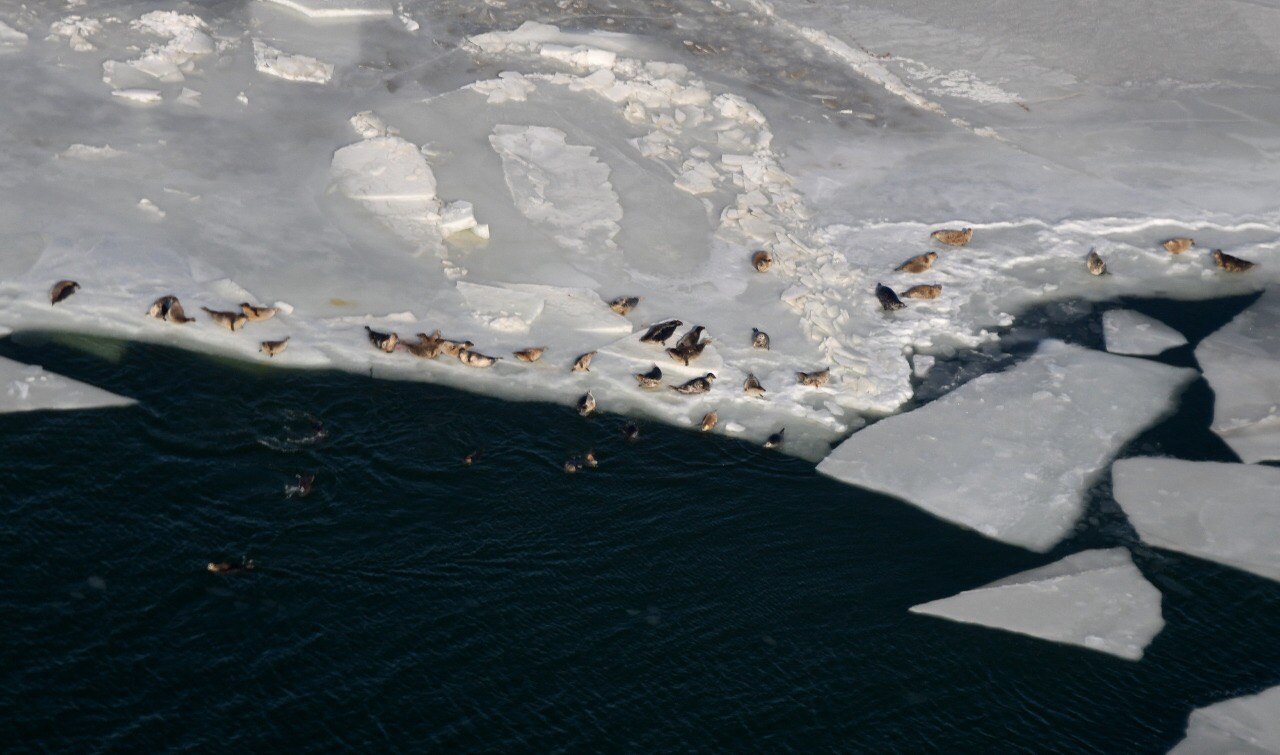
The Caspian seal is the only representative of the aquatic mammals of the Caspian Sea. It is endemic, plays a unique role in the Caspian ecosystem, being the closing link in the trophic chain of the Caspian aquatic ecosystem, lives in the entire sea area and can be considered an indicator species of its condition.
By the Decree of the Government of the Republic of Kazakhstan on November 9
In 2020, the Caspian seal is included in the List of Rare and Endangered Species of Plants or Animals.
A feature of the biology of this species is the seasonal variability of habitats. At the same time, it should be noted that for puppies (breeding) and molting, Caspian seals need ice cover, which is formed exclusively in the Kazakh and Russian sectors of the Northern Caspian. therefore, the Kazakh part of the Caspian Sea has an important role in the conservation of this species.
In this regard, in order to preserve the population of the Caspian seal, the Head of State K.K. Tokayev instructed to create a state natural reserve.
In pursuance of this instruction, the Ministry of Ecology and Natural Resources of the Republic of Kazakhstan has developed a project of natural science justification for the creation of a state natural reserve, on the basis of which a feasibility study will be developed.
The creation of the state nature reserve is expected in the second half of 2024.
Along with this, employees of the Zhaiyk-Caspian Interregional Basin Fisheries Inspection of the Fisheries Committee of the Ministry of Ecology and Natural Resources of the Republic of Kazakhstan carry out conservation measures and monitoring of the condition of Caspian seals.
So, on January 27 of this year, the Inspection staff, together with scientific staff (zoologist, ornithologist) of the Kazakhstan Agency of Applied Ecology, flew over the sea area using air transport (helicopter).
During the flyby, more than 2 thousand adults and about 40 squirrels (cubs) of seals were seen. It should be noted that the mass puppy is expected in the first half of February.
In addition, on January 30, 2023, the Inspection staff, in order to monitor the condition of the animals during the puppy period, carried out a visit to the places of their concentration, using hovercrafts located near the island of Kulaly, where about 100 adults and 5 seal pups were recorded.
The condition of the animals is satisfactory, no sick and sluggish animals were found, the basic vital reflexes were preserved, at the sight of a human adult individuals tried to leave the ice cover, actively moved on the ice and in the water area.
At the same time, since 2020, monitoring studies have been conducted on the state of the Caspian seal population together with Russian scientists. Monitoring studies include:
• study of the state of the ice field from weather data and satellite images;
• air flights to estimate the number of Caspian seals using multispectral imaging, including continuous infrared imaging of the underlying surface. Thermal imaging is the most effective for detecting seals on ice, which is due to the significant difference in body temperatures of a warm-blooded seal and the snow-ice cover of the sea. Photographs make it possible to identify objects of aerial photography and document the accuracy of recognition on infrared images of warm-blooded marine mammals on ice;
• conducting aerial reconnaissance in order to adjust the route of the icebreaker to minimize the impact on seals;
• monitoring of Caspian seal migrations based on daily satellite telemetry data;
• satellite tagging of individuals.
So, according to the results of studies conducted in 2022, the population amounted to about 311 thousand individuals.
Work on the execution of the instructions of the Head of State and monitoring studies of the condition of the Caspian seals are continuing.
***