Interim information on ongoing work to identify the causes of seal death in November-December 2022
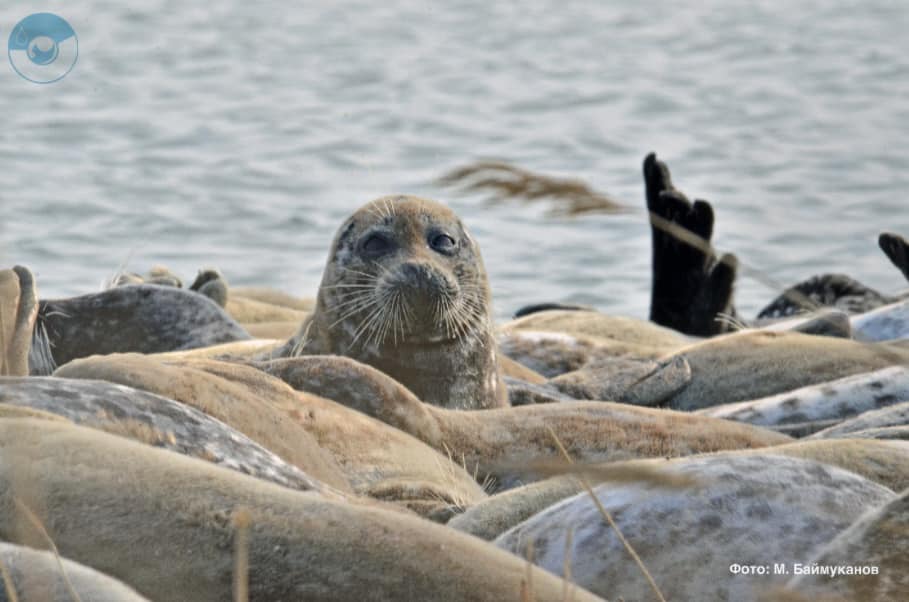
In the period from November 7 to December 3, 2022, in Tupkaragan District of Mangistau region, during raid activities on the coast of the Caspian Sea, the carcasses of 172 dead seals were found.
The committee of Fisheries of the Ministry of Agriculture of the Republic of Kazakhstan involved various scientific organizations: “Institute of Hydrobiology and ecology", "scientific and production center of Microbiology and virology" LLP, "Kazakhstan Agency of Applied Ecology" LLP, the Center for research and rehabilitation of the Caspian seal,as well as interested state bodies: the Department of ecology of Mangystau region, territorial divisions of the Committee for Veterinary Control and supervision of the Ministry of Agriculture of the Republic of Kazakhstan, the Police Department of Mangystau region.
According to the Committee for Veterinary Control and supervision of the Ministry of Agriculture of the Republic of Kazakhstan, no pathogens of pasteurellosis and carnivorous plague were found in the studied samples of tissues of dead seals.
According to the results of the study of samples of sea water and atmospheric air, Kazhydromet and the Department of ecology of Mangystau region found that the permissible concentrations of harmful substances were not exceeded.
According to the results of preliminary studies by the Kazakhstan agency for Applied Ecology, the research and production center of Microbiology and virology, the Institute of problems of Ecology and evolution of the Russian Academy of Sciences, there are no viral infections in the samples, however, to clarify the causes of death of seals, extensive laboratory tests are currently being conducted, since it is assumed that the cause of death of The results of the extended laboratory examination are expected on December 30, 2022.
Employees of the Institute of Hydrobiology and ecology examined 85 carcasses of dead seals (males 43, females 42), claws and incisors were taken from 60 carcasses of them to determine age, samples of the lungs, liver, kidneys and spleen were taken from 7 individuals for histological studies in order to identify pathological changes in tissues. All samples are in the processing and research phase, with a completion date until January 15, 2023.
The Caspian seal research and Rehabilitation Center continues to conduct laboratory tests of liver tissue samples for the presence of heavy metals in the body of seals, which will be completed by January 15, 2023.
The carcasses of dead seals were destroyed by the forces of Public Utilities of the local executive body and representatives of the Fisheries Association-BD, in compliance with sanitary standards.
The Working Group came to the following conclusions:
1. no mechanical damage was found on the carcasses of seals, indicating the influence of man-made factors: fishing, shipping, poaching;
2. the carcasses were classified in 3-4 stages of 5 possible decomposition, which made it possible to take a partial sample for analysis;
3. for a more accurate determination of the causes of the extinction, the conclusion of all studies that are planned to be completed by January 20, 2023 is required;
4.appoint the next meeting of the Working Group on January 21, 2023.
At the same time, the Working Group noted the need to continue scientific research on the study of the Caspian seal, as well as conduct research on a systematic basis by the method of life analysis.