Comment on the Conclusion on the death of seals in 2022
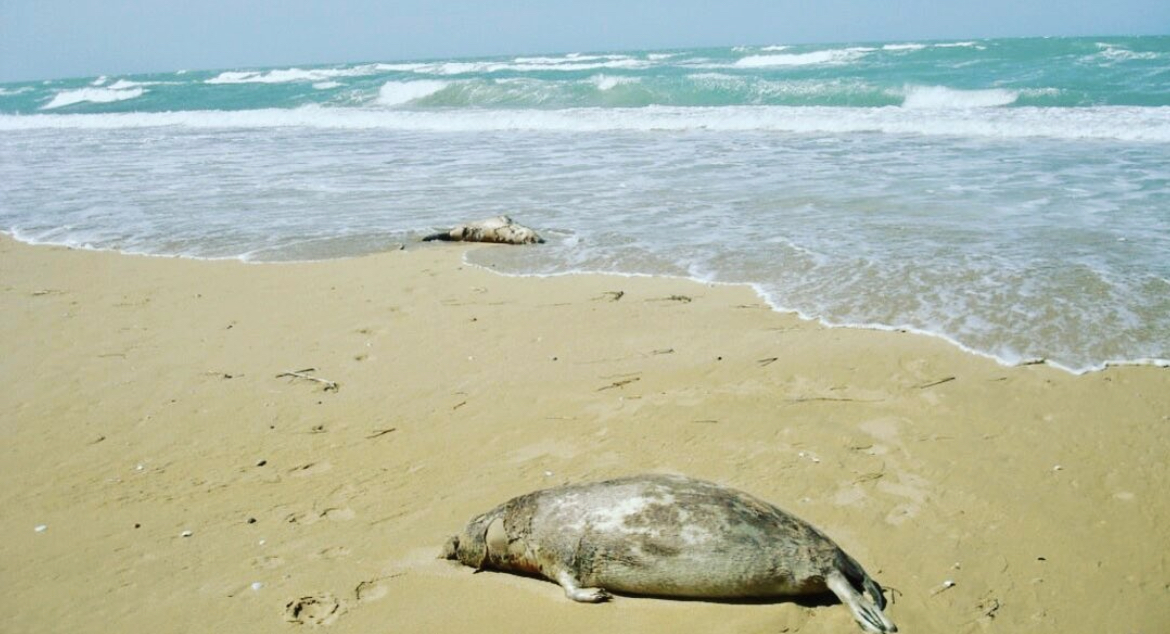
In the first decade of June, the results of the examination of the corpses of seals from the places of their discovery were obtained.
Taking into account the discussions, which were attended by researchers from the Institute of Hydrobiology and Ecology, LLP "Scientific and Production Center of Microbiology and Virology", LLP "Kazakhstan Agency of Applied Ecology", as well as representatives of competent state bodies: the Committee of Fisheries, the Department of Ecology of Mangystau region and territorial divisions of the Committee of Veterinary Control and Supervision of the Ministry of Agriculture of the Republic of Kazakhstan, On June 24 of this year, a conclusion was prepared on the death of seals.
According to this conclusion, the exact causes of death could not be determined due to the strong decomposition of the carcasses found. At the same time, possible causes of the death of seals, according to scientists and competent state bodies, could be the exhaustion of newborn puppies due to their removal on ice to the open sea, freezing due to the ingress of puppies into the water, by-catch of adult seals in fishing nets, as well as seals getting under the screws of cruising vessels.
Representatives of scientific organizations and interested state bodies also agreed that dredging operations carried out in the Caspian Sea do not have a direct impact on the death of the discovered seals and cannot be considered as a possible cause of their death.
Due to the fact that the Caspian seal is a transboundary aquatic animal, in September 2021, during the XVII Forum of Interregional Cooperation between Kazakhstan and Russia, a Joint action plan for the conservation of the Caspian seal population for 2021-2026 was signed between the Ministries of Ecology of Kazakhstan and Russia.
We would like to remind you that the Head of State has taken the solution to the problem of reducing the population of the Caspian seal under his personal control and today the Ministry is working on the issue of creating a specially protected natural area to preserve the habitats and reproduction of the Caspian seal. At present, an appropriate natural-scientific justification is being developed.
In addition, since 2020, the Caspian seal has been included in the List of Rare and Endangered Animal Species (the Red Book of the Republic of Kazakhstan) and in accordance with the Criminal Code of the Republic of Kazakhstan, illegal treatment of rare and endangered animal species is punishable by a fine of up to 3000 MCI or restriction of liberty for up to 3 years.
In turn, upon the discovery of dead seals on the coast of the Caspian Sea in the spring of this year, relevant materials were sent to the Mangystau region Police Department for taking procedural measures.