Results of the state audit in the field of secondary education discussed by the Supreme Audit Chamber of the Republic of Kazakhstan
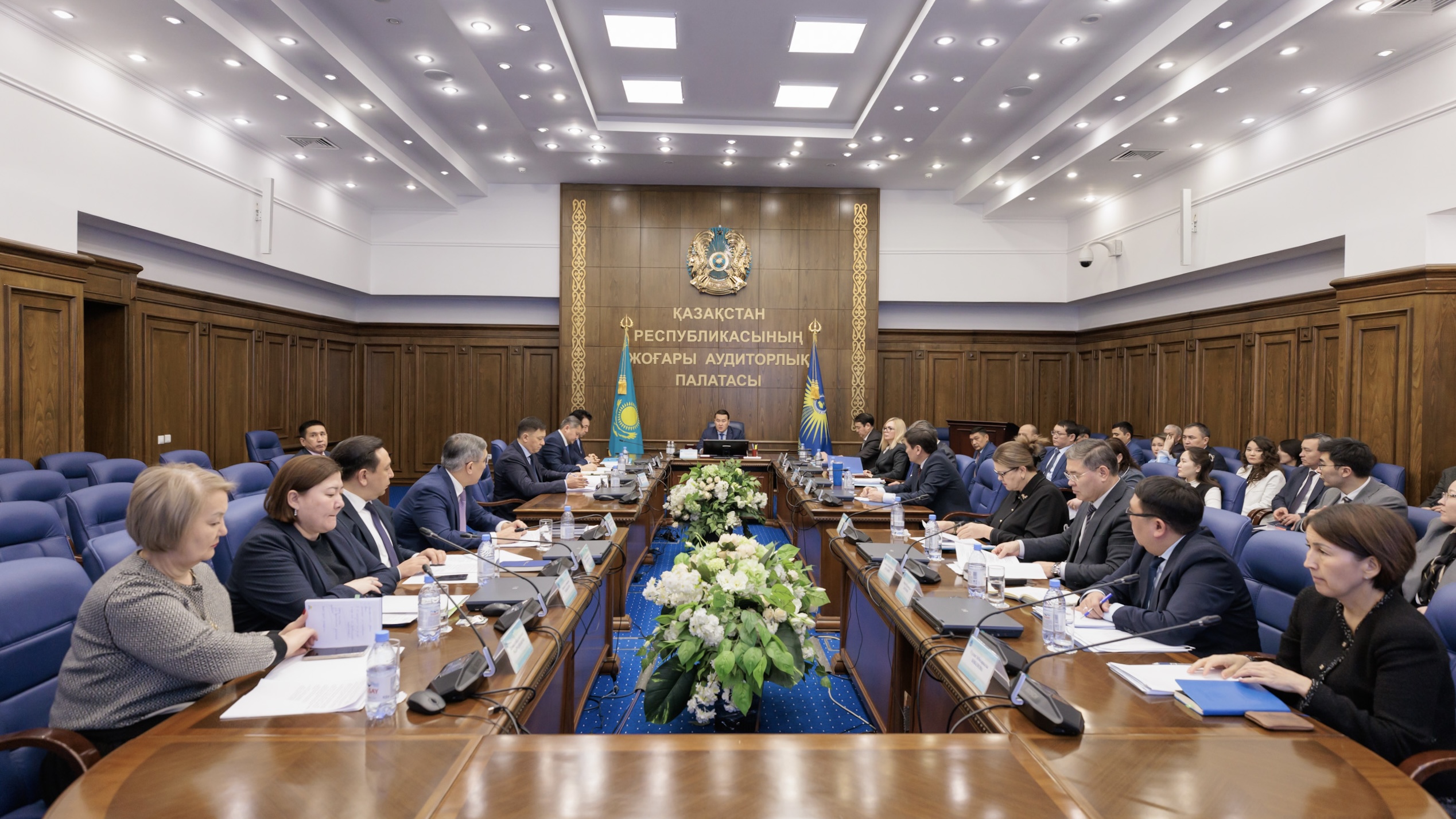
The Supreme Audit Chamber conducted a performance audit of funds allocated for the development and improvement of the quality of secondary education. The results of the audit were discussed at the meeting chaired by the Chairman of the Supreme Audit Chamber Alikhan Smailov.
The discussion involved the Minister of Education Gani Beisembayev, the Minister of Science and Higher Education Sayasat Nurbek, responsible officials from ministries, as well as heads of subordinate organizations.
According to the audit materials which have covered the period since 2019, the number of schools in Kazakhstan has been steadily increasing: in the 2023-2024 academic year, there were more than 7,800 schools. The number of students and teachers is also growing. This indicates an expanding accessibility of education in the country.
Funding for the secondary education system also demonstrates steady growth: over recent years, the expenses have more than tripled—from 1.3 trillion tenge in 2019 to 4.8 trillion tenge in 2024, confirming the priority of this sector for the state.
However, the state audit highlighted a number of problematic issues and systemic flaws that reduce the effectiveness of measures taken to develop secondary education. It was reported by the Member of the Supreme Audit Chamber Nurlan Nurzhanov that these issues relate to strategic planning, education quality assessment, teacher training and employment, the quality of their retraining, the methodological support of the educational process, as well as state regulation and control.
Strategic planning in the education sphere is characterized by frequent changes in government programs and concepts. Regular changes in strategic documents lead to the interruption of previously started initiatives, resulting in a lack of continuity and stability in educational policy.
During the meeting, the Chairman of the Supreme Audit Chamber Alikhan Smailov paid special attention to this issue.
“The Ministry of Education should first and foremost ensure that the adopted documents provide consistency in reforms. Over the last few years, funding for secondary education has increased more than three times. In such circumstances, the state expects greater returns from the measures taken”, - said Alikhan Smailov.
According to the audit conclusion, significant discrepancies were found in the formation of the state order for teacher training between the forecasts of the Ministry of Labor and the actual needs of the education system, which is explained by shortcomings in the methodology of calculations.
As for the advanced training, the issue remains post-course support for teachers. It should help teachers to apply new knowledge in practice, but in reality, it is limited to seminars and publications.
Reforms in the field of educational standards are carried out unsystematically. Frequent changes in curriculum have led to revisions of already published textbooks, resulting in inefficient budget spending. Over the past five years, the economic losses from revising textbooks exceeded 16 billion tenge.
Weaknesses were also found in the expertise and monitoring of the quality of textbooks. Over five years, the evaluation criteria changed 12 times, indicating the lack of a stable evaluation system. The procedure for expertise through the information system for monitoring state services has not been implemented, and procedures are still carried out on paper.
Licensing is one of the forms of ensuring state guarantees for quality education, however there are 66 schools that operate without licenses in the country, including state schools. The widespread systemic problems in educational institutions are reflected in the low percentage of successful accreditation, with only 18.2% of schools passing it on the first attempt.
As a whole, the state audit established the following:
- Financial violations totaling 1.1 billion tenge;
- Ineffective planning of funds and resources – 62.4 billion tenge;
- Ineffective use – 3.2 billion tenge.
To improve management effectiveness and address the identified problems, the Supreme Audit Chamber will issue recommendations to the Government and directives to the relevant responsible state bodies. This work will remain under supervision until it is fully completed.