The Supreme Audit Chamber of the Republic of Kazakhstan considered the results of the audit of state measures in combating the shadow economy
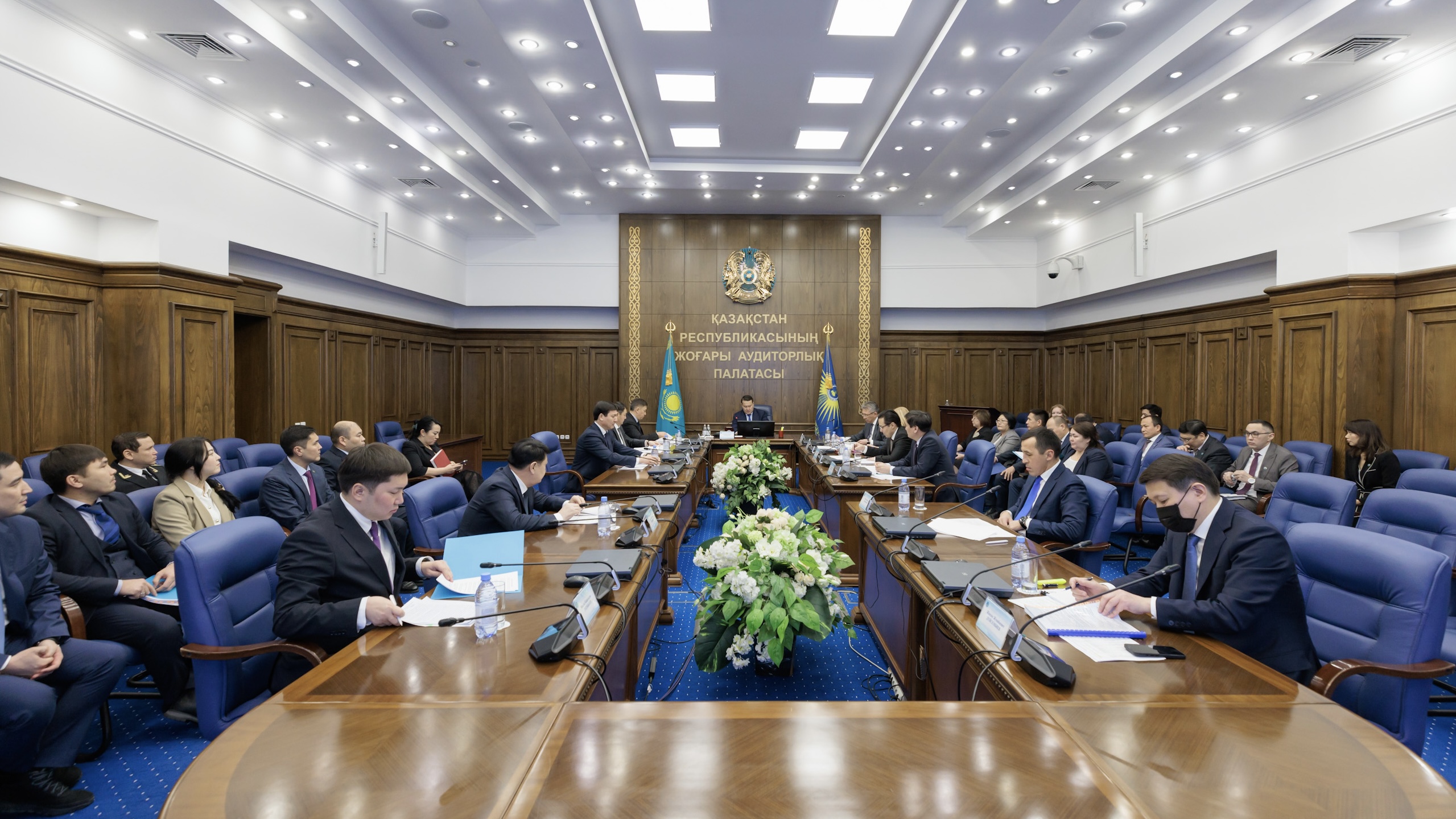
The Supreme Audit Chamber (SAC) has completed a state performance audit of government policies in combating the shadow economy. The results were reviewed at a meeting of the SAC chaired by Alikhan Smailov.
The meeting was also attended by Kairat Bizhanov, Deputy Chairman of the Financial Monitoring Agency, Maksat Turlubayev, Head of the Bureau of National Statistics, Erzhan Birzhanov, Vice Minister of Finance, Zhandos Duisembiyev, Chairman of the State Revenue Committee, and others.
The shadow economy negatively affects the country’s development by reducing fair competition, hindering the growth of small and medium-sized businesses, and decreasing government budget revenues.
Kazakhstan aims to reduce the share of the shadow economy in its gross domestic product (GDP) to 15%, which corresponds to the level of developed OECD countries. In recent years, there has been a steady decline in this indicator—from 28.8% in 2017 to 17.5% in 2023.
However, according to the audit results, several significant shortcomings hinder the effectiveness of government policy measures in this area.
Currently, there is no government body responsible for forming a unified policy on combating the shadow economy and coordinating other agencies. These functions were initially assigned to the Financial Monitoring Agency but were later excluded from its regulations.
As a result, each government agency takes measures within its competence, but there is no unified system with clearly defined responsibilities. Comprehensive plans to combat the shadow economy do not cover all sectors, and some measures appear to be formalities.
“There is no coordinated work among government agencies. The comprehensive plans are not sufficiently focused on reducing the shadow economy. The measures are poorly developed, and some are removed from control without implementation. No assessment is conducted on their impact in reducing the shadow economy. Meanwhile, the audit revealed a significant volume of hidden turnover in the country,” noted Alikhan Smailov during the meeting.
Auditors also raised concerns about the methodologies used to assess the unobserved economy. For example, the coefficient of cashless turnover is used, which measures the ratio of cashless payments made by individuals for goods and services to GDP. However, since the share of such payments grows every year, this automatically “reduces” the level of the shadow economy, raising doubts about the validity of this coefficient.
Additionally, in one of the calculation categories, classifiers such as “Real Estate Operations,” which include housing rentals, and “Arts, Entertainment, and Recreation” are not considered. In another category, data collection on small trading enterprises has shifted from a comprehensive to a selective method, leading to reduced coverage of the unobserved economy.
The state audit identified several high-risk sectors and areas prone to shadow turnover based on the conducted analysis. For example, according to the State Revenue Committee`s data, citizens from three Central Asian countries earned 136 billion tenge in Kazakhstan over three years. However, according to the National Bank, during the same period, they transferred a total of 1 trillion tenge to their home countries. This suggests a high likelihood of “shadow” goods or services production.
Overall, the audit identified indirect budget losses in the revenue part amounting to 74 billion tenge, as well as 18 procedural violations and 23 systemic shortcomings.
The Supreme Audit Chamber has developed the necessary recommendations and directives to address all identified issues. These measures are expected to help eliminate the existing shortcomings and achieve the goals set in combating the shadow economy.