The Supreme Audit Chamber in the field of water disposal has identified a number of systemic problems
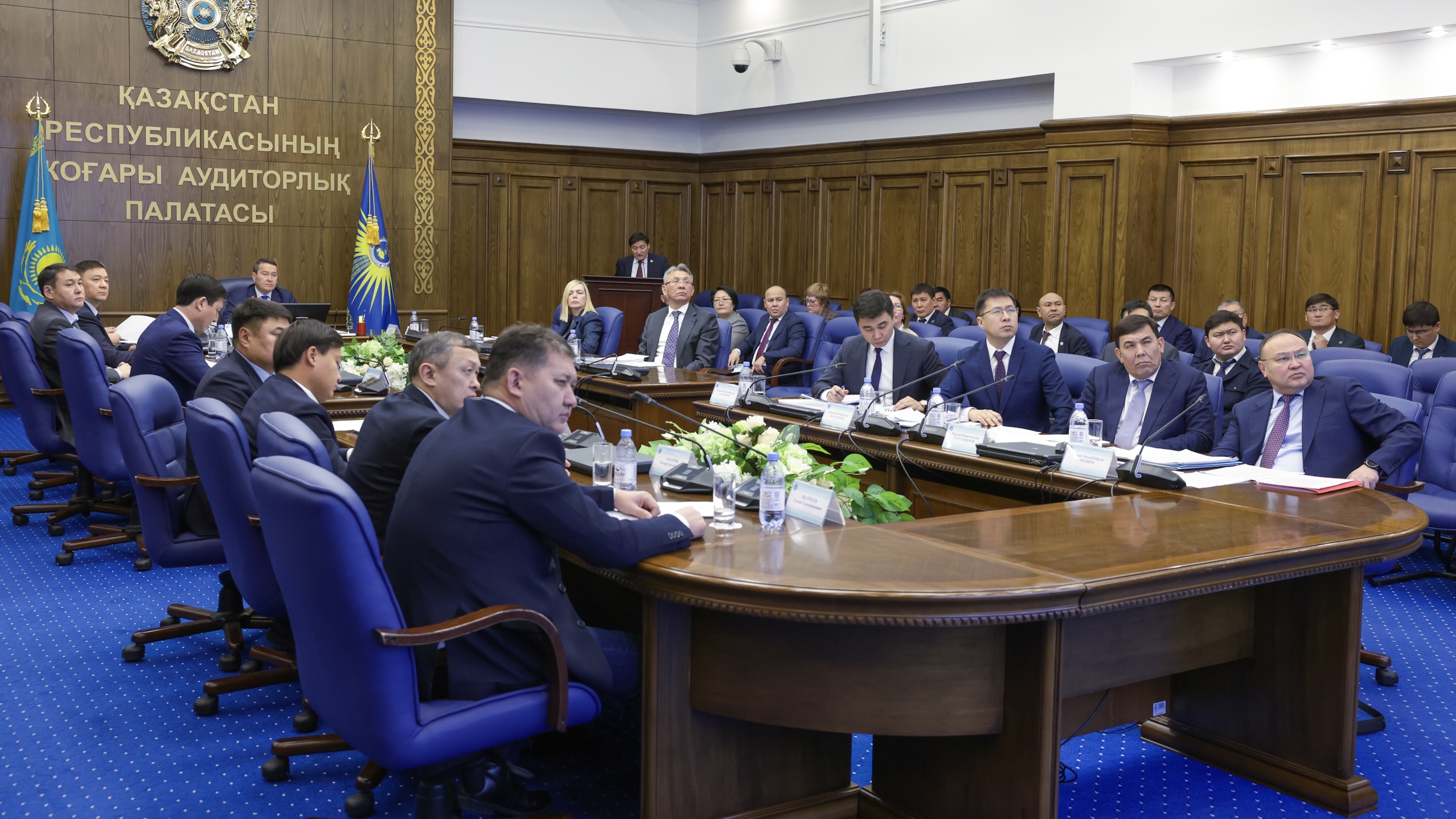
The results of the performance audit of the use of budgetary funds and state assets in the field of water disposal were considered at a meeting of the Supreme Audit Chamber chaired by Alikhan Smailov.
The state audit revealed a layer of shortcomings in the field of water disposal, including inconsistency in the actions of authorized bodies, gaps in the regulatory framework, lack of high-quality monitoring and reliable operational data, low level of automation and digitalization, poor development of investment projects, etc.
The low level of payment for utilities and low tariffs on the ground create risks of underfunding the infrastructure. At the same time, the lack of a unified approach to the collection, processing and generalization of information leads to discrepancies in data on the length of networks, the number of sewage treatment facilities (STF), emergency sites, etc.
In 67 cities of the country, new construction, modernization and reconstruction of STF are required, and in 27 they are absent completely.
There is an imbalance in the distribution of funds between regions. For example, the largest amounts of funding were directed to Astana, Turkestan and Almaty regions, despite the higher degree of deterioration of engineering networks in Karaganda, Pavlodar and Ulytau regions.
The examination of 27 complex water disposal projects in the Republic of Kazakhstan was carried out by organizations that do not have the appropriate rights, which contradicts the legislation. The deadlines for implementation were violated for 15 projects in Turkestan, Karaganda regions, Shymkent and Astana cities, and the revised project documentation was not re-examined for individual projects. In general, the cost of implementing 35 water disposal projects increased by 70 billion tenge according to the results of the adjustment – from 109 to 180 billion tenge.
At the same time, inconsistency of actions and low control lead to some objects being idle. For example, the project of reconstruction of sewage treatment facilities in Priozersk town, Karaganda region, worth 1.9 billion tenge, with 98% readiness, has been idle since 2017. In Turkestan and East Kazakhstan regions, 6 commissioned sewage treatment facilities projects worth 5.6 billion tenge are idle due to the lack of sewer networks.
At the meeting, the Chairman of the SAC stressed that without the development of a unified information system in the housing and communal services sector, the problems considered will remain relevant.
"Without digitization, without having reliable information, you cannot plan expenses effectively. You need to see the whole picture: by country, by region, and by type of infrastructure. And the most critical issues should be addressed first. Without high-quality monitoring, it turns out that you act on your fingers: which region will be the first to arrive, and you work with it. This is wrong and ineffective," Alikhan Smailov said, addressing employees of the Ministry of Industry and Construction.
In total, according to the results of the audit, there are:
- financial violations amounting to 18.7 billion tenge;
- inefficient planning of budget funds and assets – 23.4 billion tenge;
- their inefficient use is 26.7 billion tenge;
- possible losses and lost profits amounted to KZT 17.3 billion tenge;
- state auditors identified 59 systemic deficiencies and 277 procedural violations.
The work on their elimination will be under the control of the Supreme Audit Chamber until it is fully completed.