Slow procedures and financing of privileged groups: the audit of state support for the manufacturing industry has been completed
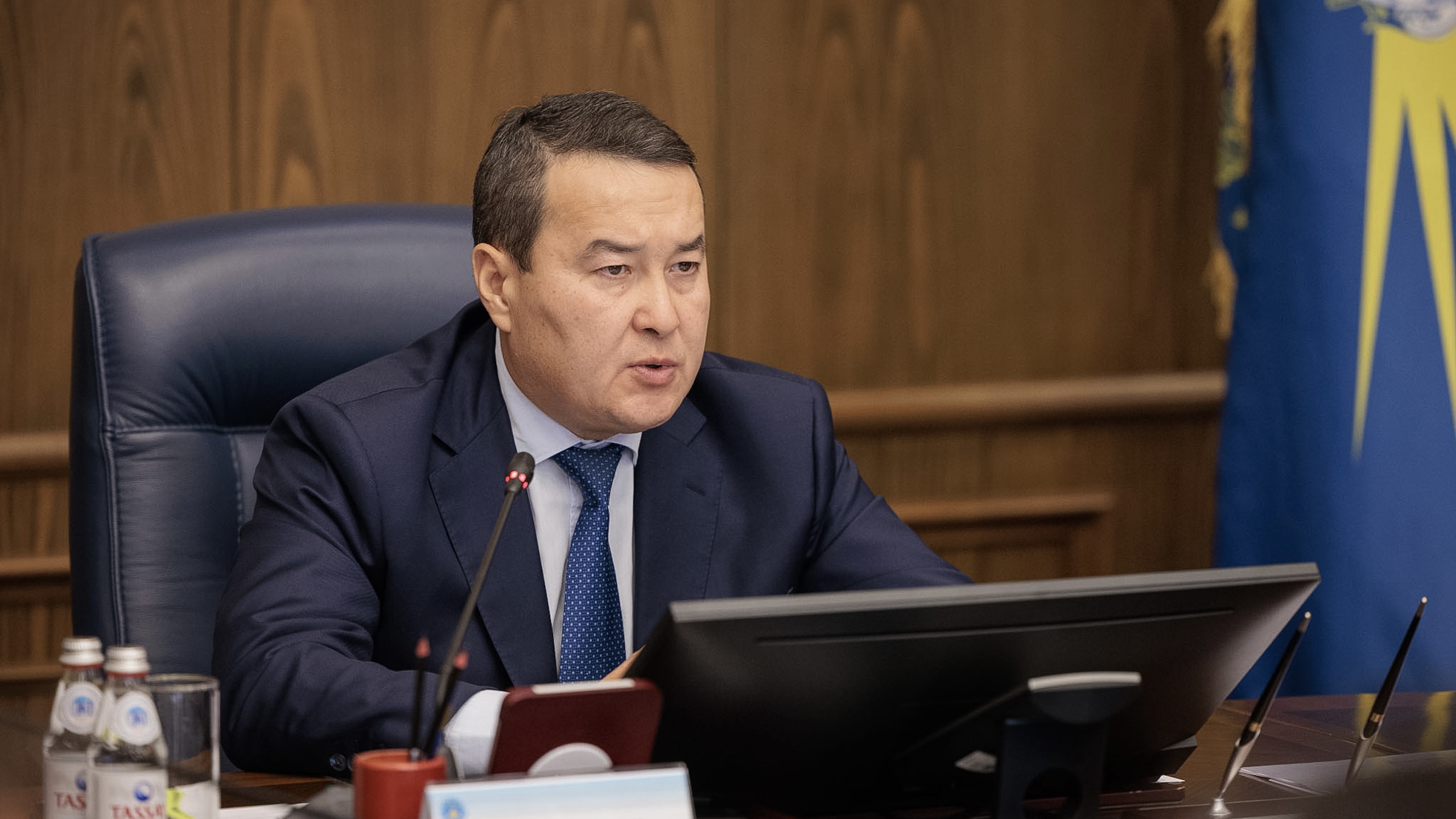
The results of the performance audit of state incentives for the industrial and innovative sphere were reviewed by the Supreme Audit Chamber of the Republic of Kazakhstan. The key focus of the audit was the financing of projects in the manufacturing industry.
As follows from the audit report, in 2016-2023 Kazakhstan managed to achieve a number of significant results in the development of the manufacturing sector. Thus, production volumes increased from 8 trillion tenge in 2016 to 22 trillion tenge in 2023. The volume of investments in fixed assets of the manufacturing industry increased from 878 billion to 1.6 trillion tenge over the same period.
The level of exports of manufactured goods has also increased. The highest figures were recorded in 2022 and 2023, when it reached 27 and 23 billion US dollars, respectively. In particular, the share of the manufacturing industry in total exports in 2023 amounted to 29%. In general, Kazakhstan is increasing the supply of goods of medium and high technological complexity to other countries.
The main development institutions supporting the manufacturing industry are JSC Development Bank of Kazakhstan and its subsidiary JSC Industrial Development Fund. In 2019-2023, they financed industry projects worth 2.4 trillion tenge. This mainly concerns the metallurgical and food industries, mechanical engineering, as well as the production of rubber and plastic products.
At the same time, according to the results of the state audit, a low share of financing projects with a pronounced environmental and innovation burden is noted. In addition, within the framework of support measures, such areas as finished products, light and pharmaceutical industries, which are also priorities, are practically not represented.
Along with this, there are facts of long-term bringing of preferential funds to the final recipients, which can negatively affect the overall effectiveness of state support measures. Moreover, this even applies to funds from the Government's reserve provided for urgent measures: the facts of their use with a delay have been noted.
During the meeting, Alikhan Smailov stressed that concessional financing of projects should be carried out many times faster due to high-quality preparatory work. It means, it is necessary to consider and prepare projects in advance for the receipt of funds, and not vice versa.
"Money from the budget is allocated to you in order to actively invest in the economy and thereby expand the tax base, create new jobs, and support it. But here you are sitting on money, although you should distribute it promptly. It turns out that you request some amounts from the state and freeze them on deposit accounts, while these funds could work within the budget on other important infrastructure projects," the Chairman of the SAC said, addressing the authority of quasi-state companies.
The audit also established the parallel implementation of DBK JSC of similar targeted financing programs for exporters with different marginal remuneration rates. This creates risks of providing cheaper loans to certain borrowers, which undermines the foundations of equitable access to such measures. Thus, for individual borrowers, DBK JSC, at its discretion, applied lending rates below the established limit by 1-2.5%.
The state auditors paid special attention to the continuation of the practice of preferential financial support for representatives of established large businesses – the so-called special group of counterparties. Half of the total loan, leasing and investment portfolios of JSC DBK for five years have been accounted for by these privileged groups, which continues to make it, in fact, a "personal bank for a select circle of people." In general, this approach undermines the principles of equal access to concessional funds and their fair distribution.
The priority areas of financing for JSC IDF should be leasing transactions with a pronounced socio-economic effect. However, in the process of selecting projects, an assessment of the expected socio-economic effects of them is not carried out. There is also no corresponding methodology.
At the same time, the state audit revealed that counter obligations for the export of products do not always encourage borrowers to increase it. This applies in cases where existing export indicators already comply with the loan agreement. This approach creates the risk of inefficient allocation of public resources and their use as a cheap source of funding for abstract purposes: payment of dividends to shareholders and placement on bank deposits.
In addition, when evaluating exports, gross receipts from foreign economic activity for all products related to the company's activities are taken into account. Whereas a measure of state support is provided to expand the volume of exports of a certain type of product, for which financing is open. Thus, there is a situation when the declared product, for which support is provided, can actually not be released.
"You set counter obligations for exports so comfortable that borrowers have no motivation to increase it. As a result, the share of exports of enterprises that you support has halved in total exports since 2020 – from 9.1% to 4.5%. Although the mission of DBK, as one of our major development institutions, is to promote the export potential of the manufacturing industry" - Alikhan Smailov noted.
Cases of financing high-risk projects have also been identified. Thus, for similar projects included in the audit sample, there is a deterioration in the financial condition, the failure to achieve plans for the export of products and late payments. Two of them have been assigned the status of economic default. In total, over 439 billion tenge was covered by the state audit. As a result, the following are established:
- financial violations of 1.2 billion tenge;
- inefficient planning and use of funds for 25.9 billion tenge;
- 64 procedural violations and 9 systemic deficiencies;
- The lost profits and economic losses, according to calculations, amounted to KZT 15.8 million.
Summing up the meeting, the Chairman of the SAC stressed that in order to eliminate the identified violations and shortcomings, it is necessary to take a number of specific measures, including improving the internal regulatory documents of quasi-state companies. The relevant work will be under the control of the Supreme Audit Chamber.