The audit of pricing in the construction sector was completed by the Supreme Audit Chamber
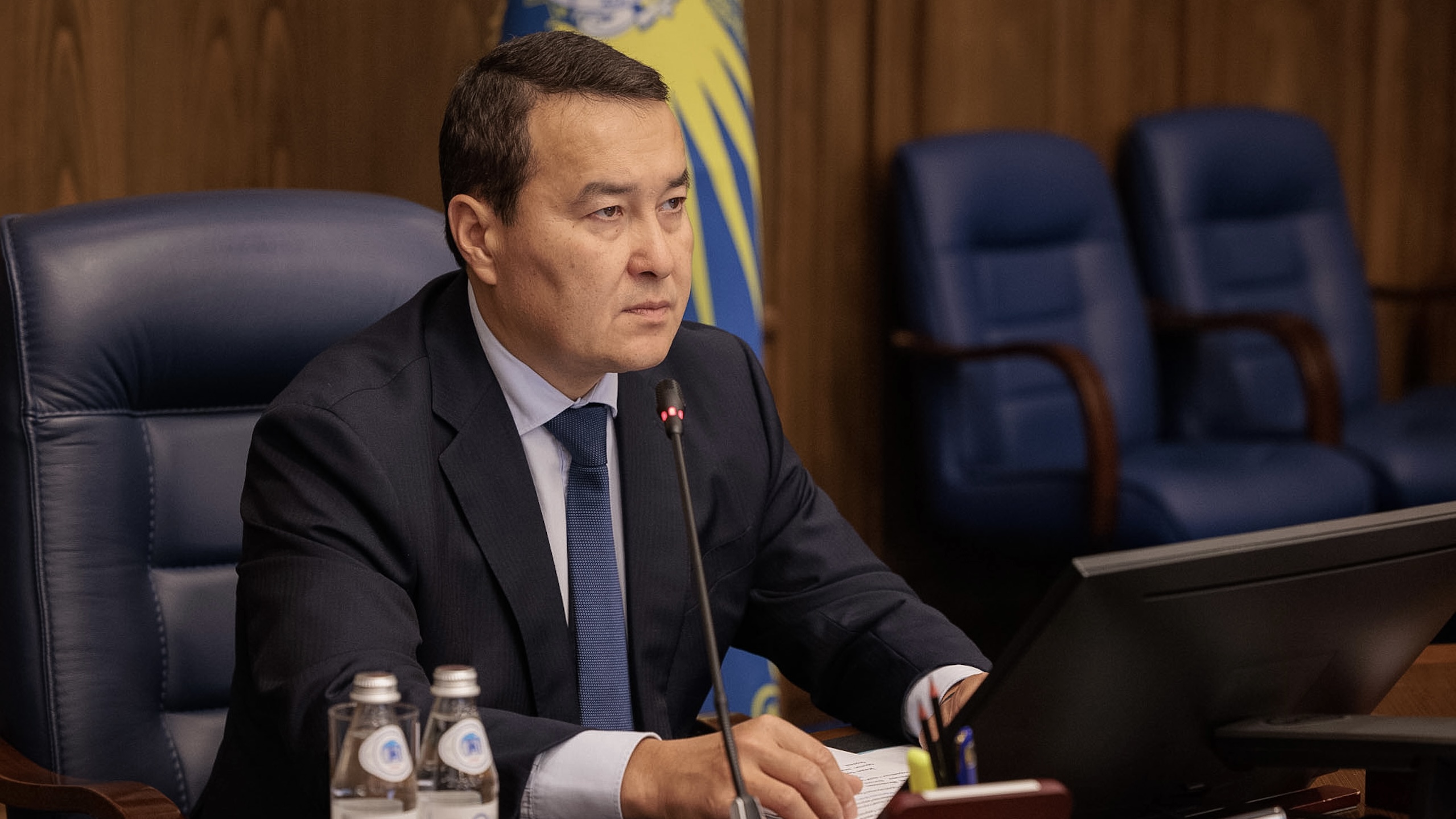
At the meeting of the Supreme Audit Chamber of the Republic of Kazakhstan the results of the perfomance audit of the pricing system in construction, as well as the use of funds and assets allocated for design and construction were reviewed.
According to official statistics, the total volume of construction work in Kazakhstan last year reached 7.6 trillion tenge, an increase of 21% compared to 2022. Most of this is occupied by residential and non-residential buildings, roads and highways, pipelines for water supply and sewerage, as well as oil and gas main pipelines. In general, the construction industry accounts for an average of 6.5% of GDP in 2017-2023.
At the same time, as Mikhail Bortnik, the Member of the Supreme Audit Chamber, noted, there are a number of gaps and flaws in the current regulatory legal acts affecting pricing in construction.
Thus, there are no clear criteria and transparency for the selection of basic supplier enterprises, on the basis of which prices are further monitored and an estimated regulatory framework in construction is provided. This applies to monitoring prices for building materials, products, structures and equipment. At the same time, companies are not responsible for failure to submit the established reporting form (1-CMIO).
Shortcomings in the legislation on public procurement have been identified. In particular, the Rules on public procurement do not take into account the provisions on the implementation of construction projects in accordance with the contractor's estimate (offer).
The issue of the provision (preservation) by contractors of the discount indicated by them initially when submitting an application for participation in the competition and which was the basis for choosing a supplier has not been settled.
In addition, the current legislation allows, in case of adjustments and increases in the cost of construction projects with the preservation of technology and the constructive part, to also increase the amount of contracts for the provision of technical and author's supervision services. This leads to an additional burden on the budget, despite the same amount of oversight services.
The state audit revealed that the current legislation also does not provide for certification of cost estimators involved in the design and construction process, by analogy with engineering and technical workers. At the same time, the reliability of determining the cost of construction at different stages directly depends on their professional level.
To this date, architectural, urban planning and construction catalogs of Kazakhstan contain more than 500 sectoral and departmental regulatory documents of the USSR and the post-soviet period (until 2001). Their relevance requires confirmation.
The list of normative legal acts and technical documents in the field of architecture, urban planning and construction (AUPCC-1) contains more than 400 state standards, according to which it is necessary to review in order to exclude identical requirements.
There are obstacles to the introduction of new advanced technologies in the construction industry. This is due to the lack of detailed procedures and procedures for carrying out timekeeping works, as well as real construction facilities for their implementation.
There are 6,706 projects in the state bank of construction projects, which was created to eliminate the facts of overestimation of cost during the construction of identical facilities. At the same time, 5,665 of them (84.5%) lack copyright (property) rights to use them.
In general, due to the lack of effective tools and regulatory requirements for the application of projects of this state bank, they are rarely used. Since January 2021, only 55 projects have been requested and submitted, which is 5% of the number of projects with copyrights (1,041 units).
"These projects are being developed at the expense of budgetary funds, they get into our catalog, but due to the fact that copyrights have not been transferred, they cannot be reused. If the customer, represented by a budgetary or quasi-governmental organization, pays money for the development of a certain product, it must fully become the property of the customer. Now, because of this, the reuse of ready-made projects is hindered. How are you going to solve this issue?" — Alikhan Smailov addressed representatives of authorized state bodies.
Vice Minister of Justice Botagoz Zhakselekova commented that today there are no legal problems initially when concluding an agreement to prescribe clauses on the transfer of property rights. This is more a matter of discipline on the part of government agencies. In this regard, she noted the need to develop a standard form of a contract for budget projects so that this paragraph would be followed by default.
According to the state audit, there are problems with the digitalization of the construction industry. So, to date, the criteria for the introduction of Information Modeling Technology for Construction facilities (IMTCF) have not been defined, and its use within the framework of the draft Building Code is not mandatory.
The activities of non-governmental expert organizations are characterized by the presence of numerous gross violations of the law when issuing expert opinions on construction projects. This is confirmed by the facts of improper construction, which led to the collapse of structures, as well as the refusal to implement projects in general.
The state audit also revealed violations and shortcomings in the implementation of specific infrastructure projects, reflecting existing systemic problems in the industry. Thus, according to the project for the construction of a bridge over the Bukhtarma reservoir in the Kurchum district of East Kazakhstan region, there was an increase in price by more than 31.2 billion tenge, or 104%. The cost of the Hematology Center in Ust-Kamenogorsk increased from 32 to 72 billion tenge, that is, by 125%. For a new pumping and filtration station in the capital's residential area, the international cost increase after adjustment was 39%, and for the construction of a Congress Hall in Shymkent City area in Shymkent - 21%.
In total, the state audit revealed:
- financial violations of 1.3 billion tenge;
- inefficient planning and use of budget funds – by more than 14.2 billion tenge;
- economic losses and lost profits – 530 million tenge.
There were also 26 systemic deficiencies and 88 procedural violations.
Materials on 21 facts with signs of administrative offenses have been transferred to the authorized bodies.
"There are a number of systemic problems in the construction industry. These include imperfection of legislation, the presence of outdated regulatory and technical documents, the lack of demand for standard projects of the state bank, poor-quality activities of private expert organizations, and a low level of digital technology implementation. To eliminate these shortcomings, specific measures and a proactive position of heads and employees of ministries are needed. We will give all the necessary instructions and recommendations," Alikhan Smailov concluded the meeting.
He also outlined the need to develop a roadmap to eliminate the identified problems and shortcomings and stressed that the progress of its implementation will be monitored by the Supreme Audit Chamber.
The meeting was attended by Minister of Industry and Construction Kanat Sharlapayev, Members of the Supreme Audit Chamber, Vice Minister of Finance Dauren Temirbekov, Vice Minister of Justice Botagoz Zhakselekova, First Deputy Chairman of the Agency for Protection and Development of Competition Rustam Akhmetov and others.