42% of objections are confirmed in favor of those being inspected: Alikhan Smailov pointed out the low quality of desk control in Kazakhstan
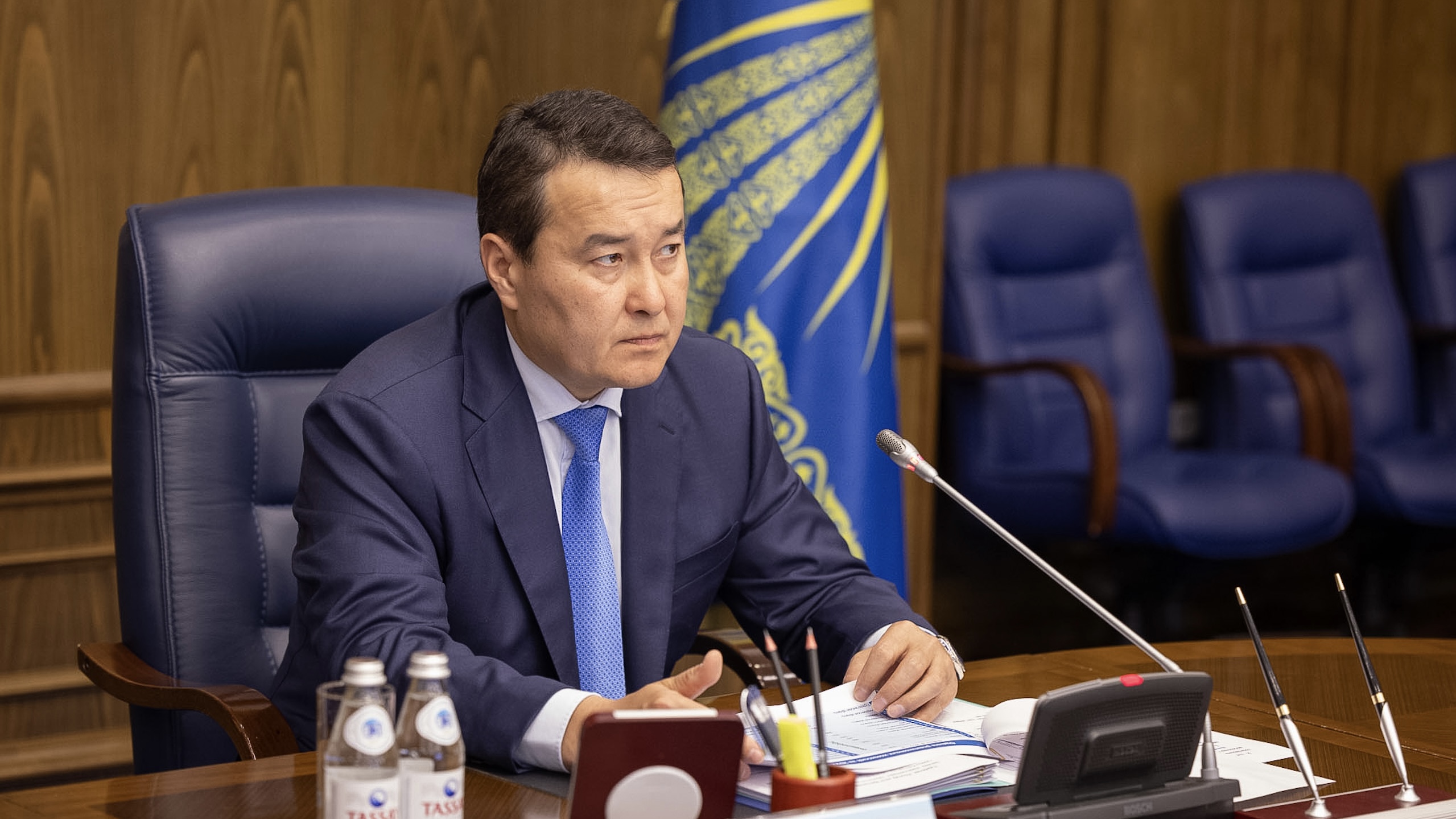
Chairman of the Supreme Audit Chamber Alikhan Smailov chaired the 12th meeting of the Coordination Council of State Audit and Financial Control Bodies with the participation of representatives of the Ministry of Finance, the Ministry of Trade and Heads of regional audit commissions.
The key issue on the agenda was the assessment of the activities of regional audit commissions, the Internal State Audit Committee (ISAC) of the Ministry of Finance of the Republic of Kazakhstan and internal audit services for 2023. The participants discussed in detail the violations identified and the response measures taken, as well as issues of compliance with performance standards and legal requirements in the field of auditing.
As Ardak Tengebayev, a member of the Supreme Audit Chamber, reported, the activities of only 11 out of 20 regional audit commissions (55%) were rated as effective. The rest received a “satisfactory” rating. One of the main parameters is the volume of changes made to the List of State Audit Objects. Replacement within 10% is assessed positively, and anything over 10% is considered a violation, since this carries great corruption risks. In 2023, the audit commissions of East Kazakhstan, North Kazakhstan and Kostanay regions updated their lists from 10 to 30% within a year. The largest deviation was recorded in the Turkestan region - 38%.
“Facts of overestimation of indicators have also been revealed. According to the Audit Commission over Shymkent city, the audit covered 122.6 billion tenge, and the amount of ineffective use and planning amounted to 163.9 billion tenge, or 133.7%, which in itself is nonsense,” he said.
Alikhan Smailov pointed out shortcomings in the registration of audit results in legal statistics bodies, gaps in the work to compensate the budget for identified financial violations and a number of other violations.
In addition, state auditor certificates were revoked from employees of the ISAC and audit commissions in the North Kazakhstan and Almaty regions due to corruption cases.
“This is a very important question. Each such fact must be carefully considered. This is a completely unacceptable situation. It is necessary to pay great attention to the prevention of corruption offenses,” emphasized the Chairman of the Supreme Audit Chamber of the Republic of Kazakhstan.
The Chairmen of the audit commissions, Galymzhan Tapeyev, Dmitry Kostyuk, Aidos Sadykov, Nurzhan Nalibayev, Meiram Musayev and Kairat Seitkozhayev, made comments on the issues raised and the measures taken.
At the same time, the Chairman of the SAC outlined the importance of improving the quality of desk control by the Internal State Audit Committee. Over the past year, notifications from government agencies have become more often issued without justification, and this creates an extra burden on the auditees and the employees themselves.
“The situation when 42% of objections are confirmed in favor of the auditees means that desk control is not working well. This shouldn't happen at all. The Committee needs to work on the mistakes: correct risk profiles, settings in desk control, so that auditees do not receive notifications that are then not confirmed. This is a waste of time and money, a burden on those being inspected,” said Alikhan Smailov.
The issue of digitalization of auditing activities was also discussed at the meeting. Today, the country is implementing a phased transition to real-time auditing using digital technologies.
Thus, full automation of the public procurement web portal made it possible to successfully implement electronic audit at the stage of procurement procedures. As a result, the audit period was reduced and prompt decision-making on requests from individuals and legal entities was ensured.
At the same time, electronic audit was expanded to the financial and economic activities of government institutions. Auditors were trained and the system was tested in pilot mode with the launch of a new electronic audit module in all territorial divisions of the ISAC.
In general, electronic audit showed not only the high efficiency and efficiency of the measures taken, but also, first of all, the minimization of corruption risks by eliminating direct contact with the entities being audited.
This year it is planned to automate the process of monitoring budget requests of ministries. This will make it possible to record violations at the budget planning stage and send notifications about their elimination before the public procurement stage.
In 2025, the information systems “e-Qurylys”, “National Educational Database”, “Medical Equipment Management System”, “e-Agriculture”, “Farm Animal Identification”, etc. will be added to the integration. This will significantly increase control over the use of budget funds.
Alikhan Smailov pointed out the need to fill the risk management system with up-to-date data and maximize the potential of electronic audit.
“It is important to continue work on the digitalization of state audit, as this is one of the most effective measures to increase its efficiency and prevent corruption risks. By automating processes, you can achieve significantly greater results with less effort. This work needs to be accelerated,” emphasized the Chairman of the SAC of the Republic of Kazakhstan.
The meeting also discussed issues of introducing International Standards of Supreme Audit Institutions (ISSAI) into the methodology of external state audit of Kazakhstan. In particular, a model has been prepared for the transition to the formation of a single document based on the results of a state audit instead of numerous audit reports and conclusions. This will strengthen the responsibility of SAC officials and audit commissions, as well as evaluate the personal contribution of each auditor to the results of a specific audit event.
For reference: audit commissions carry out their activities independently of other state audit bodies. They are financed from the local budget and in their work are accountable to the maslikhat of the corresponding region or city.