Ready-made residential buildings have been idle for more than 1.5 years: the results of the state audit in Zhetysu region
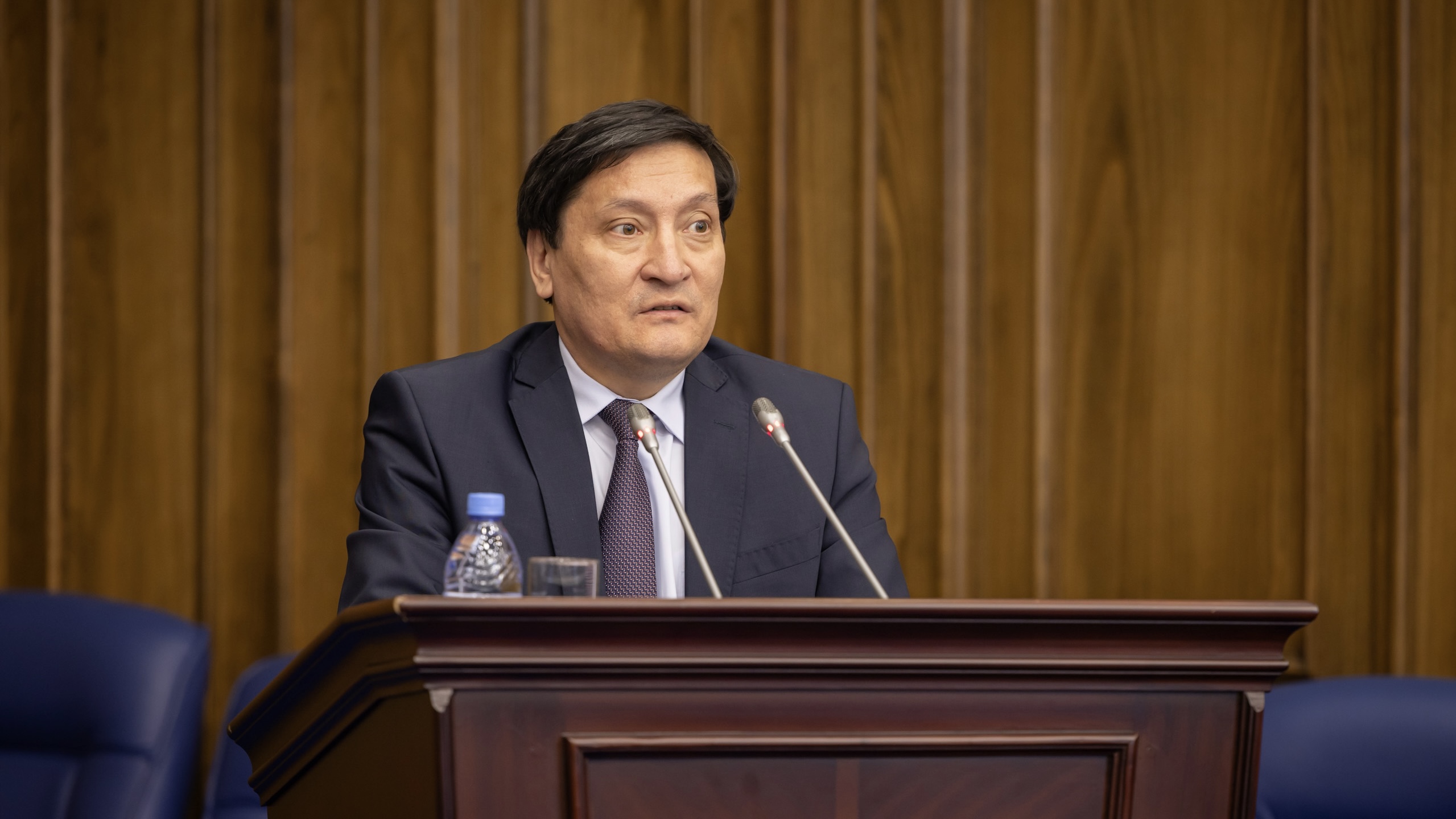
The results of the performance audit on the use of public funds in Zhetysu region for 2022-2023 were considered at a meeting of the Supreme Audit Chamber of the Republic of Kazakhstan.
Materials of the state audit were discussed under the chairmanship of Alikhan Smailov and with the participation of Heads of departments of the Akimat of the region.
The Zhetysu region has a dominant position in the republican commodity production of batteries (100%), sugar (34%) and ceramic plates (21%). More than 40 types of basic building materials and structures are produced here. At the same time, the region is considered agricultural, as it produces about 5.5% of gross agricultural products in the republic.
However, the conducted state audit revealed a number of systemic problems and violations affecting the quality and efficient execution of the budget.
The region remains extremely dependent on funds allocated from the republican budget. Local revenues, excluding transfers, cover only 16% of total expenses. At the same time, the execution of the regional budget is not fully result-oriented. Comfortable formulations of individual indicators allow administrators of budget programs not to take appropriate measures to achieve them. This creates risks of inefficient use of allocated funds.
"You have 32 projects in the regional industrialization map. At the same time, three of them are not functioning, the implementation of three more has been discontinued, and one project is idle. That is, there are no results for seven projects. It is necessary to calculate this in advance, given that each production has a significant impact on the economy of the region. It is necessary to select projects at the planning stage that will work at full capacity. Public funds are also used for this, the infrastructure capabilities of the region are being used," Alikhan Smailov said, addressing representatives of the Akimat of the region.
The state audit also revealed that inconsistency of actions leads to shortcomings in the planning of budget projects. For example, the design capacity of the school in the village of Baskunchi is 300 places while the number of students is 425, the design capacity of the school in the village of 10 years of Kazakhstan is 120 places while the number of students is 69. In total, the deficit in the region is 4,730 student places.
Cases of inefficient use of budgetary funds have been identified, which leads to high expenditures and unnecessary costs. For example, within the framework of the project "Reconstruction of the building of the Akimat of Almaty region", 603 sets of workstations (computer equipment) were purchased, while the actual need according to the approved estimate was only 250 sets. As a result of the inspection, it was revealed that there are 351 unclaimed sets of workstations in the warehouse in the amount of over 150 million tenge.
The delay in landscaping works, as well as heating, water supply and sewerage networks, has led to a disruption in the terms of settlement of commissioned housing. For example, in the Panfilovsky district, four 60-apartment and two 80-apartment buildings have been idle for more than 1.5 years. Their total cost is about 5.8 billion tenge.
The lack of proper analysis of the implementation of investment projects leads to their rise in price and delay in the launch period. In particular, three projects worth 10.5 billion tenge are not working in the region, three more projects worth 1.1 billion tenge have been suspended. The cost of 14 projects increased by almost 55 billion tenge.
The delay in the reconstruction of the Almaty – Aktogay highway led to the failure to develop the budget funds provided for 2022 in the amount of 1 billion tenge. In general, there is a systemic underfunding of the maintenance of roads of regional and district significance.
The audit found that JSC SEC Zhetysu inefficiently manages state assets, investing in unprofitable enterprises, storing unused equipment and implementing budget projects without economic benefit. Of the 31 companies in which the Company has a stake, 19% are inactive, and 16% show negative financial results in the amount of 1.3 billion tenge. For example, a subsidiary of AksuKant LLP should return 2.7 billion tenge of financial assistance, and SEC Zhetysu, despite this, finances it with a loan of 1.9 billion tenge and increases the authorized capital by 1.4 billion tenge.
According to the results of the verification measures carried out by the Supreme Audit Chamber, financial violations amounting to 2.6 billion tenge, inefficient planning and use of budget funds – by more than 20 billion tenge, as well as 226 procedural violations. Possible losses and lost profits for the period under review amounted to 214 million tenge.
The SAC has given instructions to government agencies and the Akimat of the Zhetysu region to eliminate the identified violations and consider the responsibility of officials.