Supreme Audit Chamber has completed the audit of JSC “Samruk-Kazyna”
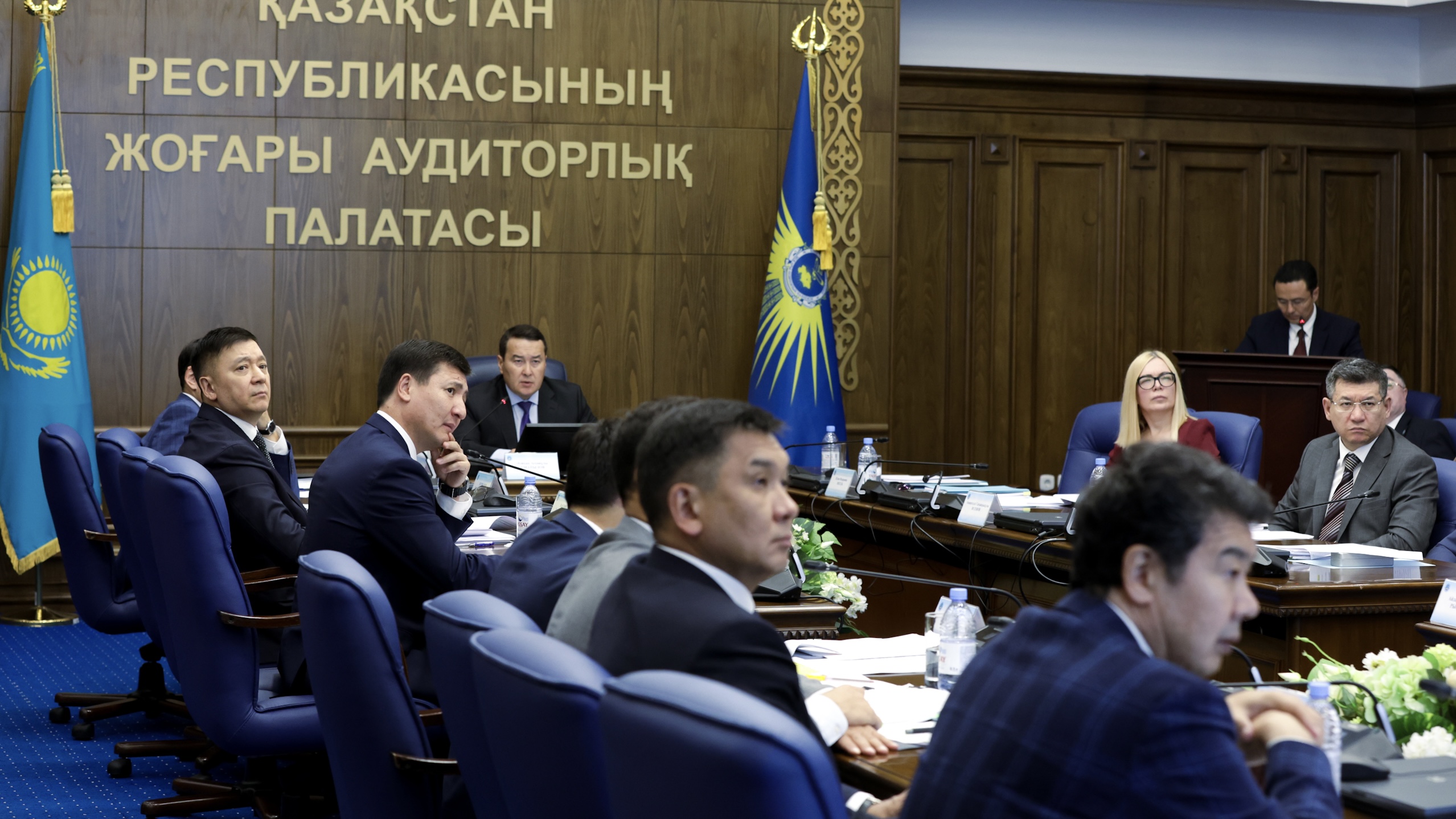
The Supreme Audit Chamber of the Republic of Kazakhstan conducted
a performance audit of the use of state assets and evaluated the system of strategic management in “National Welfare Fund “Samruk-Kazyna” JSC and its subsidiary organizations.
The audit activities covered the activities of the Fund itself as a corporate center, as well as the companies “Kazatomprom,” “Samruk-Kazyna Ondeu,” and a number of others. In total, 18 legal entities were covered by the audit, while a number of requests from deputies of the Parliament of the Republic of Kazakhstan and the public were taken into account during the audit.
Based on the results of 2024, the revenues of the Fund’s group of companies amounted to 16.5 trillion tenge, and the consolidated net profit for the holding’s group of companies amounted to 2.4 trillion tenge.
At the same time, 2.37 trillion tenge was paid to the state by the holding for the audited period, of which 779.9 billion tenge were in the form of dividends and 1.6 trillion tenge in the form of deductions from the transfer of assets into a competitive environment.
In addition to these payments, the Fund implemented the instructions of the President of the Republic of Kazakhstan and the Government for another 673 billion tenge.
At the same time, the auditors identified shortcomings in strategic planning and management in the group of companies of the Fund.
The goal of the Fund’s Transformation Program for 2018–2021 to bring 8 companies to the level of efficiency of foreign analogues was not achieved. The actual benefits from the Program amounted to 154.5 billion tenge, which is half of the planned amount.
An insufficient level of corporate governance in the Fund was noted. In particular, there are facts of improper development of strategic documents and understatement of planned indicators; strengthening of control over the execution of the Development Plan of the holding is required.
Out of 7 information systems, only 4 are used by the Fund. The management reporting system (SAP BPC) operates with violations, and financial reporting for a number of companies is conducted manually.
“Samruk-Kazyna” pays insufficient attention to the systematization of internal regulatory documents, about 15% of which are not used, are subject to revision, or should be written off.
Of the 5 committees under the Board of Directors of JSC “Samruk-Kazyna,” 3 do not operate (on strategy, on control over the implementation of the Transformation Program, specialized committee), and of the 7 committees under the Management Board of the Fund, since 2024, 2 do not operate (on modernization and sustainable development).
As a result, the holding has acquired a cumbersome structure: the Fund’s group includes 326 companies, which are spread across 6 management levels. For the years 2020–2024, the Fund’s group had 23 inactive companies, and based on the results of 2024, 41 companies showed a loss. This indicates significant potential for optimizing the structure of assets and their effective management.
At the same time, it is required to drastically strengthen the monitoring of the implementation of investment projects, since from 2020 to September 30, 2024, only 49 out of 175 projects were completed by the Fund’s group.
In general, based on the results of the audit, the following were established:
- financial violations amounting to 351.8 million tenge;
- inefficient planning and use of funds — 122.2 billion tenge;
- 119 systemic shortcomings were identified.
A number of materials were transferred for the initiation of administrative proceedings, and for certain facts of the identified violations, materials were sent to law enforcement agencies.