Approaches to the digital transformation of public audit in Kazakhstan were presented at the Council of Audit Institutions of the CIS countries
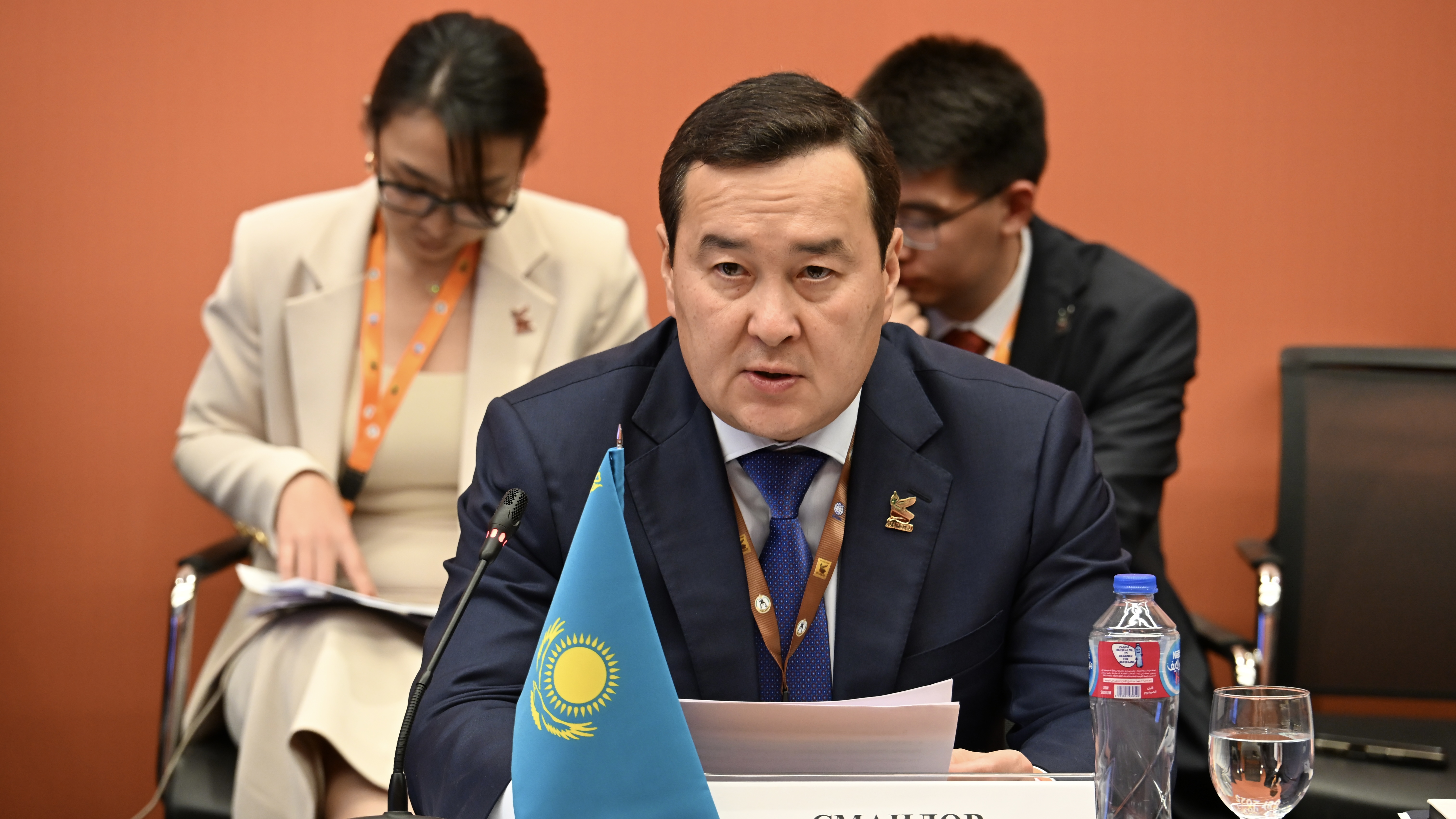
Approaches to the digital transformation of public audit in Kazakhstan were presented at the Council of Audit Institutions of the CIS countries.
The event took place in Sharm el-Sheikh, Egypt, where the 25th Congress of the International Organization of Supreme Audit Institutions (INTOSAI) is currently underway.
Meeting participants reviewed the Council's activity report for the past period, learned about the results of the Working Group on the Development of Public Auditing Standards for CIS countries, approved agreed-upon methodological documents, and endorsed a work plan for the future.
The highlight of the evening was a thematic session on digital transformation in public audit processes, attended by authorized representatives of the supreme audit institutions of Azerbaijan, Armenia, Belarus, Kazakhstan, Kyrgyzstan, Russia, Tajikistan, and Uzbekistan.
As Alikhan Smailov, Chairman of the Supreme Audit Chamber, noted in his report, President Kassym-Jomart Tokayev has set the strategic goal of transforming Kazakhstan into a digital country in the coming years.
To this end, the country has created a Ministry of Artificial Intelligence and Digital Development, launched the Alem.ai International AI Center, has been creating three supercomputer clusters, and developing a Digital Code.
"It's clear that state auditing cannot remain unaffected by these changes. New technologies offer us vast opportunities: conducting real-time audits, using data analytics to identify risks and violations, and applying predictive models," said Alikhan Smailov.
He emphasized that the SAC is taking concrete steps in this direction.
The SAC Integrated Information System, which integrates all audit business processes – from audit planning to quality control – is actively developing. Currently, it has access to 13 information systems of government agencies and covers all recipients of budget funds.
The auditor certification procedure has also been significantly digitalized.
AI agents are currently being developed to assist in the preliminary assessment of the draft national budget and the preparation of the SAC's annual report for Parliament.
"The role of the auditor is gradually transforming. Previously, the primary focus was on collecting, verifying, and analyzing primary data. Today, these tasks are increasingly automated. State auditors can focus on strategic objectives, critical analysis, identifying systemic problems, and developing recommendations," said Alikhan Smailov.
He also added that the role of supreme audit institutions in the new era is not only to assess the effectiveness of digitalization measures but also to alert governments to potential risks. These include the protection of personal data, ensuring cybersecurity and environmental sustainability, and the ethical aspects of using AI.
During the 21st session of the Council, Alikhan Smailov also presented information on the activities of the Working Group on the Development of Public Auditing Standards for the CIS, chaired by the Supreme Audit Chamber of Kazakhstan. It should be noted that the SAI Kazakhstan has chaired the Working Group for 15 years.
This year, three new drafts of methodological documents were approved:
- The first helps supreme audit institutions (SAIs) operate according to uniform rules when conducting audits and working to achieve sustainable development goals;
- The second aims to develop the institutional capacity of SAIs;
- The third defines the basic principles for the formation, use, and evaluation of consolidated financial information during audits.
Following the meeting, it was announced that Kazakhstan will host the next 22nd session of the Council of Heads of Supreme Audit Institutions (Financial Control Institutions) of the CIS countries. The event will take place in 2027.