The results of the tax and customs administration audit were reviewed in the SAC
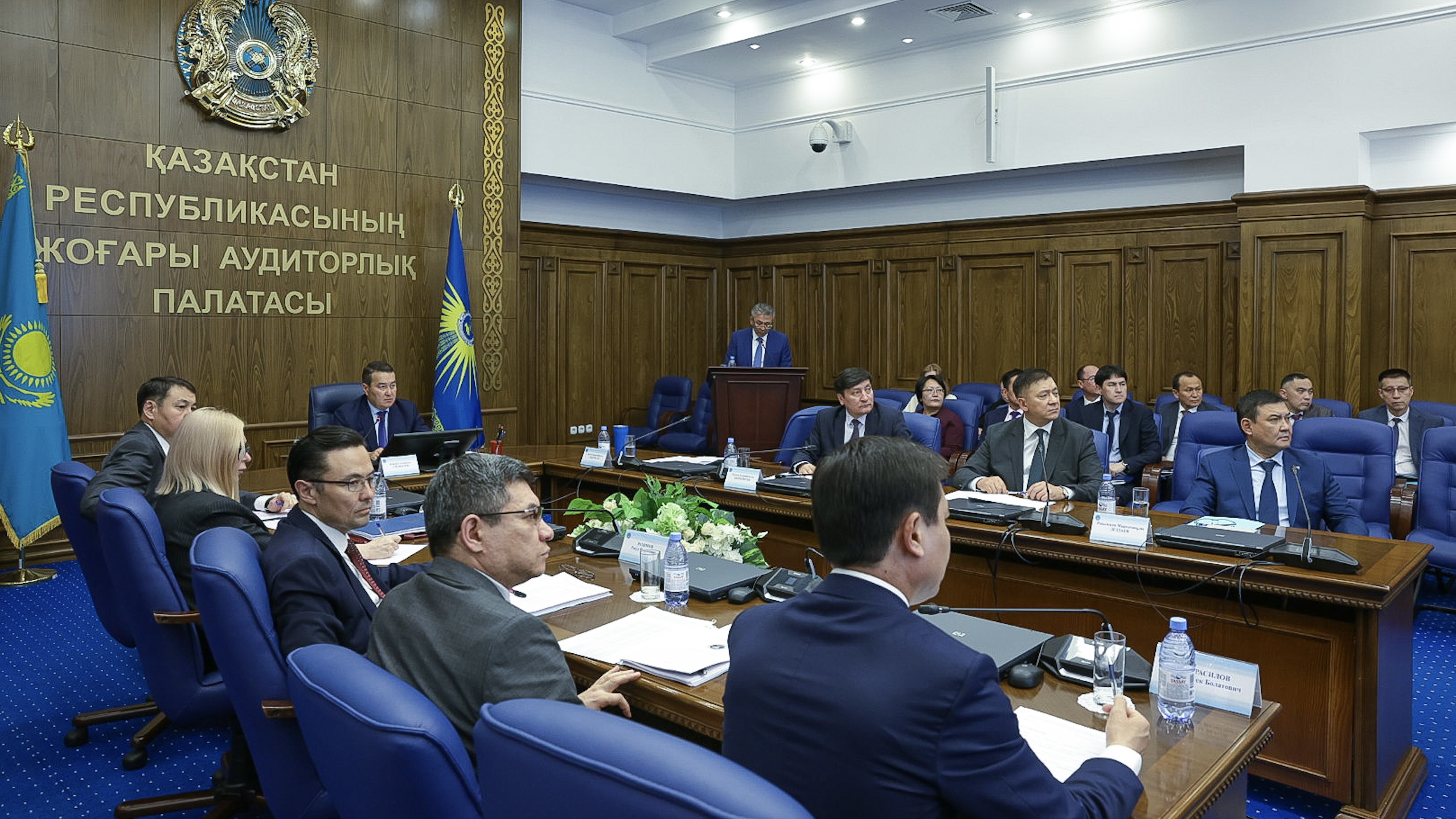
The state performance audit of tax and customs administration has been completed in Kazakhstan. Its results were summed up at a meeting of the Supreme Audit Chamber.
The state auditors found out that, despite the increase in the number of tax audits and the amount of additional charges, the overall efficiency has decreased. Thus, 70% of the additional charges are for comprehensive inspections. However, inspections based on the risk management system (RMS) turned out to be significantly less effective than unscheduled inspections by the decision of the SRC (State Revenue Committee) and in criminal cases.
When checking more than 900 enterprises selected by the RMS, only 46 billion tenge was added. Automation of selection is not effective enough: 61% of taxpayers were manually excluded from the plan for the first half of 2024, 97% from the plan for the second half of the year.
There is also a decrease in efficiency in customs checks. Only 1 participant in foreign economic activity accounted for 70% of the charges. Inspections based on RMS are also noticeably inferior to unscheduled ones.
As follows from the audit opinion, customs administration does not fully take into account the requirements of technical regulations when importing goods. So, in 2024, 6 large importers of clothing from Türkiye imported goods worth $145 million, attaching 150 certificates from the EAEU countries, 104 of which do not appear in official registers. This indicates the risks of importing counterfeit goods, which poses a threat to public health.
The monitoring of 354 large taxpayers shows effectiveness only in relation to the subsoil users – 105 companies. For the rest, the situation requires attention. Thus, during the reporting period, only 33 companies received 35 notices and demands. Only 6 turned out to be effective, for which 643 million tenge was received, which is 0.01% of the total tax revenues of 249 large taxpayers. Thus, monitoring work requires systematization.
As for VAT, in 2024, its late refund amounted to 420 billion tenge, which carries the risk of a penalty of almost 5 billion tenge. An unjustified VAT refund of 375 million tenge was also revealed.
The auditors noted that Kazakhstan is inferior in terms of the number of labeled goods to other EAEU countries. There is still no approved methodology in the republic that would show which goods need to be labeled first.
For example, labeling of tobacco products was introduced 5 years ago, but illegal products continue to be imported into Kazakhstan. In 2024, over 16 million packs of contraband tobacco products were seized, 4.5 times more than 3 years ago.
There is an ambiguous situation regarding shoes: their imports have been decreasing for 4 years, but the import of shoe blanks has increased 13 times. They are massively imported by companies that are not shoe manufacturers, subsequently selling to individuals. A significant annual increase in imports of shoe blanks in the absence of an appropriate volume of their production indicates the possible import of shoes under the guise of blanks in order to evade customs duties.
The SRC does not make sufficient use of the labeling system data. Currently, the absence of Data Matrix codes on packages makes it possible to detect tobacco product smuggling. However, despite this, in 2024, a special mobile application received 246 complaints about cases of tobacco smuggling. However, none of them has been worked out. The potential of labeling remains undiscovered.
Despite the shortcomings and problems, the Ministry of Finance reported positive results in 2024: by reducing the plan, the share of taxes in GDP was reduced from 20.2% to 17.2%, which made it possible to report on the implementation of the plan. For comparison, in 2023, the figure was 19.6%.
In total, according to the audit results, it was established:
- financial violations amounting to 747 million tenge;
- budget revenue losses of more than 2 billion tenge;
- as well as 34 procedural violations and 29 systemic deficiencies.
SAC developed recommendations for all identified problems to eliminate them. This work will be under constant control.