Fire safety in nature
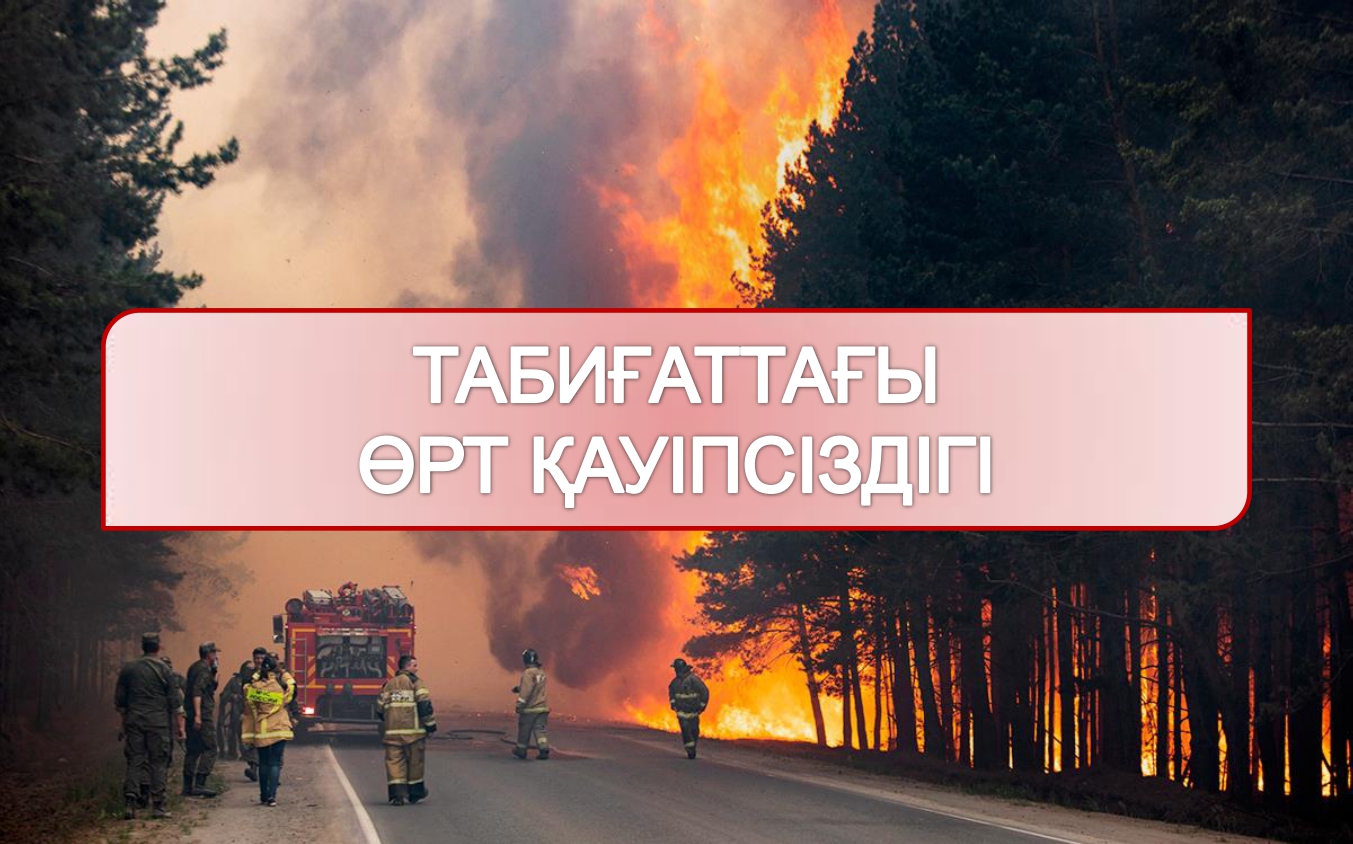
Fire safety in nature
The most important rule that you need to learn when going out into nature is fire safety.
According to statistics, most forest fires occur due to human negligence. In dry hot weather, fires often take on the scale of natural disasters.
In order to avoid a fire in the forest, it is prohibited:
use an open fire in the forest during a fire-hazardous period (mid and late spring, all summer and early autumn);
make a fire in places where there is a lot of dry grass, in coniferous young trees, in forest areas that have not been cleared of felling residues, under low-hanging tree crowns, near wood warehouses;
it is strictly forbidden to visit forests before the cancellation of the fire protection regime, if it is introduced in this area;
take flammable liquids and materials impregnated with them into the forest;
it is forbidden to leave glass fragments in the forest: when exposed to sunlight, these fragments can focus them, which will lead to a fire;
throwing burning matches, smoldering rags, cigarette butts in the forest;
burn dry grass in forest clearings, gardens, fields, under trees;
build a fire in windy weather and leave it unattended.
How to behave in case of a fire in the forest or when a source of ignition is detected:
if you were careless, and the fire still happened, do not waste a minute;
if there is water nearby, pour fire;
water all nearby plants, this will help not to spread the fire;
you can make a broom from green branches and sweep the edge of the fire from the side, obliquely to the flame, while turning the broom all the time;
throw the fire with damp loose earth, you can try to dig in the place of gorenje;
if you managed to extinguish the fire, do not be lazy to report it to the forestry;
if you cannot cope on your own, do not stop trying and wait for the rescue service.
If you find a fire in the forest, the first thing to do is to report the place of the fire by calling 101, 112.
If the fire has flared up too much and you are unable to stop it, immediately leave the scene.
The main types of fire injuries are burns and carbon monoxide poisoning. When providing assistance, it is necessary, first of all, to extinguish the burning clothes on the victims, and to apply sterile bandages on the burned surface. If people are affected by carbon monoxide, they should be immediately removed from the areas of intense smoke and, if necessary, artificial respiration should be performed.
Department of State Fire Control of the Emergency Department of
the West Kazakhstan region