The emergence and spread of steppe fires
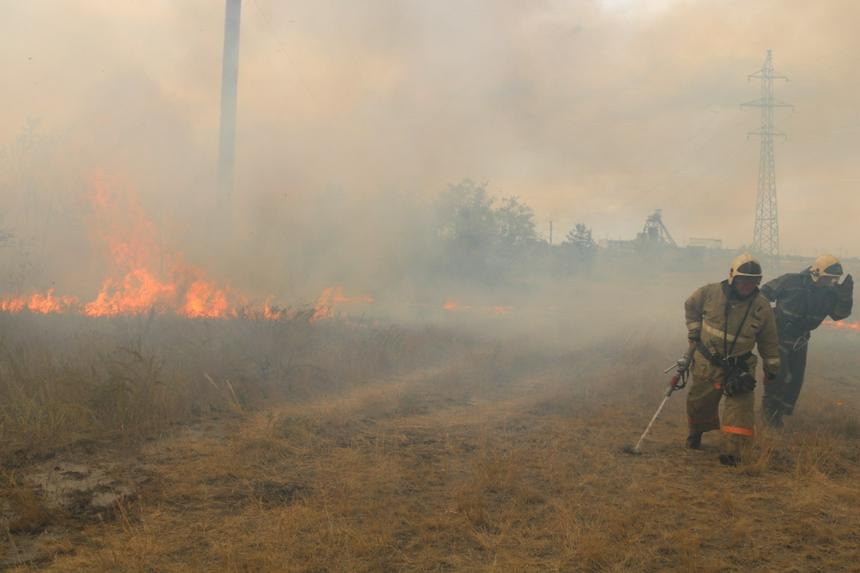
The emergence and spread of steppe fires
For centuries, people have faced steppe fires, but this phenomenon became a truly serious problem only in the 20th century, when the steppe ecosystem practically lost its ability to self-regulate. Human actions have led to the fact that there are almost no large ungulates left in the steppes that eat plants and trample down paths that are a natural obstacle to fire. Grasses growing in the steppes have a high degree of ignition. The resulting fire can instantly spread to other plants, covering large areas. In open areas, fairly strong surface winds prevail, so the speed of fire propagation can reach 10 meters per second. During a steppe fire, the vegetation layer burns out completely, usually the deserted soil is overgrown with wormwood and other weeds. The risk of a steppe fire is especially high in August and September. Apart from this time, field fires often start in late spring, when last year's grass, which was covered with snow in winter, begins to dry out. The cause of fires is most often the annealing of grass, which is out of human control.
Negative consequences
Steppe fires have serious economic and environmental consequences. A fire can break out in a field and destroy crops grown with great difficulty. The fire spreads quickly, and many small animals or steppe birds cannot escape from the toxic combustion products that are generated during a fire. In addition, the smoke from the fire greatly pollutes the atmosphere. Some rangeland owners intentionally burn grass in an attempt to improve the quality of the grass that grows in the area. Such actions only lead to a weakening of the ecosystem. After a steppe fire, the grasses do not protect the soil from erosion, moreover, the fire destroys the steppe felt that covers the ground, which leads to desertification. Special services can quite easily localize a steppe fire, but due to the rapid spread of fire, a fire can be a real threat to forests, residential buildings or industrial buildings that are nearby. Most often, mineralized barriers are created to fight fire through which it is impossible to spread. During a steppe fire, due to the temperature difference, tornadoes sometimes occur, which can throw the fire over mineralized bands and other obstacles. It is dangerous to be close to the steppe fire zone, because in addition to fire, carbon monoxide is a danger.
DEPARTMENT OF STATE FIRE CONTROL DChS WKO