Safety on ice
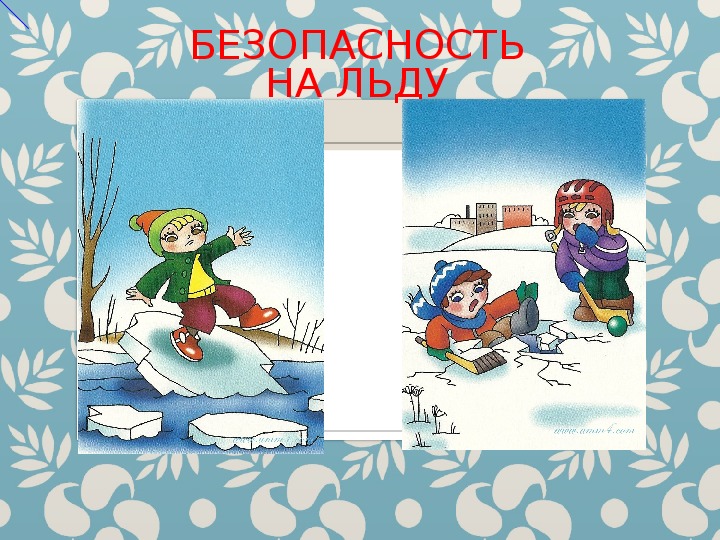
In winter, all water bodies are covered with thin ice. The ice becomes solid only after frosty continuous days are established. Short-term thaws are dangerous, because this leads to a loss of ice strength. Everyone is familiar with the rules of safe behavior on reservoirs, but not everyone follows them. These people go out to the ice fields to famously run on skates, try out hockey sticks, sit with a fishing rod over the hole, or even shorten the path and fearlessly walk straight through the reservoir, without thinking about the consequences.
According to statistics, in most cases of deaths on reservoirs in winter occur with fishermen and with children left unattended, as well as those who neglect the advice of rescuers and go out on weak, loose and fragile ice.
Ice before the onset of stable frosts, fragile. Bonded by the evening or night cold, it is still able to withstand a small load, but during the day, quickly heating up from the melt water seeping through it, it becomes porous and very weak. The safe thickness of ice for one person is 7 cm, the safe thickness of ice for making a pedestrian crossing is 15 cm or more, the safe thickness of ice for driving cars is at least 30 cm.
In order not to cause trouble, it is necessary to observe the basic rules of safe behavior on the ice:
- in no case should you go out on the ice at night and with poor visibility (fog, rain, snowfall);
- when crossing the river, you should use ice crossings;
- you can't test the strength of ice with a kick;
- if, after the first strong blow with a hard object or a ski stick, there seems to be at least a little water, immediately follow your own trail to the shore, with sliding steps, without taking your feet off the ice and placing them shoulder-width apart so that the load is distributed over a large area;
- in case of a forced crossing of a reservoir, it is safest to stick to the beaten paths or go along an already paved ski slope;
- when crossing a reservoir by a group, it is necessary to observe a distance of 5-6 meters from each other.
- If the situation gets out of control, you should call firefighters and rescuers by phone - "101" or "112" ;
Press servise
Of Emeregensy Situations Departament
of Almaty region