Choice of fire extinguishers
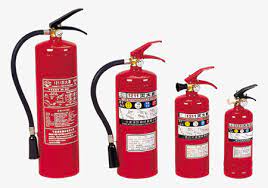
Which fire extinguisher to buy?
First of all, you need to decide on the type of fire extinguisher, and for this you need to know exactly where it is planned to use it (office, electrical room, apartment, summer house, warehouse, etc.), the area of the room, the nature of possible fires, the presence of electrical appliances in the room (computers, various office equipment etc.).
Depending on the type, fire extinguishers are used to extinguish fires of classes A, B, C, E, D.
Powder fire extinguishers (OP) are used for fires of classes A, B, C, E. Their disadvantages can be attributed to the fact that during extinguishing, fine powder easily penetrates inside audio, video and television equipment, disabling it (even if they did not extinguish at all it), as well as the "caking" of the powder (mechanical "shaking" 2-3 times a year and obligatory recharging every 5 years). Operated at temperatures from -40 to + 50 ° C.
Carbon dioxide fire extinguishers (OU) are used for fires of classes B, C, E. They are especially suitable for classes B (flammable and combustible liquids) and E (combustion of household appliances and electrical installations under voltage up to 1000 V). Liquid carbon dioxide is used as a fire extinguishing agent. Such fire extinguishers are suitable for extinguishing electrical equipment, office equipment, for use in electrical control rooms. Mandatory recharge - once every 5 years. Storage and operation temperature from -40 to + 50 ° С.
Air-foam fire extinguishers (ORP) are designed to extinguish fires of classes A and B. It is prohibited to use for extinguishing electrical equipment, because the jet conducts an electric current. Mandatory recharge - once a year. Storage and operation temperature from +5 to + 50 ° С.
What do the letters A, B, C, D, E mean on fire extinguishers?
This is the designation of the class of fire of combustible substances and materials:
A - fires of solid substances, mainly of organic origin, the combustion of which is accompanied by decay (wood, textiles, paper);
B - fires of flammable liquids or melting solids;
C - gas fires;
E - fires associated with the combustion of electrical installations.
D - fires of metals and their alloys;
DChS of Almaty region