"It is necessary to force people to change their attitude to nature" - Shynar Izteleuov.
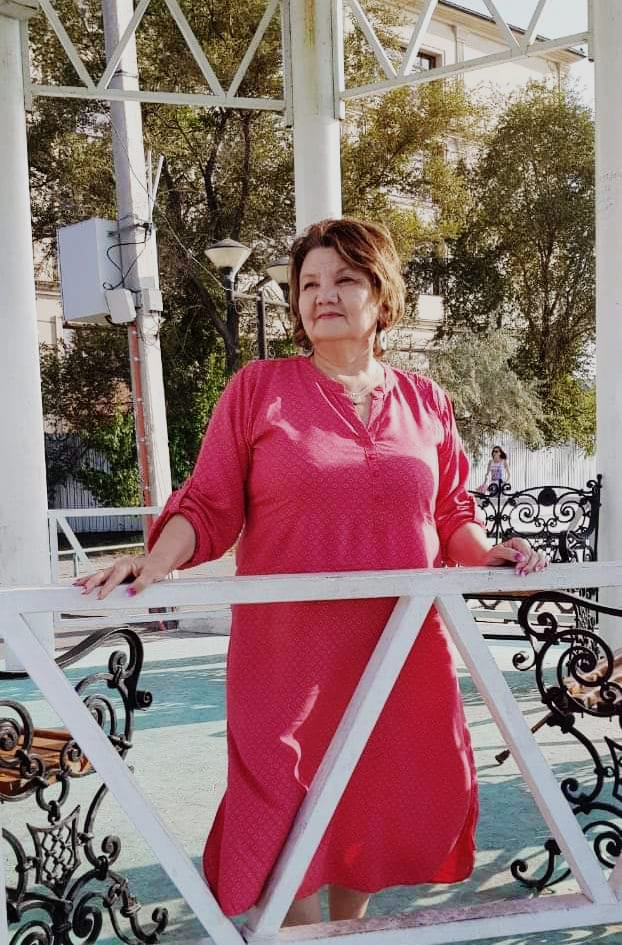
Today we will talk to a wonderful person of an active life position – a woman who has made a significant contribution to the protection of the environment of our country. Namely, in the implementation of the Aarhus Convention and improving the image of Kazakhstan at the international level.
Izteleuova Shynar Ormanbekovna-Director of the Corporate Fund "Zhaiyk-Caspian Aarhus Center" and the Public Fund for Support and Development "TAN". By the way, the latter was formed on this day, 18 years ago.
For reference: Shynar Izteleuova grew up in the village of Kaindy, near the city of Arkalyk, Turgay region, in a family of chemists and biologists. My mother is a teacher, my father is a party worker. The family had five children. They were the first who, despite the sand, planted a vegetable garden in the village. Everyone in the village was satisfied with a rich harvest of vegetables and fruits. My father believed that you need to improve the place in which you live. So, the neighbors began to engage in gardening. Conducted the first water supply.... They planted strawberries and even watermelons.
Perhaps Shynar Izteleuova's craving for nature and "green" comes from her unique family. The" chemistry " of genes after all.
- Shynar Orynbekova, as far as I know, you're majoring. How did you get on the path of an ecologist?
In 1987, she graduated from the Moscow Institute of Steel and Alloys with a degree in Physical and Chemical Research of Metallurgical Processes. She started her career at the Irtysh Chemical and Metallurgical Combine in Pervomaika village, Shemonaikha district, East Kazakhstan region, as a senior laboratory assistant at the Central Plant Laboratory, after which she taught at the Atyrau Institute of Oil and Gas.
I joined the non-governmental sector in 1998, and since 2002 I have been a specialist in the development of NGOs - a coach, coach and mentor. As a trainer, she conducted trainings commissioned by international organizations such as: Urban Institute, Regional Center for Training Civil Servants, Kauenterprat Kazakhstan, Regional Environmental Center of Central Asia, OSCE.
- Tell us more about your activities in the public funds "TAN" and in the KF Zhaiyk-Caspian Aarhus Center.
Today, by the way, is the 18th anniversary of the foundation of the Public Fund for Support and Development "TAN". Our goal is to promote initiatives of citizens and public organizations aimed at solving socially significant issues in the field of ecology, charity, education and culture.
In 2009, at the initiative of the Environmental Forum of NGOs of the Republic of Kazakhstan, the Zhaiyk-Caspian Aarhus Center was established and since 2009. To date, I am the director of the KF Zhaiyk-Caspian Aarhus Center. The activities of the Zhaiyk-Caspian Aarhus centre aimed at creating platforms for dialogue with all stakeholders to solve urgent environmental problems and promoting the implementation of the Aarhus Convention and the environmental legislation of RK. We advise the public, government agencies and business, conduct trainings, and serve as a dialogue platform for building proper relationships between the parties.
The Zhaiyk-Caspian Aarhus Center, which I head from the very beginning of its opening, is a dialogue platform, i.e. we organize a dialogue between all interested parties, business, society and government agencies. Unfortunately, very often we observe that design institutes poorly develop the EIA without taking into account local characteristics – for example, in Atyrau in the summer the temperature very often rises above 40 C, and they take an average temperature of 25 degrees, in Atyrau water sources are very limited, there are no underground sources and in the projects indicate that they will take water from the Kigach-Mangyshlak water pipeline, etc.
During public hearings, the public raises acute environmental and social issues, and it is necessary that in this case everyone understands each other. Russian Russian translation When people ask me what I do, I sometimes answer "I translate from Russian to Russian or from Kazakh to Kazakh". Anything can happen at the hearing, sometimes even people can fight.
- Shynar Orynbekova, in the course of their activities in non-governmental sector and as a member of the environmental NGO forum of the Republic of Kazakhstan was one of the participants in the framework of Alcotexa RK. Tell us about it.
- Starting from the very beginning of the discussion of the new Environmental Code, our Center organized a discussion with environmental activists, also made suggestions and recommendations to the working group on the discussion of the eco-code, but, unfortunately, we did not always receive feedback from them. Yes, the public has the right to make suggestions and recommendations, but, unfortunately, the deputies of the Mazhilis do not always take them into account.
During the development of the first and new ecocodex, the members of the NGO Ecoforum did a lot of work, we constantly met with members of Parliament, participated in the development of the NPA, and trained not only members of the public, but also representatives of government agencies and businesses. Much work is being done to develop mechanisms for implementing international conventions and environmental legislation. We constantly monitor and evaluate the implementation of environmental rights of the population.
- What solutions do you see in the problems of the ecology of Kazakhstan?
- Environmental pollution in Kazakhstan is still high. Air emissions are not decreasing – Atyrau, Pavlodar, Almaty and Nur-Sultan are good examples in this regard. In addition to factories, for example in Almaty and Nur-Sultan, air pollution comes from private homes during the heating period.
If we take water resources – we observe the pollution of rivers by industrial runoff, agriculture, as well as their degradation and shallowing, for example, a strong shallowing of the Ural River, the Caspian Sea. Both large businesses and small and medium-sized businesses (for example, car washes, restaurant businesses, farmers) and the population itself contribute to the inefficient use of water resources: they do not use the drip irrigation capabilities much, continuing to use conventional irrigation from a hose.
Unfortunately, the development of ecotourism also causes enormous damage in terms of the preservation of unique natural and historical monuments. Take, for example, the construction of the hotel near the tract Bazzara. It is impossible to develop ecotourism, destroying the unique nature of our region, this is a crime against the new generation.
- Perhaps one of the reasons is the low self-awareness of citizens? What do you think?
- One of the main directions of our work is, of course, changing the worldview of our society and fostering a careful attitude to nature. After all, everything starts with a single person, all changes should start with yourself. I have repeatedly been abroad and seen the careful attitude of the population to their land, to nature, unfortunately, we have only turned our face to nature. It is very disappointing when our citizens leave garbage behind after a rest in nature. Probably, it is necessary to introduce more stringent mechanisms tangible penalties that would have forced our people to change their attitude to nature.
Abroad, it all started with big fines. And now, try to throw away the wrapper from chocolate or ice cream in Europe-the fine reaches 500 euros. Probably, in order for people to take care of the environment, it is necessary to introduce mechanisms for large fines at the legislative level. Fine not only businesses, but also people. It is only through fines that you can be forced to take care of the environment.
We are still on the way to this. The Environmental code also prescribes the duties of people to preserve nature and respect for nature. Unfortunately, so far our people know only about their rights, but not about their duties. One of the areas of work of environmental activists is to teach people to fulfill their duties.
Our society is still mainly a consumer society. For example, the production of one cotton T-shirt takes 2.7 thousand liters of water, and the fashion industry as a whole accounts for 20% of all water used in the world, 10% of CO2 emissions into the atmosphere, 24% of insecticides and 11% of all pesticides, because factories consume a large amount of electricity and other natural resources to meet our needs. People, buying another new thing, do not think about it at all. Reducing consumption is one of the ways to reduce the pressure on nature and reduce industrial emissions into the atmosphere. We should not only say "We have the right to clean air, clean water, and land!", but we should also ask the question"What can I personally do to preserve nature?".
- Shynar Orynbekova, what are you doing in your free time, in addition to protecting the environment?
- I have four children, three grandchildren. But I am not a classic grandmother, I believe that parents should be more involved in raising children, and grandparents should love and pamper.
I've always been interested in self-development. I have been trained in coaching, human design, mentoring, and mediation. Now I am a qualified coach, coach, mentor, facilitator. I like to knit, sew comfortable clothes from natural fabrics.
I try to pay a lot of attention to the education of young people, I try to support young people in all their endeavors. In 2020, the girls who organized the eco-movement "Atyrau Eco" participated in a startup competition and won a grant for sewing fashionable eco-bags. I was their mentor. Before that, about three years ago, Yerzhan Nuridenov, the founder of the innovative startup company Zhasyl Energy from Atyrau, also won an initial grant for the introduction of technologies for the use of solar panels and wind turbines.
- What advice can you give to the younger generation of Kazakhstanis?
- The young generation of Kazakhstanis is advanced. There are a lot of eco-activists now. Young people do ecological social business, take care of the environment. I would rather give advice to the older generation (laughs). It's time to step back and make way for the young. Even in business. Young people today know several languages and are proficient in IT technologies.
Those young people who already hold a high position in companies and government structures should move away from the realities – "agashki", "apashki" and not be afraid of losing their seat, but boldly apply the international positive experience to improve life in Kazakhstan.
Therefore, young people should be supported. Now everything is changing very quickly – people, relationships, technology, and nature is changing rapidly. You should not slow down the initiatives and ideas of young people from the height of their experience, as a rule - long outdated, but on the contrary, you should learn from them.
Interviewed by Indira Kusainova,
Press Secretary of the Committee for Environmental Regulation
and Control of the Ministry of Economic Development and Trade of the Republic of Kazakhstan