About 126 million tenge was allocated from the WKO budget to subsidize passenger transportation
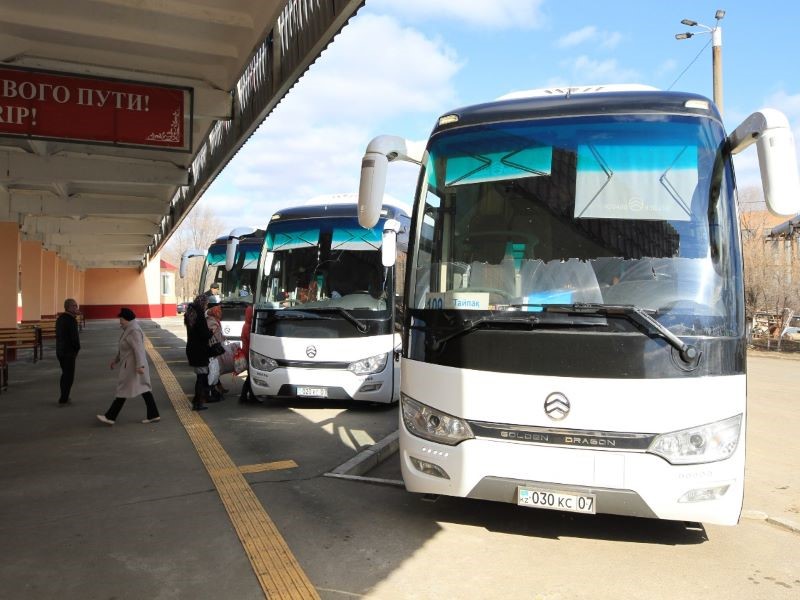
Currently, 9 routes are subsidized in the region. Most of the allocated funds have already been disbursed, Kazbek Meneev, Deputy head of the passenger transport Department, said at an online briefing with journalists.
Kazbek Meneev said that the number of subsidized bus routes is increasing every year. So in 2017 there were 5 routes, in 2018-6 routes, in 2019-7 routes and this year-9 subsidized routes. The amount of allocated subsidies is also increasing, in 2017 – 50, 2018 – 60, in 2019 – 100 and 2020 – 125 million tenge.
- As of November 30 of this year, 101.8 million tenge was spent to subsidize socially significant intra-regional routes. These directions are: "Taipak-Uralsk", "Zhangala-Uralsk", "Zhanibek-Uralsk", "Karatobe-Uralsk", "Shyngyrlau-Uralsk", "Kaztalovka-Uralsk", "Uralsk-Zhalpaktal", "Akzhaik-Uralsk", "Uralsk-Chapaevo". Tenders for these routes were won by five carriers: Kazakhstan Elim LLP, Zhienbay LLP, Zhanibekstroyservice LLP, urazalin B. M. IP and Zhibek-Zholy IP, " Kazbek Meneev said.
He also spoke about the subsidy mechanism.
— In our Republic, transportation tariffs are not regulated by law. Therefore, when the issue of the cost of fares for passenger transportation is resolved, it happens so that our management, for example, indicates the price for bus travel within the region at the rate of 4 tenge per kilometer. Then the carrier comes to us and declares its price, let's say 6 tenge. With a special Commission, which includes the akim of the region, the carrier justifies its price, gives arguments based on which it obtained such a price. As a result, if the Commission finds the carrier's arguments convincing, the tariff is set at 6 tenge per kilometer. The difference between our fare and the carrier's fare is 2 tenge. Here we return to the carrier, — said Kazbek Less.
According to him, this year a tender was drawn for 22 regional bus routes, but, in addition to 9 routes, carriers do not want to work on other areas of the region.
— The main reason for this situation is that the so-called "piracy", or the work of illegal carriers, is developed in this market. Also, competition is created by taxis that are officially operating in accordance with the procedure established by law. The owners of taxis more benefits to the owners of the buses. Here, for example, a bus driver under the contract and by law must travel on the route only from the bus station, and the taxi driver can come for the passenger to his home and take him to where he needs, and not to a certain place. In addition, the difference in payment is small, and the passenger chooses a taxi. Buses go on the route according to the passenger occupancy rate, and a taxi can take one person where they need to, without waiting for anyone — " Kazbek Meneev said.
Kazbek Less said that in the region there are:
— 7 international routes to destinations (Samara, Orenburg, Tolyatti, Saratov, Buzuluk, Kazan, Aksai-Orenburg)
- 2 intercity buses (Atyrau, Aktobe)
- 22 intra-regional
- 37 intra-district
- 34 city routes (28 routes in Uralsk, 6 routes in Aksai)
This year, 10 thousand passengers were transported in the region.