Common methods of financial fraud in modern realities
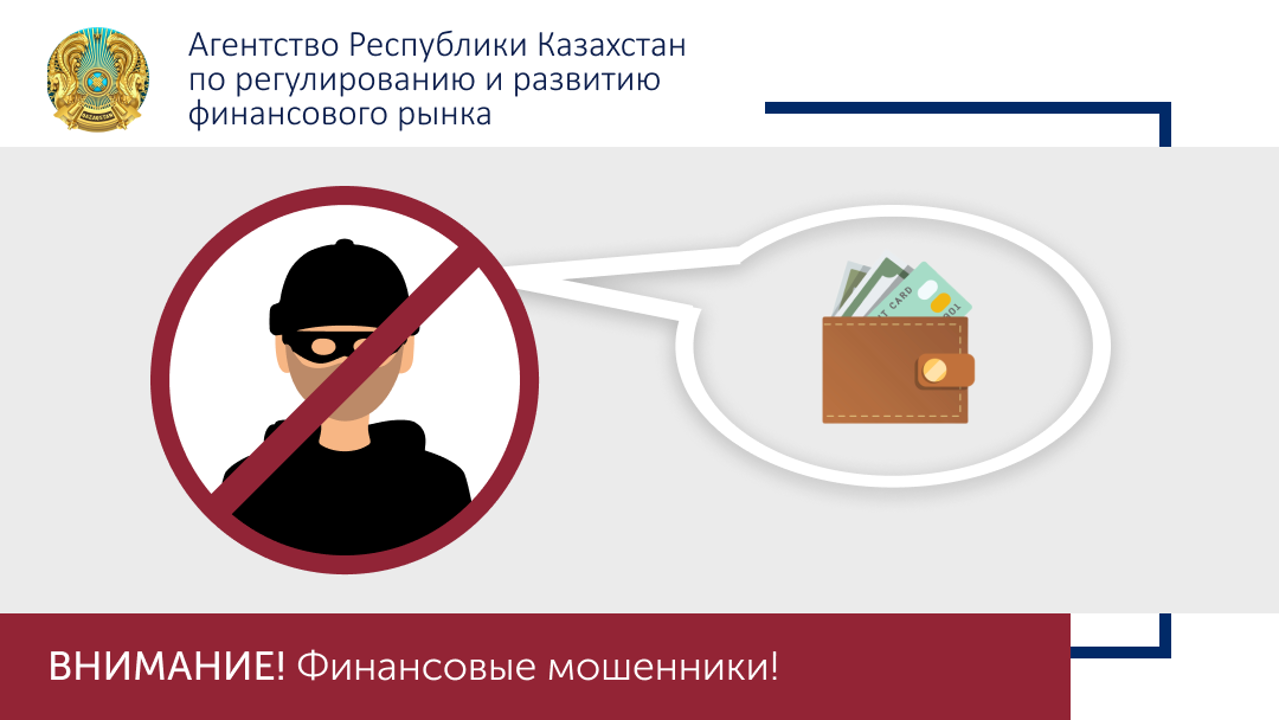
Material Fingramota.kz
Modern scammers are coming up with new ways to deceive citizens every day to gain access to their money. Schemes of deception can be completely different: a bank customer's click on an unfamiliar link, password hacking, an intrusive offer on the network, etc. However, citizens need to remember that your online security directly depends on their level of financial and information literacy.
The most popular schemes of intruders
For example, scammers offer their goods or services on the Internet on various sites at a low price, promising, moreover, fast delivery. The client pays attention to a tempting offer, then he is asked to transfer a partial or full prepayment online to an account that is usually issued to a third party. After receiving the prepayment, orders are not fulfilled. It is very difficult to find such scammers, since they can physically be in another country under encrypted data.
Often, hunters for other people's money call customers of various banks to personal phone numbers. For example, a fake bank manager and the head of the security service may call an online banking user. They report a fictitious story that suspicious financial transactions are taking place on the client's card. To block them, they ask to tell them a three-digit number on the back of the payment card, an SMS code. Having received all the necessary data, the scammers connect to Internet banking and steal all the money on the client's online accounts in a matter of minutes. To use the client's card for their own purposes, fraudsters need to find out its number, the name of the owner, the expiration date, the number on the back of the card.
This type of fraud is also common through a call or SMS, the client is told the supposedly joyful news that his subscriber number has won the company's competition. The prize is offered to be taken from another city or received on a bank card in the form of money. To do this, they request a person's personal data, ask them to download various applications that allow Internet banking to be connected to their device, and steal money.
Scammers can very often transform into buyers. They send links to the seller's phone to fill in the data in order to allegedly pay for the goods. And when the seller follows this link, the money is automatically debited from his account without the knowledge of the owner of the payment card, this happens with the help of special malicious software.
What do you need to know in order not to become a victim of scammers?
First of all, it is impossible to tell anyone your personal data, including details of plastic cards, not to transfer receipts for transfers, and even more so codes and code words.
You cannot trust unverified and dubious sources of information, for example, unknown people, especially on the Internet. Always check any information that relates to money matters.
Without verification, it is impossible to make an advance payment for the goods, try to arrange payment after receiving it. If you have any doubt that the buyer or seller is not sincere with you and may be trying to cheat, then cancel the transaction, do not rush to pay for the product or service right away. You can always wait. As long as you have the money, you are the master of the situation, and it's up to you to decide whether or not to buy this or that product or service.
Always observe the following safety rules:
never click on questionable links, otherwise, we repeat, fraudsters can automatically withdraw money from accounts using your personal data;
do not call back to unfamiliar numbers;
check all sites unknown to you via the Internet, see reviews, analyze information;
change passwords for accessing your online banking services more often;
regularly check the movement of money in your accounts, how much money and when it was received and spent;
if you buy something over the Internet, do not tell anyone the secret code to confirm transactions. It usually comes by SMS;
if suddenly you received an SMS allegedly from the bank about crediting funds to your account, and then an unknown person calls you and says that he credited you money by mistake and asks you to return it, then do not rush to do it. Most likely, they are scammers. That is, the money has not actually been received to you, and the SMS is fake. Therefore, in this case, immediately check all your accounts, look at the statement in the online bank;
if you receive a "Confirm purchase" notification and a code on your phone, and then an unknown person also calls you and says that he mistakenly entered your phone number and asks you to dictate the code to him, then in no case do this. Criminals need your code to debit money from your account or sign you up for an unnecessary paid service.
How do I create strong passwords to my online accounts?
A strong password will help you protect your personal data, keep the confidentiality of your emails, files and other materials and protect yourself from scammers who may try to hack your account.
The password must contain at least 12 characters. It can be any combination of letters, numbers and other characters. The longer the password, the more reliable it is. For example, it can be: a line from a song or poem; a quote from a movie or a speech by a famous person; a quote from a book; a phrase significant to you; an abbreviation (for example, from the first letters of each word in a sentence).
Don't use passwords that are easy to guess. If a person knows you, they can easily pick up a password. For example, according to data from your social networks.
Do not set too simple passwords, for example, Danik123, do not specify your name and year of birth in it. Avoid personal data and common words. It is best to set a password that would be easy for you to remember, but outsiders could not guess it. Change passwords more often.
By creating a strong password, take care of its security. Keep your recorded passwords in a safe place. If you need to write down passwords in order not to forget them, do not leave them freely available, for example, on a desk or computer monitor, in phone notes.
Be vigilant when making any financial transactions online.