Kazakhstan marks its 30th anniversary since the closure of the Semipalatinsk Nuclear Test Site
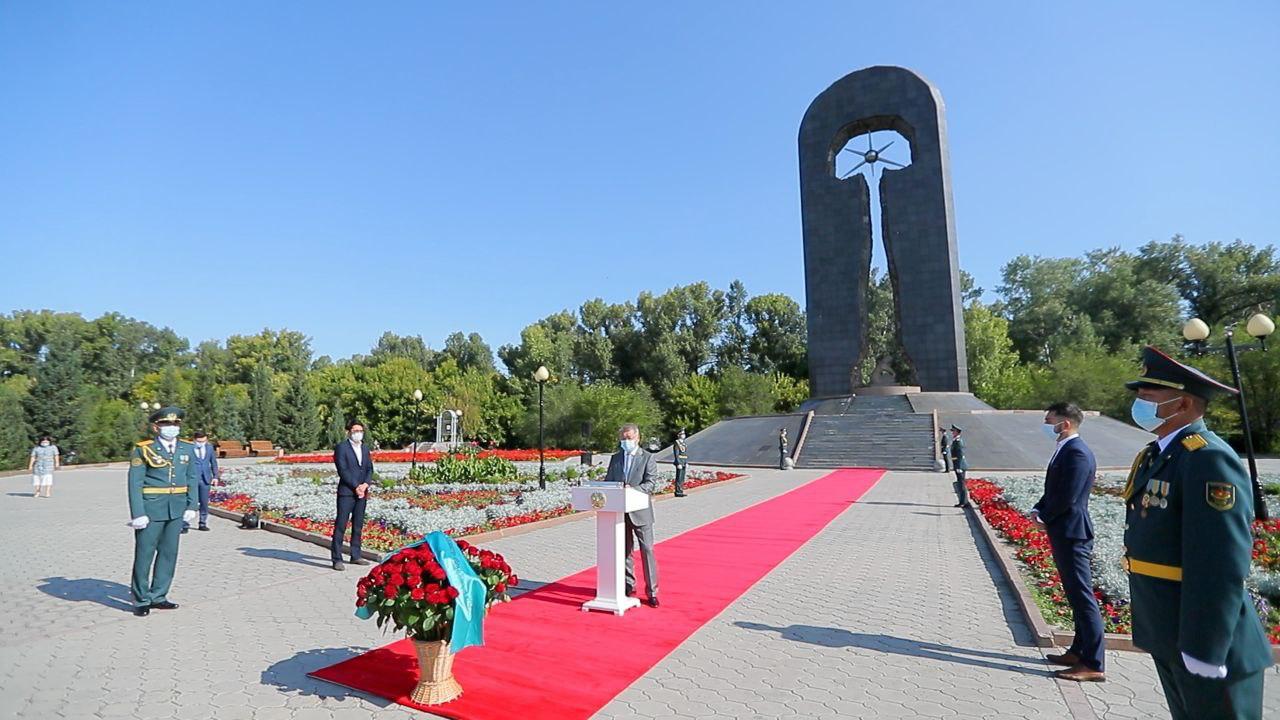
A minute of silence was held in Semey city in honour of the victims of nuclear tests and those people who lost their lives in the explosions in Zhambyl region.
30 years ago, the Semipalatinsk nuclear test site was closed by the Decree of the First President of the country Nursultan Nazarbayev.
It was one of the largest test ranges of the former Soviet Union. From 1949, at least 468 tests were conducted there, during which 616 nuclear devices were detonated on the ground, underground and in the air.
The last explosion occurred on August 19, 1989. At the same time, a unique movement “Nevada-Semipalatinsk” was created that united the victims of nuclear tests around the world.
Today the rally took place in Semey city near the monument “Stronger than death” where the activists of the movement and members of the public laid flowers to the monument and observed a minute of silence in honour of the victims of the nuclear test site and those people killed in the recent tragedy in Baizak district of Zhambyl region.
The rally was attended by Akim of East Kazakhstan region Danial Akhmetov, who stressed the unprecedented decision of Elbasy to close the nuclear test site as a global initiative and marked the beginning of a new era - the era of peaceful atom.
“This was the most crucial step at the beginning of establishing our country. The historic decree followed by the closure of the nuclear test site in Semipalatinsk and it is one of the most important events associated with the declaration of independence. There are no more explosions at the test site, but life is going on there providing a wide variety of opportunities for using nuclear energy for peaceful purposes,” he highlighted.
The head of the region noted that today the Kurchatov National Nuclear Center, which operates on the basis of the closed test site, is conducting research of a completely different nature - its scientists have implemented a number of promising and, most importantly, useful projects that have nothing to do with the military and defense industry.
Moreover, in 2008, the efforts are under way to create engineering protection structures to prevent access of the population and livestock to the most contaminated areas of the test range.