Developing scientific literacy through multi-level PISA test questions
Today, the quality of education is largely determined by the level of functional literacy learners demonstrate. Theoretical knowledge alone is no longer enough: the priority has shifted to the ability to apply knowledge in real-life situations.
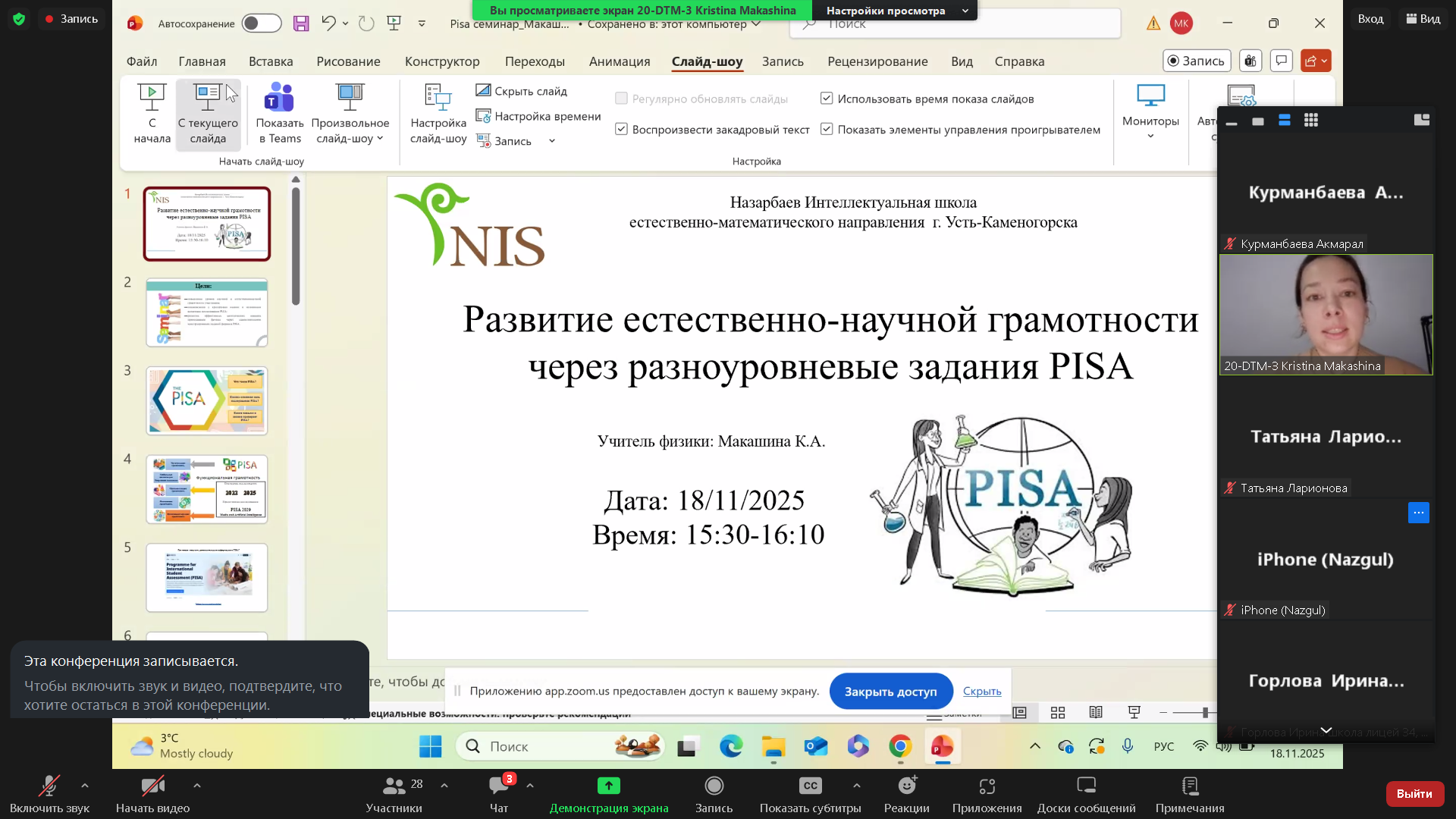
Örken East Kazakhstan Regional Scientific and Methodological Center for Informatization and Education Development of Education Administration of East Kazakhstan region, jointly with a teacher of physics Kristina A. Makashina from Nazarbayev Intellectual School of Natural Sciences and Mathematics of Ust-Kamenogorsk city conducted a webinar on the topic: “Developing scientific literacy through multi-level PISA test questions” for teachers of physics from schools of the region with the Russian language of instruction.
This webinar focused on practical application of theoretical knowledge in scientific literacy (physics) in the PISA task format, as well as on mastering the methodology for developing own tasks aligned with required topics.
The objectives of the webinar:
- to enhance the level of scientific literacy of the participants of the webinar;
- to familiarize teachers with PISA assessment criteria and key components of the PISA study;
- to develop effective methodological skills in teaching physics through the independent creation of PISA test questions.
Expected outcomes:
According to the results of the webinar, the participants will:
- be able to apply the acquired knowledge to create educational tasks aimed at developing scientific literacy, taking into account the academic needs of students;
- master the algorithm for independent developing physics tasks in PISA format, focused on real-life situations, interdisciplinary connections and practical application of knowledge;
- learn to formulate questions of various levels of complexity and develop assessment criteria for them;
- enhance methodological competencies related to the use of PISA tasks in the educational process in physics;
- implement the developed materials into their teaching practice to foster key competencies of the 21st century in students.
Developing multi-level tasks based on PISA methodology contributes to strengthening scientific literacy, cultivating critical thinking, problem-solving skills and the ability to apply scientific knowledge in real-life situations.