Меню
Overview
Zhambyl region is one of the southern regions of Kazakhstan. The region borders Chüy and Talas regions of Kyrgyzstan in the south.
The area of the region is 144.3 thousand square kilometers. It is the 10th largest region in the country. The region ranks third in population density with 7.6 people per square kilometer in 2015, behind only the South Kazakhstan and Almaty regions.
In early 2016, the population of the region amounted to 1.111 million people. The rural population is larger than the urban population, 59.5% to 40.5%.
The dominant ethnic group of the region is Kazakhs (72.6%), followed by Russians (10.3%) and Dungans (4.9%). Also there is a significant number of people of Turkish, Kurdish and Uzbek descent compared to other regions.
Administrative Structure
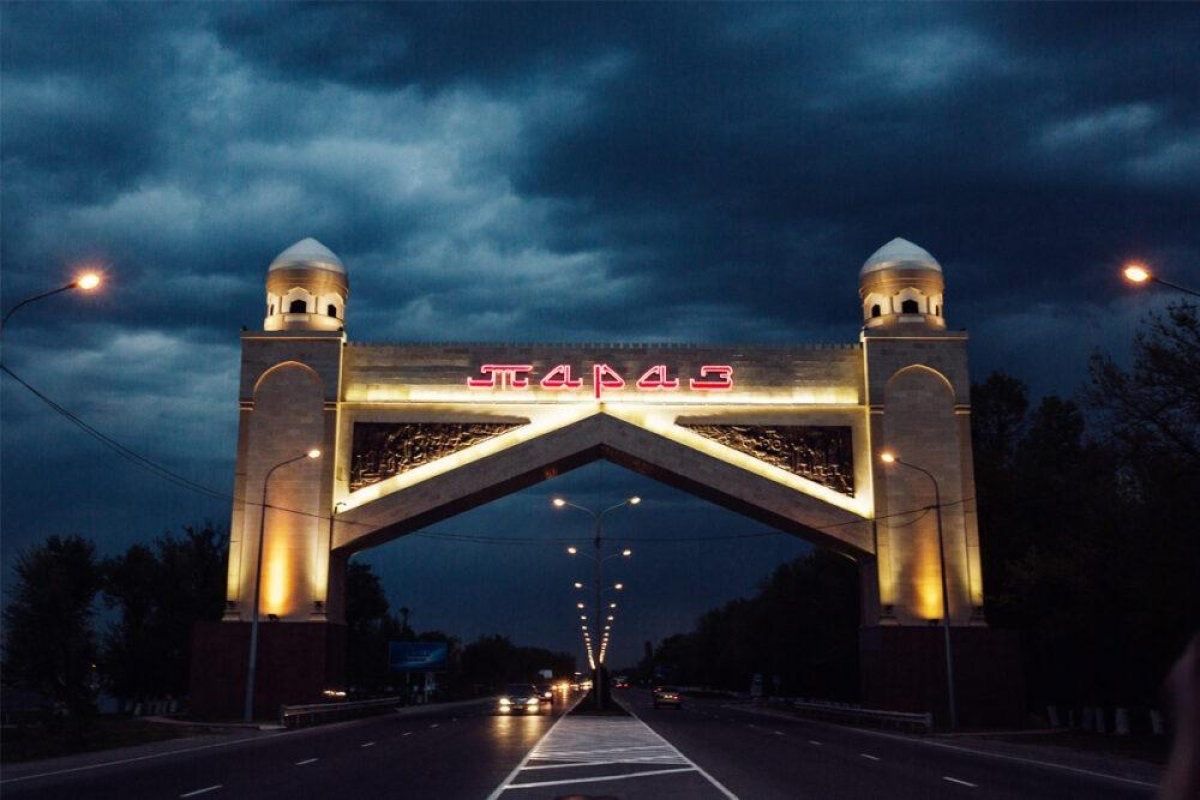
The administrative center of the Zhambyl region is Taraz. The region is divided into 10 rural districts. In total, there are 4 cities and 373 rural settlements in the region.
At the beginning of 2016, the population of Taraz was 362.9 thousand people. Three other cities of the region are the cities of district subordination, these are Shu (35.9 thousand people), Karatau (28.8 thousand people) and Zhanatas (21.9 thousand people).
Regional Center
Taraz is one of the oldest cities in Kazakhstan. It is located in the south of the region, almost on the border with Kyrgyzstan. The city stands on the Talas river in the foothills of the Western Tien Shan Mountains on the southern side and the Karatau Mountains on the western side.
Researchers believe that urban culture in this place appeared in the 5th century BC in the times of the Saka and the Wusun. The first written references to the city date back to the 6th century. Throughout the history of Kazakhstan, Taraz was a major trade and political center.
From 1465 to 1718, Taraz was part of the Kazakh Khanate, after that it fell under the rule of the Dzungars (an ancient nation whose descendants are modern Kalmyks) for several decades. Later, until the second half of the 19th century, the city was part of the Kokand Khanate, and in 1864 was captured by Russian troops.
At that time the city was called Aulie-Ata, which means “holy father (grandfather)” in honor of Karakhan, the founder of the Karakhanid dynasty.
Later in 1936-1938, already being a part of the Kazakh SSR, the city was called Mirzoyan. In 1938, the name of the city was changed to Dzhambul to honor the famous Kazakh poet Zhambyl Zhabayev.
In 1939, Zhambyl became the center of the Zhambyl region.
In 1997, the city received its ancient name of Taraz back.
History
The Zhambyl region was formed on October 14, 1939. Back then, it was called Dzhambulskaya oblast. The region was formed from the districts separated from the South Kazakhstan and Almaty regions.
Later, the region underwent a number of other administrative transformations.
In 1993, the name of the region was changed from Dhambulskaya to Zhambyl.
Climate
The Zhambyl region is mostly plains. The northern part of the region from the Shu River valley to Saryarka is occupied by the clay desert Betpakdala. The Moyinkum desert stretches to the south of the Shu River. The southern territories of Zhambyl are occupied by mountainous areas: the Karatau Mountains are in the west, the ridges of the Kyrgyz Alatau are in the south, the Zheltau, Aitau and other mountains are in the southeast.
The region is not rich in water resources. The main rivers of the region are the Shu, Talas, and Asy. Numerous lakes, the largest of which are Akzhar, Aschykol, Bibikol, Akkol, tend to dry up in summer and turn into salt plains. A number of reservoirs have been created in the region, the largest of which are Tasotkel and Ters-Ashibulak.
Salt wormwood and combined cereal-wormwood vegetation prevails in the northern areas, saxaul thickets are prevalent in the sands, and toga forests are found in the river valleys. Shrubs and deciduous forests grow in the mountains and foothills. The region is a home to argalis, leopards, bears, wolves, and foxes. In general, the flora consists of more than three thousand species.
The climate of the Zhambyl region is continental. Winter in the north is cold and snowy, in the southern areas the winters are short and rather mild. Summers are very hot and dry throughout the region.
Depending on the districts, precipitation varies: in the north it is extremely low, and in the southern foothills, on the contrary, precipitation levels are quite high, up to 900 mm per year.
The region possesses the richest deposits of phosphate rock (more than 70% of the total national reserves), fluorspar (68% of the total reserves), gold, copper, magnesium. The region also has deposits of gypsum, barite, saltpeter, technical stone and various construction materials.
Economy
The Zhambyl region is an industrial and agrarian region of Kazakhstan. The region has a diversified industry. In 2015, the industrial production amounted to 274.5 billion tenge.
The manufacturing industry is the most prevalent one, it accounts for 74.7% of industrial production. Chemical, metallurgical and food industries prevail among the branches of the manufacturing industry. The largest enterprises in the region are Kazphosphate, Eurochem-Fertilizers, AmangeldyGas, Kaz Ferro and others.
The key activities in agriculture are irrigated farming and pasture livestock breeding. Gross output of agriculture amounted to 172.364 billion tenge in 2015, with livestock and crop production occupying approximately equal shares, 53.4% and 46.6%.
Tourism
Due to its rich history, the region has a significant tourism potential, both for domestic tourists and visitors from abroad. A section of the Great Silk Road passed through the region and its administrative center Taraz, where a number of interesting historical monuments are located. The region itself is included in the State Program for Revival of Historical Centers of the Silk Road.
In addition, 550 years ago, the Kazakh Khanate was founded between the Talas and Shu rivers in the Zhambyl region. In 2015, a 30-meter monument depicting the founders of the khanate, Zhanibek and Kerey khans, was built in Taraz.
In honor of the 550th anniversary of the Kazakh Khanate, the Ancient Taraz archeological park was opened, a great piece of interest to history buffs.
The traditional monuments of the region include a number of mausoleums of not only cultural and historical but also religious significance. This is, first of all, the Aisha-Bibi Mausoleum located 17 km from Taraz (11-12th centuries), Babadja-Khatun Mausoleum (11th centuries), Karakhan Mausoleum (11-12th centuries) and others.
In total, there are more than 1000 monuments in the Zhambyl region, including 844 monuments of archeology, 111 monuments of history, 97 monuments of architecture, and 28 monumental art pieces.
There are also three state nature reserves in the region: Berikkara tract, Karakunuz tract, and Andasai state nature reserve with their own unique flora and fauna.
Official website of the Zhambyl region’s Akimat https://www.gov.kz/memleket/entities/zhambyl?lang=ru