Меню
General information
The West Kazakhstan region (WKO) is located in the depths of the southern part of the temperate zone of the Eurasian continent and is 2.5 thousand km away from the Atlantic Ocean and its seas. The total length of the region's border is 2274 km. A significant part of the region's borders, 1400 km, falls on the state border with the Russian Federation: in the north and northwest it borders on the Orenburg, Samara and Saratov regions, in the west - on the Volgograd and Astrakhan regions, in the south and east it borders on Atyrau and Aktobe regions of Kazakhstan (874 km).
The territory of the region is 151.3 thousand km2, which is 5.9% of the territory of Kazakhstan, this is the 8th place in the country. It could fit such Western European states as Belgium, the Netherlands, Denmark, Luxembourg and Switzerland combined. WKO stretches from west to east for 585 km and from north to south for 425 km. The region is located in the extreme west of Kazakhstan, in the basin of the middle reaches of the Zhaiyk (Ural) River between 51º35ʹ and 48º north latitude, 45º30ʹ and 54º35ʹ east longitude.
The population of the region is 688.1 thousand people (as of January 1, 2023), including urban - 386.7 thousand people (56.2%), rural - 301.4 thousand people (43.8%). The population density of the region is 4.4 people per 1 km2, which is below the national average (7.2). The natural increase in the population amounted to 6.7 thousand people.
In the ethnic structure of the population of WKO, Kazakhs make up 80.0%, the share of Russians is 14.8%, Ukrainians are 2.3%, Tatars are 1.2% and others are 1.7% (2022).
Administrative division
The administrative-territorial division of the WKO includes 12 districts, 2 cities (of which 1 is of republican and regional subordination), 147 rural districts, 3 settlements and 416 auls. In addition to Uralsk, with a population of 322.7 thousand people (density 461 people per 1 km2), another city in the WKO is the city of Aksai with a population of 35.1 thousand people (2022).
Regional center
The city of Uralsk is located in the north of the West Kazakhstan region, it stands on the right bank of the Ural River and on the left bank of the Chagan River.
The city of Uralsk was founded in 1613 as a fortress, originally known as Yaitsky town. In 1773-1775, this territory became the center of a peasant uprising led by Yemelyan Pugachev against Catherine II. After the suppression of the uprising in 1775, by order of Empress Catherine, the Yaik town was renamed Uralsk, and the Yaik River was renamed the Ural.
The city of Uralsk, which has become one of the largest cities of the Russian Empire since 1864, is steadily developing as an administrative, cultural and trading center. Since then, the city has consistently developed as a transport and industrial center.
After the renaming of the Ural region in 1992 into West Kazakhstan, Uralsk remained its administrative center.
History of the region
Information of a scientific and geographical nature about the territory of the West Kazakhstan Territory first appeared in the 16th century. Initially, the West Kazakhstan region was called the Ural region. As a separate administrative-territorial unit within the Russian Empire, the region was formed in 1867-1868.
In 1920, the region was transformed into the Ural province as part of the Kirghiz ASSR. In general, since 1938 the boundaries of the region have not changed. From 1932 to 1962, the region was renamed West Kazakhstan. From 1962 to 1992, this region was called the Ural region, in 1992, by decision of the Parliament of Kazakhstan, the region received its modern name.
Natural and climatic conditions
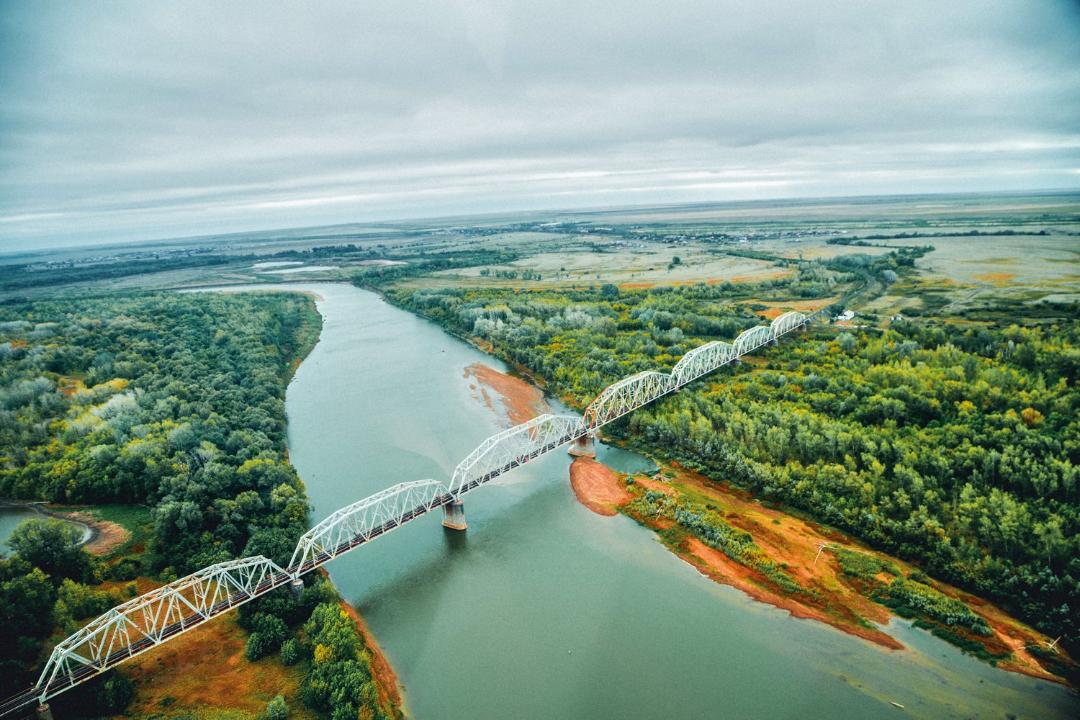
The West Kazakhstan region is located in the extreme north-west of Kazakhstan in the basin of the lower part of the middle reaches and the upper part of the lower reaches of the Zhaiyk (Ural) River. Microlocation: the region is located in the northern part of the Caspian tectonic depression.
A distinctive feature of the territory of the region is its flatness, broken by small uplifts along the northern and eastern outskirts. Five geomorphological regions form the surface of the region: the Common Syrt, the Sub-Ural Plateau, the Pre-Syrt ledge, the Caspian lowland, the valley of the middle and lower reaches of the Zhaiyk River (Ural). The highest point of the region is located in the Burlinsky district, with a maximum altitude of 279 m - Mount Aktau. On the Poduralsky plateau, according to the absolute height of the points, a number of hills with heights of more than 200 m are noted: mountains Aydarly, Shatyrly, Toratbasy. In the Common Syrt: the mountains of Ichka, Eyed, Tuyetau, Svistun. On the Caspian lowland: Sasai, Santas, Small Bogdo mountains.
In total, 196 rivers flow through the territory of the region, 8 of which have a constant flow. Large rivers include only the Urals or in Kazakh - Zhaiyk. Ilek, Utva, Barbastau, Derkul, Chagan, Karaozen, Saryozen, Bagyrdai, Kushum, Ankata, Kaldygayty, Buldyrty, Olenty and others are classified as small rivers with a basin area of at least 50 km2. There are about 3260 lakes in WKO, of which 97% have the mirror area is less than 1 km2. A characteristic feature of the region's lakes is their lack of drainage. Large lakes; Shalkar, Aralsor, Big and Small Sakryl, Batyrbay, Botkol, Balykta, Zhaltyrkol, Sulukol and others.
The soil cover of WKO is dominated by the chestnut type with its subtypes, and in its northernmost part there are southern chernozems and low-humus chernozems. In addition, there are azonal soils.
In terms of vegetation cover, the region contains elements of three zones. In the north, there is a zone of real steppes, a significant northern part of the region passes into a zone of desert steppes or semi-deserts, and the northern border of deserts passes through the southern regions.
Forb-fescue-feather grass, bluegrass-sagebrush and wheatgrass-sagebrush communities predominate on the territory of WKO. In the floodplains of the Urals and other rivers, white poplar, black poplar, elm, willow (willow) aspen forests grow. The floodplain oak forests grow in the northern part of the region.
The West Kazakhstan region is inhabited mainly by steppe animals. To date, more than 400 species of vertebrates are known in the region, including 75 mammals, 314 birds, 15 reptiles (reptiles), 7 amphibians (terrestrial), more than 50 species of fish and one species of cyclostomes. The most widespread are rodents, the giant mole rat, the hare, hare, tolai, of the carnivores - the fox, ermine, and in some places the wolf. Huge herds of saigas, steppe antelopes, graze in the south-west of the region, one of the oldest representatives of the animal world and it is the same age as the Ice Age.
The climate of the region is characterized by a sharp continental, an abundance of sunlight, frequent dry winds, intense evaporation, little snow, high wind speeds and very limited reserves of productive moisture in the soil. Average monthly wind speeds in summer are 3.5-4.5 m/s, in winter - 4.5-5.5 m/s. In winter, a spur of the Asian anticyclone penetrates the territory of the region, accompanied by frosty clear weather. During the summer season, the territory is affected by high pressure cores of Azores origin, as well as superheated air masses passing from the Turan lowland, which causes drought.
The coldest month is January, the temperature of which ranges from -9 to -13°C. In winter, the minimum air temperature often drops to -30°C, -35°C, the absolute minimum in some very severe winters reaches -37°C, -44°C. The average temperature of the warmest month, July, is +22°C, +25°C. The absolute maximum air temperature is +41°C, +46°C.
Annual rainfall ranges from 330 mm in the northeast of the region to 200 mm in the south. During the warm period of the year, 125-215 mm of precipitation falls, and they fall unevenly throughout the year.
WKO has significant natural resources, which is one of the important conditions for the development of territories. The presence of salt domes in the area gives grounds to search for oil and gas. The subsoil of the region is rich in oil and gas condensate; a significant part of all republican reserves of this raw material is concentrated here. The Karachaganak field is one of the richest in the world. Oil and gas deposits have been discovered in the Kamenskoye, Chinarevskoye, Teplovskoye, Chuvashinsky, Tsyganovskoye, Darya, Ulyanovskoye and Gremyachinskoye fields. Promising Chingiz, Becket and Kubasai oil and gas deposits in the east of the region. There are deposits of table salt and building materials in the region.
Economy
The wealth of natural resources determines the structure of the region's economy, so the region's economy has an industrial and agricultural focus.
At the end of 2022industrial products were produced in the amount of 3912.9 billion tenge, including in the mining and manufacturing industries - by 3552.2 and 279.9 billion tenge, respectively.
The industry is represented by enterprises of oil and gas production, oil products processing, mechanical engineering, metallurgy, defense, clothing and food industries. There are also enterprises for the processing of agricultural products, construction, production of building materials, etc.
The main share of industry falls on the mining industry (more than 90%).
In the manufacturing industry, at the end of 2022, products worth 279.9 billion tenge were produced, the index of physical volume of production amounted to 105.3% due to an increase in production in the engineering industries - by 16.8%, metallurgy - 1.2 times , food products - by 2.9%, building materials - by 0.6%.
The largest enterprises in the region are Karachaganak Petroleum Operating, Condensate Holding, Zhaikmunai. The enterprises of the manufacturing industry include the Ural Plant Zenit, Gidromash-Orion-MZHBK, etc. The processing of agricultural products is carried out by LLP Kublei, the leader of the domestic market for the production of canned products. In order to ensure the growth of industrial production, a number of large projects are being implemented.
Gross agricultural output in January-June 2022 amounted to 79.9 billion tenge, of which the share of livestock was more than 90%.
Tourism
The West Kazakhstan region has the territory with the widest opportunities for the development of the tourism industry.
Over the past 5 years, there has been an increase in the number of visitors to inbound and domestic tourism by 15%. The increase in visitors in 2021 was 84% and in the 3rd quarter of 2022 increased by 52.3% and amounted to 78.5 thousand people. To date, the number of accommodation places is 89 units in which there are 2,183 rooms, with a one-time capacity of 4,456 beds. The volume of services rendered by the placements is 2,681.4 million tenge. The occupancy rate of hotels was 19.5%.
For reference: By the end of 2021, the number of visitors increased by 84% and amounted to 76,180 people (internal - 69,592, inbound – 6,588).
The urban culture of Uralsk is also developing intensively, today the city is more than 400 years old. In the historical city, many buildings have been preserved since the XIX century: the House of merchants Vanyushins, the House of Tukhvatullins, the House-Museum of E. Pugachev, the cinema Building. Gagarina, the Church of the Intercession of the Most Holy Theotokos, the Red Mosque, the Karev House and others. A.S. Pushkin, M.A. Sholokhov, V.A. Zhukovsky, V.I. Dahl, L.N. Tolstoy, I.A. Krylov and many other outstanding figures of culture, science and art visited Uralsk at various times. Within the framework of the State Program for the development of the tourism industry of the Republic of Kazakhstan for 2019-2025, the West Kazakhstan Historical and Cultural, Architectural and Ethnographic Museum-Reserve Khan Ordasy and the Cluster of Youth Tourism are included in the TOP-50 of the regional map of tourism.
Khan Ordasy Museum –Reserve, according to the implementation of the state program, work has begun on the construction of a visit center in the Khan Ordasy Museum–Reserve, which is a key historical and cultural object of Western Kazakhstan, the attendance of which will increase to 50,000 tourists per year (2019 - 21,635 tourists, 2020 – 4,492 tourists, 2021 - 21,846 tourists), the implementation period is 2023. The cost of the project is 431 million tenge with the creation of 20 new jobs.
The project «Restoration of the historical area of the Bukeev Khanate on the basis of the objects of the Khan Ordasy Museum-Reserve» has been developed.
16 objects in the museum-reserve are included in the list of historical and cultural monuments of republican significance and are under state protection in accordance with the order of the Minister of Culture and Sports of the Republic of Kazakhstan dated April 14, 2020 № 88.
Much attention is also paid to the development of the culture of ethnographic and ecological tourism. In the expanses of the ethno-tourist center «Sayat» there is an opportunity to plunge into the world of ancient nomads for a moment and master the skills of riding – joining the national equestrian sports. True spiritual pleasure will be given to connoisseurs of ethnotourism and educational excursions that open up unusual corners of original nature. A favorite type of tourist leisure in the region is summer and winter fishing. Several fishing complexes are presented to the attention of tourists. This is a Fisherman's house «Dongelek» and a recreation center «Sayat» with nine piers on a fixed lake and the Ural river.
Assistance in the successful development of youth tourism and ecology is a special priority. Young generations are especially interested in actively exploring the fascinating landscapes of their native land since childhood. This is evidenced by the leading position of children's and youth tourism throughout the republic. The Local History center, which has brought up more than one generation of tourists who are truly in love with their small homeland, was awarded the high status of a UNESCO Club in 2016.
In order to promote tourism for guests and residents, tourist products have been developed: the www.visit-uralsk.kz website has been modernized, «Interactive 3D map of tourism of the region», virtual tours of tourist and sacred sites, tourist information terminals installed in public places, virtual promoter, virtual kiosk, tourist card of the region and Uralsk, trifolders about tourist routes, museums, etc.
To demonstrate the possibilities of tourism development in the region, as well as to study the tourism potential in the region, more than 27 tourist routes have been prepared. In particular, the most popular ones are an excursion to the Bukeev Khanate, the Mysterious Ichka, the smallest waterfall, Akzhayik, a Jeep tour to the Chingirlau district, the Reserved Terekta, Steppe Lake, Sacred objects of the West Kazakhstan Region and others. Additional information is available on the website www.visit-uralsk .kz in the register of tourist routes.
In 2022, 5 projects worth 3.3 billion tenge were implemented with the creation of about 108 new jobs:
- Construction of a hotel in Terektinsky district (the project was implemented in December in 2022 y., Nurbergen Health Resort LLP);
- Construction of a recreation and water entertainment park (Stage 1) (the project was implemented in August in 2022 y., BatysStroyMontazh LLP);
- Construction of an equestrian sports complex (the project was implemented in September in2022 y., BatysStroyPlus LLP);
- Construction of a Ferris wheel in Uralsk (the project was implemented in July in 2022 y., Ria Mir LLP);
- Construction of a class «B» camping in the Chingirlau district (the project was implemented in December in 2022 y., Zhomart LLP);
Also, in the future, for 2022-2025, the implementation of projects is planned: The construction of a hotel under the international franchise «IntercontinentalHotelGroup - HolidayInn» in Aksai, the construction of a 4-star hotel complex, the organization of tourist activities on Lake Shalkar and the construction of a visit center of the Khan Ordasy Museum-Reserve included in the TOP 50 of the Regional Map of tourism of the Republic of Kazakhstan.
Culture
There are 678 cultural institutions in the West Kazakhstan region, including 2 drama theaters, 2 concert organizations, 360 libraries, 258 clubs, 5 auto clubs, 5 cinemas (including 3 private cinemas), 15 film installations, 23 museums (including 2 private museums), 3 parks, 1 exhibition hall, 2 centers (the regional folk art center, the Kadyr Myrzali Regional Center for Culture and Art), the Atameken Art Center and the State Inspectorate for the protection of historical and cultural heritage.
In 2022, the building of the 900-seat art center "Atameken-oner Ordasy" in the city of Uralsk was commissioned, financed by the investment of KPO B.V. The construction of 4 cultural objects was also carried out.
Within the framework of the "Auyl el besigi" program, the reconstruction of a non-residential building of the village of Zhympity of the Syrymsky district was carried out, within the framework of the "Employment Roadmap-2021" - the construction of a rural House of culture with.Tasmola of the Shyngyrlau district. As part of the special project "Tugan Zher" of the "Rukhani Zhangyru" program, a park was built in the village of Zhalpaktal of Kaztalov district at the expense of sponsorship funds of school graduates.
Work has been carried out on the overhaul of 6 cultural objects, for the implementation of which funds in the amount of 544 million 050 thousand tenge have been allocated from the national fund (the village club of the village of Kamyst of the Zhanibek district, the district central library of the Karatobinsky district, the district library of the Kaztalovsky district, the Leisure Center of the Zhangalinsky district, the village club of the village of Makhambet and the village of Egindibulak of the Bayterek district).
Libraries.
There are 360 libraries in the region, of which 333 are located in rural areas. In 2021, the number of visitors amounted to 2,244,696 units (in 2020 – 2,189,187), the number of readers amounted to 26,8516 people, which in comparison with 2020 increased by 23,811 people. Book sales to readers amounted to 4943,107, which is 7% higher than last year.
To the 150th anniversary of the creation of the regional scientific and Universal library named after Zh.Moldagalieva hosted an international conference on the theme "Independent Kazakhstan: the place of the library in the social and cultural space". The book fund of libraries is 5,875,292 copies, of which 1760914 copies. literature in the Kazakh language. According to the program "Digital Kazakhstan" 5131 copies. books of local history literature have been translated into digital format. In addition, the project "Okityn Kala" is being implemented (placing QR codes of books in public places, at bus stops, educational institutions, bus stops, etc.). Currently, in the buildings of secondary schools No. 6, 37, 45 and 51, Uralsk, Pedagogical College named after Zh.Dosmukhambetova, QR codes are also installed at the bus station and railway station.
Regional libraries show good results in national and international competitions and events. In 2021 , the regional Universal Scientific Library named after Zh .Moldagalieva together with the National Academic Library of the Republic of Kazakhstan on February 18-21 this year in Minsk of the Republic of Belarus presented an illustrative book exhibition on the theme "The Historical and Literary world of the Urals" in the International Book Fair "The Book is the uniting tool of all mankind".
In the republican round of the Rukhani Kazyna festival in 2021, the Terekta Central Children's Library won the nomination "Best Online Children's Project", and G.F.Utemisova, an employee of the Kuigenkol rural Library of the Zhanibek district, was awarded the nomination "Best Young Rural Librarian -2021".
Within the framework of the program article of Elbasy "A look into the future: modernization of public consciousness", rural libraries are being modernized, where users have the opportunity to receive information and library services of a new format. 13 coworking centers have been opened (Akzhaiksky district - 4 rural libraries, in the Bayterek district-2, Terektinsky district-2, Burlinsky district- 1, Shyngyrlau district-1, Uralsk -2, ODUB named after H.Yesenzhanov) and 46 model libraries equipped with information resources that meet the modern requirements of readers.
Museums.
In order to preserve and promote the historical and cultural heritage in the region, there are 23 museums: (West Kazakhstan Regional Museum of Local Lore with 17 branches, Khan Ordasy Museum-Reserve, Baiterek and Kaztalov district museums, 2 private museums).
To date, 206311 exhibits are stored in the funds of the region. Work is underway to digitalize these exhibits. In 2021, 2,200 exhibits will be converted to digital format.
It is important to note the considerable achievements of museum staff. For example, in 2021, in the republican festival of workers and organizations of the sphere of culture and art "Rukhani Kazyna", the director of the regional Museum of Local lore Mirbolat Yersayev won the nomination "The best regional museum worker".
Concert organizations.
Due to the current epidemiological situation in the country, concert organizations, along with traditional forms of work, cultural organizations find their viewers, mastering the virtual space, perform in social networks and various television projects.
It is worth noting that since the beginning of the year, in order to popularize traditional art, the projects "Gasyrlar Sazy", "Madeniyet Aynasy" have been released, the project "Transformation" and joint TV projects with TVK-42 "FILARMONIYA-LIVE" have been launched in a new direction. Actively place posters of planned events, use an electronic ticket sales system. They meet their viewers through the pilot project "Ashyq".
In 2021, the first international film festival of short films and documentaries "JaiyqFilmFest" was held in the Urals for the first time. The cultural events of the region were supplemented by the holding of creative evenings dedicated to kuishi, professor of the Kazakh National University of Arts Aitzhan Toktaganov "Kui Dauren", Honored Worker of the Republic of Kazakhstan, kuishi Orynbai Duisenov, as well as the republican contest of performers and dombrists in honor of the 70th anniversary of Tuyakberdy Shamelov.
Anniversary concert programs were held as part of the celebration of the 10th anniversary of the creation of the regional chamber orchestra, the 30th anniversary of the founding of the ensemble "Oral Sazy", the artists of the regional Philharmonic named after G.Kurmangaliev went on tour to the districts of the region under the name "Mahabbat auenderimen".
Theaters. In 2021 , the regional Kazakh Drama Theater named after H.Bukeyeva and the Drama Theater named after A.Ostrovsky staged 255 performances, (in 2020 – 184 performances). The performances of the theaters were attended by 23115 spectators (2020 - 20283 people). The number of performances has increased by 27% compared to 2020, the number of viewers has increased by 12%.
On October 30-31, as part of the celebration of the 30th anniversary of Independence of the Republic at the regional Kazakh Drama Theater named after H.Bukeyeva Soto celebrated the opening of the XXIX theatrical season with a new production of Sh .Kusainova "Tomiris". (The director of the play is Murat Akhmanov, Honored Artist of Kazakhstan, winner of the Order "Kurmet"). Also, the regional drama theater named after A.N.Ostrovsky premiered the production of "The Seller of Rain".
Houses of culture and clubs. 263 club institutions are operating in the West Kazakhstan region: 12 of them are district houses of culture (1 city in Aksai), 108 rural houses of culture, 113 rural clubs, 2 urban houses of culture and 23 yard clubs in the city of Uralsk, 5 auto clubs /in rural areas/.
13052 cultural events were held in the region (in 2020-16,827 events), they covered 1373741 spectators. (2020- 1539154 viewers)
In 2021, events dedicated to significant events in the history of the country and anniversaries of outstanding personalities were held, such as the republican dombrist competition "Kui kumbiri", dedicated to the 160th anniversary of kuishi-composer Seitek Orazalin, to the 180th anniversary of the singer- composer Mukhit Maraliuly competition of performers of traditional songs "An kudiretin askaktatkan Mukhit sal" in Karatobinsky district, republican competition of dombrists "Asemkonyr" in honor of the 160th anniversary of kuishi-composer Dina Nurpeisova in Zhangaly district, republican scientific and practical conference dedicated to the 180th anniversary of zhyrshy Marabay Kulzhabayuly.
In order to promote the cultural heritage of Kazakh art and reveal the creative potential of young talents, the regional competition "Zhigit Sultan- 2021", the online poetic duel "Zhanartau Zhyr", the republican aitys akynov "Asyl Dombyra" were held.
Recently, the theatrical genre has been actively developing in the districts of the region, there are 12 "folk" theaters. They presented 10 new productions last year. Among them, in terms of the number of achievements on the front lines are the Burlinsky district People's Theater "Murager", and in terms of the number of new productions, it is possible to note the M. Gumarov People's Theater, which has a half-century history, the theater "Dat" of the Terektinsky district, theaters of the Zhanibek, Taskalinsky, Shyngyrlau districts.
In 2021, the city cultural and educational association created a public theater for children and teenagers "Altyn Orda", which opened its theatrical season with the production of A.Atymtayev's fairy tale "Kim Patsha?".
In order to effectively use leisure time and increase children's interest in creativity, 952 children's clubs are functioning in the region, covering 12,500 participants. The city cultural and Educational association has 23 club institutions, where over 1928 children are engaged in 82 circles.
In 2021, as part of the Roadmap of the Nur Otan party's election program "The Path of Change: A decent life for everyone", 14 children's clubs covering 107 children were opened in the region. Also, since July 1, 2021, a creative state order for per capita financing has been implemented in the region. As part of the creative state order, 28 circles have been opened with coverage of 1714 children.
Monumental structures. There are 2,149 historical and cultural sites in the region. (republican significance -31, local significance -2118, of which 131-architecture and urban planning, 22-monumental art, 1965-i archaeological monuments).
Official website of the Governor of West Kazakhstan region