Меню
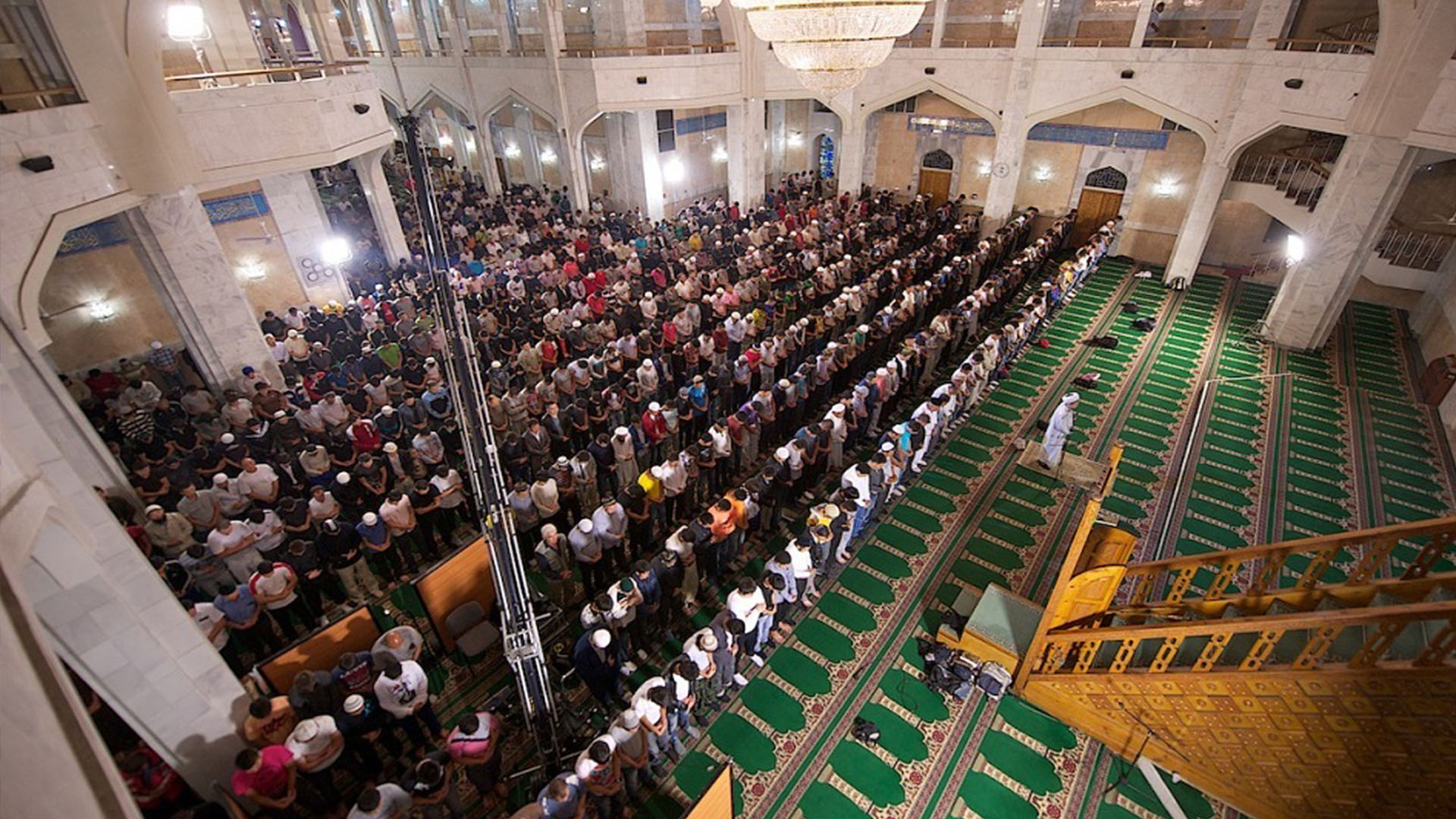
The Republic of Kazakhstan is a secular State. The Constitution of Kazakhstan guarantees freedom of conscience and freedom. Religion is an important component of the life of almost every citizen of Kazakhstan. According to the latest national census conducted in 2021, Islam is practiced by 69.31%, Christianity – 17.19%, including Orthodoxy – 17.04%, Catholicism – 0.10%, and Protestantism – 0.05%. The proportion of the population professing Buddhism and Judaism was 0.08% and 0.04%, respectively. As of the 1st quarter of 2023, 3,924 religious associations representing 18 confessions were registered in the country.
Islam
In Kazakhstan, the Hanafi Madhhab Islam has the most followers. It is this branch of Islam that the majority of the country's Muslims adhere to. The largest religious association of Muslims in the country is the Spiritual Administration of Muslims of Kazakhstan, headed by the Supreme Mufti. By 2023, 2,780 SAMK mosques are functioning in the country.
Christianity
The largest number of Christians in the country adheres to Orthodoxy. This is due to the predominance of the Slavic population, who traditionally professes this direction of Christianity.
There are about 345 Orthodox religious associations in Kazakhstan, of which 335 parishes belong to the Russian Orthodox Church, which make up the metropolitan district of the Orthodox Church of Kazakhstan with the center in Astana.
Besides Russian Orthodox churches, the Armenian Apostolic Church, 7 Old Believer churches and 2 Russian Orthodox Churches abroad also operate in Kazakhstan.
Another branch of Christianity, widespread in Kazakhstan, is Catholicism, among whose followers representatives of the Polish and German ethnic groups predominate. There are 92 associations of the Roman Catholic Church in the country, united into a metropolitan province with its center in Astana.
Protestantism in Kazakhstan is quite heterogeneous. Among the trends operating in Kazakhstan are Baptists, Lutherans, Methodists and Mennonites, as well as modern communities, including, first of all, Pentecostal, Presbyterian and Adventist movements. In total, 290 religious associations representing Protestantism are registered in Kazakhstan.
In addition to the main confessions of Christianity, small separate Christian movements carry out their activities on the territory of the country: the New Apostolic Church, the Church of Jesus Christ of Latter-day Saints (Mormons), the Unification Church (Moonies) and Jehovah's Witnesses.
Buddhism
Buddhism in Kazakhstan does not have as many followers as Islam and Christianity, the share of Buddhists in the country is about 0.08%. Most of them are representatives of the Korean and Kalmyk ethnic groups.
Today, Buddhist religious associations in Kazakhstan are located only in the cities of Almaty, where the Won-Buddhist direction and Ural – Tibetan Buddhism operate.
Nevertheless, despite the small proportion of followers, Buddhism in Kazakhstan has long traditions, and there are even Buddhist monuments on the territory of the country, including, for example, the Tamgaly-Tas tract in the Almaty region.
Judaism
According to the population census of 2021, the share of adherents of Judaism in Kazakhstan is 0.04%. Today there are 7 Jewish religious associations in the country, 6 synagogues operate in Astana, Almaty, Ust-Kamenogorsk, Kostanay, Karaganda (2) and Pavlodar.
In addition to these confessions, the Baha'i Community and the Society for Krishna Consciousness are registered and operate on the territory of Kazakhstan.
Congress of Leaders of World and Traditional Religions
The priorities of domestic policy focused on preserving interethnic and interreligious harmony have also influenced the foreign policy activity of Kazakhstan, which, as part of its policy of strengthening regional and global stability, is making considerable efforts to disseminate these priorities on a global scale.
Kazakhstan's initiative to convene the Congress of Leaders of World and Traditional Religions has aroused great interest in the world community. This idea was supported by leaders of many world faiths, heads of major powers and influential politicians.
The First Congress of Leaders of World and Traditional Religions was held on September 23-24, 2003 in Astana. It was attended by representatives of 17 religious organizations from Islam, Christianity, Buddhism, Judaism, Hinduism, Shintoism, Taoism from 13 countries of Europe, Asia, Africa and the Middle East.
The Congress convincingly demonstrated the relevance and necessity of embodying the idea of cooperation and unity of representatives of various religions in the name of a peaceful and dignified life of people all over the planet.
Since then, the Congress of Leaders of World and Traditional Religions has been held in Astana regularly, every three years. Within the framework of the event, topical issues of intercivilizational and interreligious relations, ways of assistance from spiritual leaders in the struggle for peace and harmony on the planet are discussed and considered.
To date, 7 Congresses of Leaders of world and traditional Religions have been held in Kazakhstan. The latest Congress was held on September 14-15, 2022, which was attended by about 100 delegations from 50 countries. For the first time, the Congress was presented by distinguished guests such as the Pope, Grand Imam of al-Azhar, Chief Rabbis of Israel and many other political and public figures, representatives of international organizations of the UN, OSCE, Alliance of Civilizations, OIC and others.
Based on the results of the discussions, a Declaration was adopted by the participants of the Congress, among the 35 points of which one can note a call for strengthening the dialogue of religious leaders with politicians, international organizations and civil society in order to ensure stability and security in the world, prevent and peacefully resolve conflicts of leaders, to activate traditional and search for new mechanisms of interaction between religious and political leaders in in the name of sustainable peace and development.