Меню
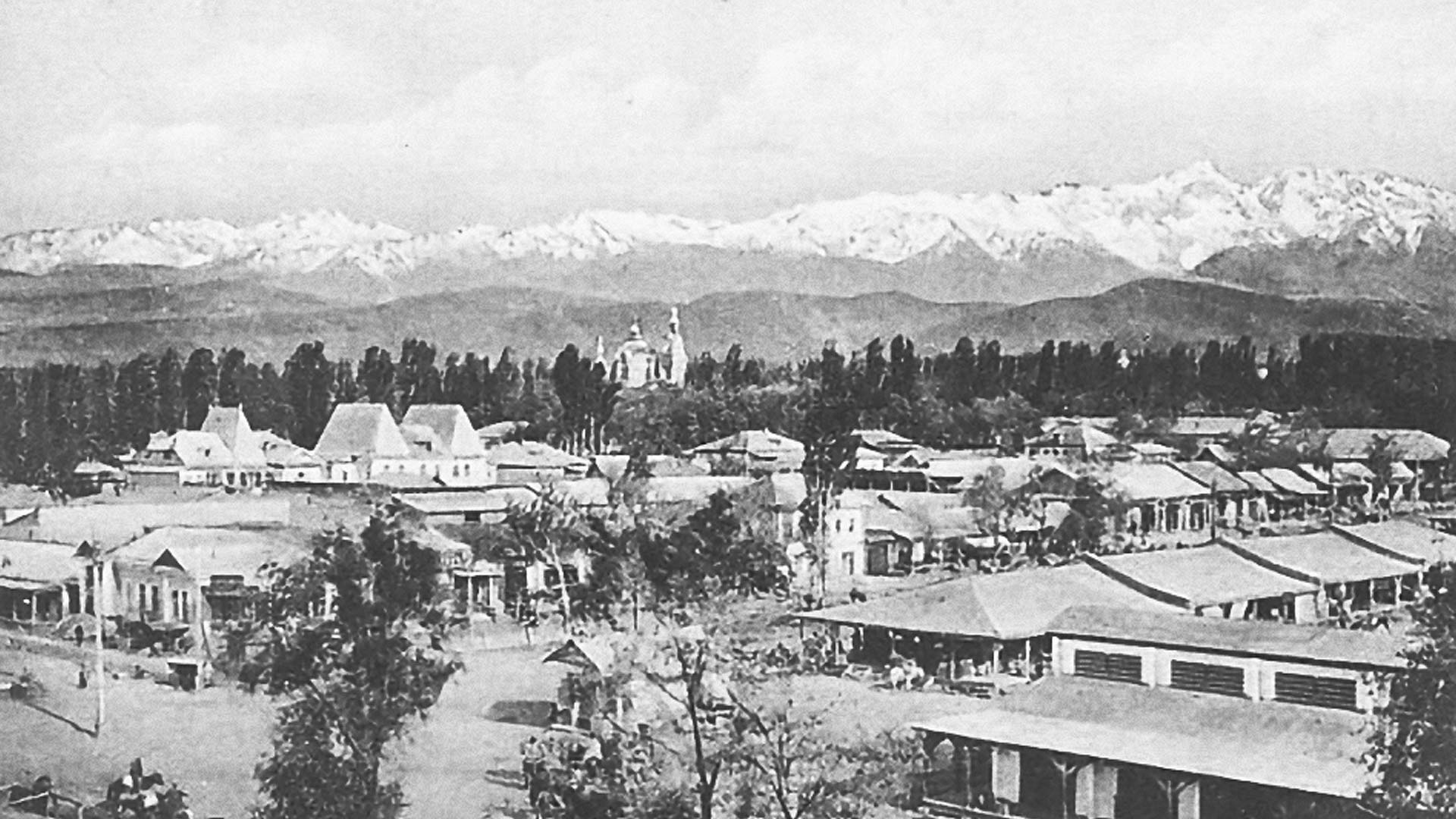
The 20s of the XVIII century were a particularly difficult period for Kazakhstan in its history. The endless wars, especially the major devastating invasion of the Dzungars from the east, were a heavy blow to the socio-economic life of the Kazakhs. The complexity of the foreign policy situation prompted the nation to look for ways out of this situation. Under these conditions, the Khan of the Junior Zhuz, Abul-Khair, sent an ambassador to Russia to "ask for patronage" for the Kazakhs of the Junior Zhuz.
On February 19, 1731, Empress Anna Ioannovna signed a letter of commendation to Khan Abul-Khair on the admission of the Junior Zhuz to Russian citizenship. To take the appropriate oath, ambassadors were sent to Kazakhstan with a letter to Khan Abul-Khair, headed by the translator of the Commission of Foreign Affairs A. I. Tevkelev.
At the end of 1731 Abul-Khair and Bogenbay Batyr sent their representatives to Middle Zhuz, promising Khan Semeke to ensure the security of the region with the help of Russian troops in case of acceptance of Russian citizenship. Semeke accepted the offer of the ambassadors of Abul-Khair. By the letter of Anna Ioannovna dated June 10, 1734, the request of Semeke and his supporters was granted.
The accession of the main part of the Senior Zhuz took place in similar conditions. Part of the Kazakh clans of Southern Kazakhstan accepted Russian citizenship voluntarily. In May 1824, Emperor Alexander I signed a letter of acceptance into citizenship of the sultans of the Senior Zhuz, who were nomadic in Zhetysu. Another part of the Senior Zhuz, which was under the control of Kokand, was incorporated into the Russian Empire along with the whole of Central Asia after a series of military expeditions in the middle of the XIX century.
However, the further development of the relationship was contradictory. On the one hand, Russia's military and diplomatic activity, the construction of fortresses, lines of Cossack outposts and redoubts protected the Kazakhs from the ruinous raids of their neighbors, from the conquest of Dzungaria, from the threat of enslavement by the Qing Empire, which hung over the Kazakhs after the defeat of the Dzungarian Khanate by the Manchus.
The inclusion of Kazakhstan, later Central Asia into the all-Russian economic system had a certain positive impact on the economy of the region. Due to the powerful state apparatus, internal strife has been minimized. The result of the accession was also that since the 30s of the XVIII century, the Central Asian, Kazakh and Russian peoples have been converging and strengthening friendly ties between them, the ground was laid for the spread of writing, the revival of trade, the inclusion of the Kazakh economy in the orbit of world industrial relations. That is why the outstanding thinker of the Kazakh people Abai Kunanbayev advocated the development of friendship and strengthening relations with the Russian people.
On the other hand, the construction of fortresses limited the traditional nomads of the Kazakhs, created tension between the Siberian administration and the Kazakh sultans. For example, in 1756, a royal decree was issued forbidding Kazakhs to drive cattle to the right bank of the Urals in winter, which created anti-government sentiment.
At the beginning of the XIX century, the Russian administration began to introduce a direct management system in Kazakhstan. After the death of the khans of the Middle Zhuz Bokey and Vali, the tsarist government liquidated the khan's power.
In 1822, the "Charter on the Siberian Kirghiz" developed by M. M. Speransky was introduced, which provided for the creation of eight "outer districts" divided into volosts (districts), which, in turn, consisted of auls. The cities of Ayaguz, Kokchetav, Karkaralinsk, Atbasar and others were built. In 1824, the liquidation of the khan's power in the Junior Zhuz, divided into three parts led by the sultans-governors, followed, the rights of the local nobility and ancestral elders were limited.
The autocracy's decision-making mechanism, which did not take into account the interests and needs of the common people, led to discontent and uprisings throughout the empire, including the Kazakh steppe. Thus, the largest were the national liberation movement of Khan Kenesary Kasymov, the batyrs of Syrym Datov, Isatai and Makhambet, the people's liberation uprising of 1916, etc.
However, economic development continued to move forward. At the beginning of the XX century, industry appeared in Kazakhstan, and Russian, French, English and American capital began to invest in the mining sector. In 1911, oil production began in the Embin district. It should be noted that even then a model of Kazakhstan's tolerance and joint development was being developed. Thus, both Kazakh and Russian workers worked at the Spassky Copper smelter, Ekibastuz mines, the Uspensky mines and in Karaganda. Large farms of Kazakh bais engaged in the supply of livestock developed.
Due to a complex of complex reasons and accumulated contradictions, the autocracy of the Russian Empire collapsed during the February bourgeois-democratic Revolution of 1917.
The subsequent October Socialist Revolution of 1917 and the Civil War marked the transition of Kazakhstan to a new historical period — as part of the Union of Soviet Socialist Republics (USSR).