Меню
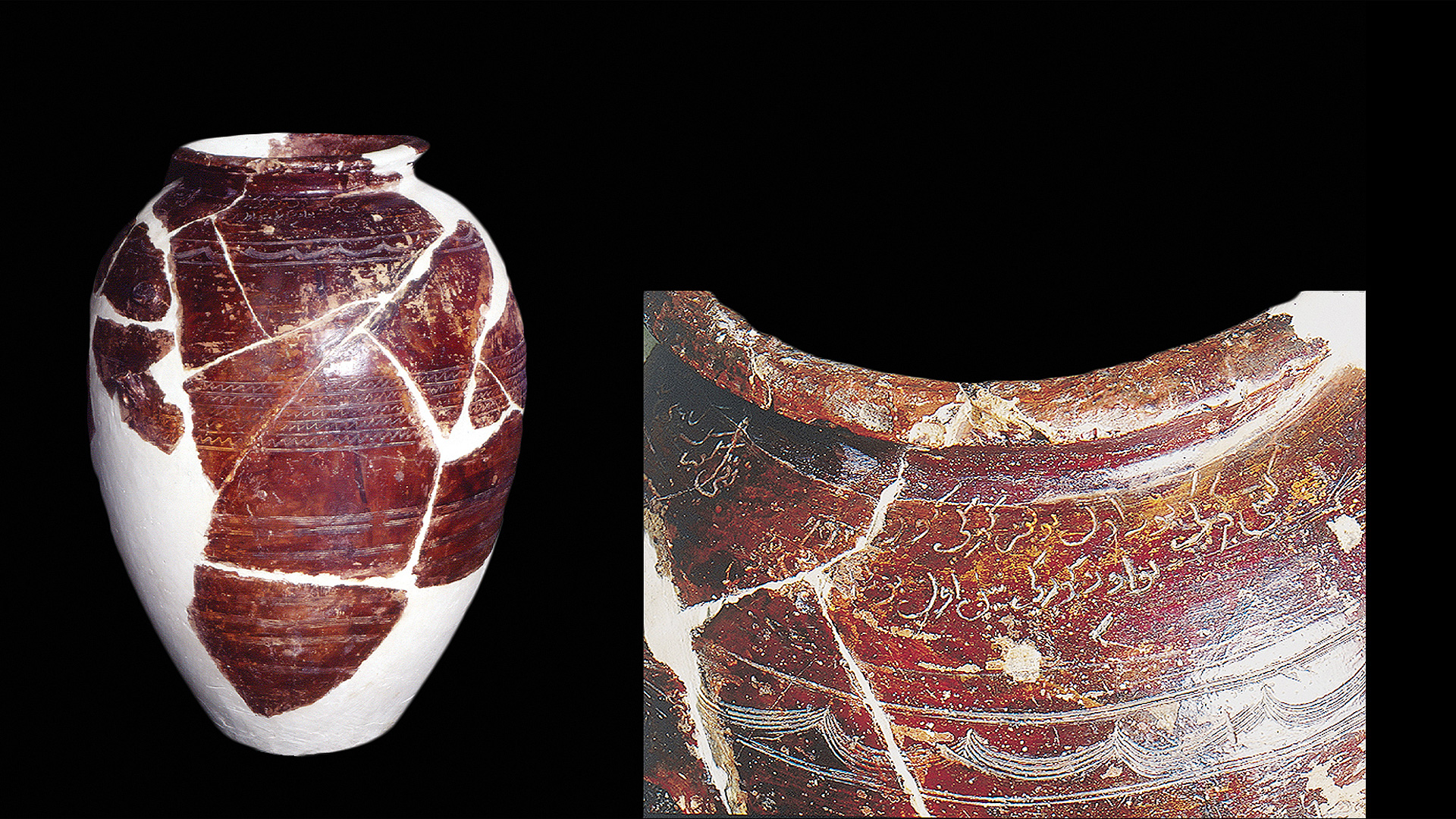
The Mongol Empire (1206-1468)
As the 13th century began, leaders of strong nomadic tribes were vying for power – and it was the Mongol leader Temüjin (Genghis Khan) who managed to unite the tribes of Central Asia to become one of the most powerful conquerors on the Eurasian continent.
In the spring of 1206, at the Onon River, nomadic aristocracy gathered a kurultai (great assembly) where Temüjin was solemnly proclaimed the great khan and given the title of Genghis, meaning “the lord of the water” or, more precisely, “the Universal Ruler.”
After conquering Mongolia, South Siberia and the Northern China, Genghis Khan leading a powerful and disciplined army conquered Kazakhstan and the rest of Central Asia defeating the Qara Khitai, Naimans, Khwarezmian Empire over the years 1218 to 1221. Many urban centers of the region were plundered, including the six-month besiege of Otrar (Farab).
Various written sources indicate that the empire of Genghis Khan was largely based on the Turkic tribes of Central Asia and Kazakhstan as well. Genghis Khan’s empire was based on a military system formed by the Turkic Khanate and developed by successive states.
A new legal code was developed during the rule of Genghis Khan and his successors. Yasa, the codified collection of laws, covered new social and political framework. During the Kazakh Khanate, provisions of Yasa were partially included in Zheti Zhargy (“Seven Charters”). Many social norms and statehood forms were employed in other states emerging on the territory of Kazakhstan.
Genghis Khan’s dynastic empire spread across half the known world in the first half of the 13th century, based on a strong centralized power, inequalities of population, and an ideology with these fundamental values: the right to power of the descendants of Genghis, and the need to unify all nomads (yurt dwellers) and states under nomad control. However, internal strife amongst the ruling elite, and economic disunity within the Empire led to weakening of the main ulus (territorial possessions) including Ulus Juchi, which covered a greater part of Kazakhstan’s territory.
The Golden Horde (Altyn Horde)
In 1227, Genghis Khan died, half a year after his eldest son Juchi died under mysterious circumstances.
Juchi’s son Batu succeeded Genghis and became famous for his successful military campaign across Europe. He defeated Russian duchies and a number of other states. In his seven-year conquest from 1236 to 1242 Batu seized territories from Volga to Danube Rivers, Crimea, North Caucasus, and the Cuman steppes.
After returning to the lower reaches of the Volga, Batu founded a new Mongol state – the Golden Horde. It included Juchi’s ulus, the steppe regions of Kazakhstan to the west of the lower reaches of Ob and Irtysh rivers and up to the lower reaches of Volga and Amu Daryia rivers, as well as a part of Khorezm and Western Siberia.
The Golden Horde exerted heavy influence on Russian principalities which became vassals of the Steppe state; in return for tribute, they were given trading and economic links to the whole Mongol Empire.
The cities of Sarai-Batu (near modern Astrakhan) and Sarai-Berke were successive capitals, the seats of Genghis’s two grandsons, Batu Khan and Berke Khan.The Golden Horde was a multinational state, made up of numerous tribes and nationalities at varying degrees of social and economic development, and differences of cultures and customs.
The Turkic tribes – mainly Kypchacks, with Kanglys, Karluks, Naimans and many others – formed the majority of nomads in the Steppe of Desht-i-Kypchak. Settled regions of the Golden Horde were inhabited by Bulgars, Mordvinians, Russians, Greeks, Circassians, and Khorezmians, with Mongols proper forming an insignificant minority. During the 13th and 14th centuries Mongols living here were assimilated with Turkic people.
During the rule of Batu’s brother Berke Khan (1256-1266) the Golden Horde became an independent state; it reached its peak in the early 14th century under Uzbek Khan (1312-1342) and his successor Janybek Khan (1342-1357). Uzbek Khan made Islam an official religion of the state.
From 1357 to 1380, there were 25 khans taking the throne. Eventually, by the mid-1400s some khans came to power in separate uluses and the Golden Horde disintegrated.
The Post-Mongolian period (14th-15th centuries)
The Post-Mongolian period saw ethnic consolidation of the nomadic, seminomadic and settled agricultural population across Western Desht-i-Kypchak, Zhetysu (Semirechye) and South Kazakhstan.
Development of a single nation and statehood happened during the complex period of political division.
Political evolution involved several ethnic states – Ak-Orda, Mogulistan, Abulkhayr Khanate (nomadic Uzbeks), and Nogai Horde.
Ak-Orda (the White Horde) became an independent state in the east of what was Juchi’s Ulus managing gradual economic revival and reinforcement of local Turkic culture. The Turkic speaking tribes had lived in the steppe of Kazakhstan for a millennium, or had moved from the East during Genghis Khan’s invasion. The latter included Kypchaks, Naimans, Uisuns (Ushuns), Argyns, Karluks, Kereits (Kirei), Kanglys, Kongrats, Mangyts and others.
Ak-Orda developed forms of land ownership and property in settlements. Being a de-facto independent political state with its own dynasty and economic autonomy, Ak-Orda played a mjor part in political consolidation of ethnic groups, tribes and nations in the beginning of the 15th century.
Moghulistan, emerging in the Eastern part of Chagatai’s ulus, changed its territory throughout its existence. It included a part of the Eastern Turkistan that belonged to the Dughlat amir Bulaji. “Moghulistan” derived from “moghul”.
The head of the state and the owner of land in Moghulistan was khan. In nomadic territories, the land was common property. The cattle mostly belonged to the elites, the pastures too. The owners of pastures often built fortresses to claim the land.
Abulkhair’s Khanate ran from 1428 to 1468 over western, central and south regions of what is now Kazakhstan. Riven by internal conflicts for its entire existence, the khanate never became a unified state but was divided into several ethnic territorial and political groups, headed by descendants of Genghis Khan and nomadic tribal leaders. To please his political backers, Abulkhair Khan waged wars of conquest in the south and south-east of Kazakhstan. Briefly, in 1430, he conquered the cities of Khorezm and Urgench in the valley of Amu Darya River, and in 1446 Abulkhair conquered several cities on the Syr Darya River and in the Karatau foothills; these were given to tribal leaders who had supported him. This bolstered Abulkhair’s authority with some and worsened relations with the others; as so often before, internecine warring and political weakness led to the breakdown of the Khanate.
The century of instability and flux paved the way for a Kazakh nation of a three-way tribal structure: the Zhuzes. Moghulistan tribes became the Senior Zhuz; tribes of Ak-Orda and Abulkhair’s Khanate formed the Medium Zhuz, and the Nogai Horde formed the Junior Zhuz.
At the current stage, ethnic and political evolution was common for various neighboring Turkic tribes (Kazakh, Uzbek, Kyrgyz, Tatar, Nogai and others.)