Priorities for the Development of the Middle Corridor and Regional Cooperation Discussed in Washington, DC
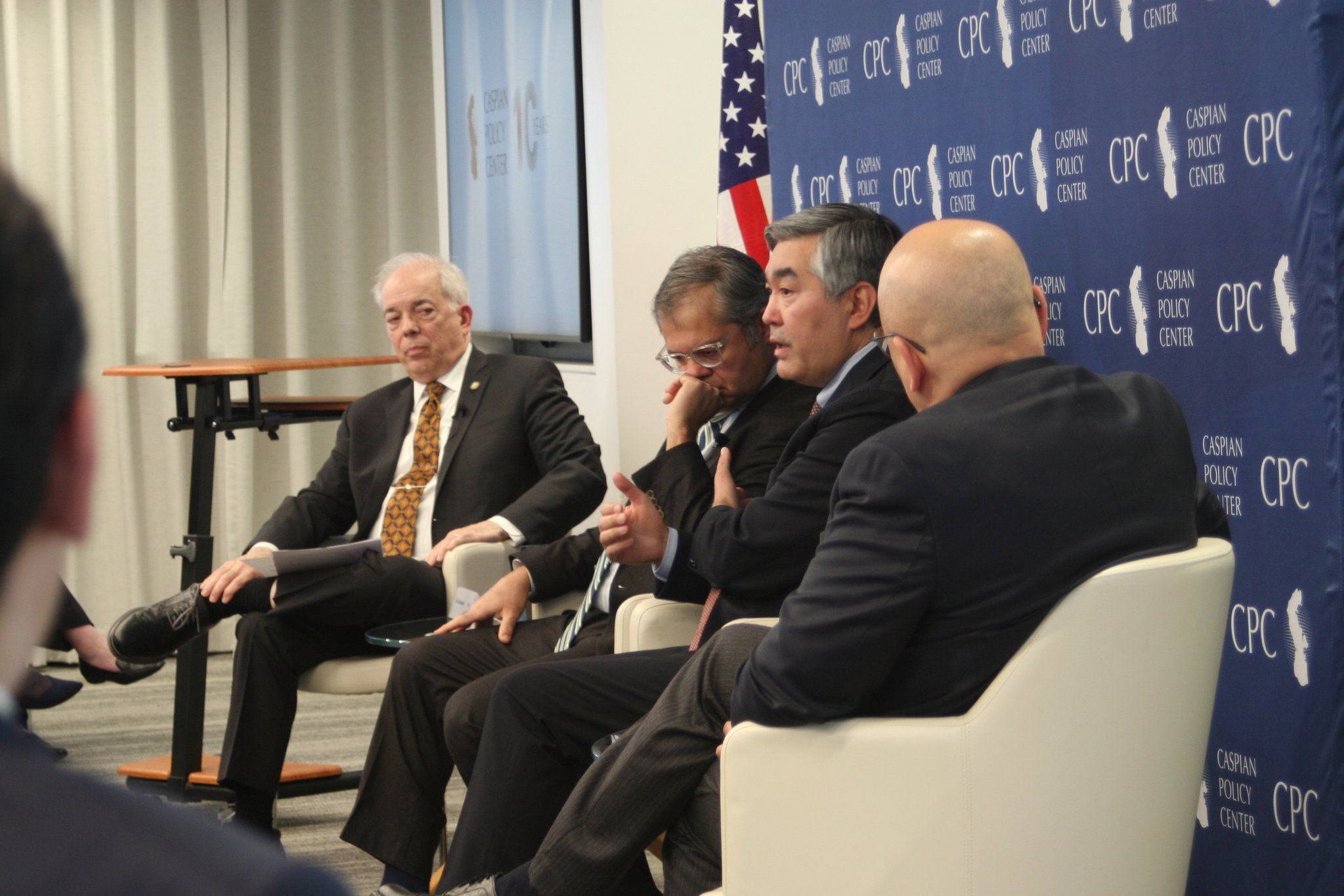
A roundtable discussion entitled “A New and Expanded Central Asia: Next Steps in Advancing the Trans-Caspian Growth” was held at the Caspian Policy Center, focusing on the prospects of the Middle Corridor and enhanced regional cooperation.
The discussion brought together Ambassador of Kazakhstan to the United States Magzhan Ilyassov, the heads of the diplomatic missions of Azerbaijan and Uzbekistan, as well as representatives of the U.S. expert community and media.
In his remarks, Ambassador Ilyassov noted that Kazakhstan consistently promotes deeper partnership within Central Asia and expands its strategic engagement with Azerbaijan. According to him, the launch of the “C6” format marks a transition toward a more pragmatically structured model of cooperation in transport, trade, and infrastructure development across the Eurasia.
The Ambassador emphasized that the region’s sustained economic growth is creating a sizeable market, stimulating intra-regional trade, and enhancing Central Asia’s investment attractiveness. Kazakhstan views the progress of neighboring states as a key factor in ensuring the long-term resilience and competitiveness of the region as a whole, guided by the principles of openness, pragmatism, and mutual benefit.
Special attention was given to the development of the Middle Corridor, where Kazakhstan serves as a key transit and logistics hub. The modernization of rail and port infrastructure, the expansion of Caspian port capacities, the introduction of digital solutions, and the streamlining of procedures have significantly reduced delivery times and increased container traffic along the route.
The discussion also highlighted the synergy between the Trans-Caspian agenda and the economic track of the “C5+1” format, including cooperation with the United States in critical minerals, advanced technologies, and investments.
The event concluded with a Q&A session, during which participants exchanged views on practical steps to further advance the Trans-Caspian route and strengthen sustainable growth in Central Asia.