World Day of the Turkic Languages Family Celebrated in Mexico City
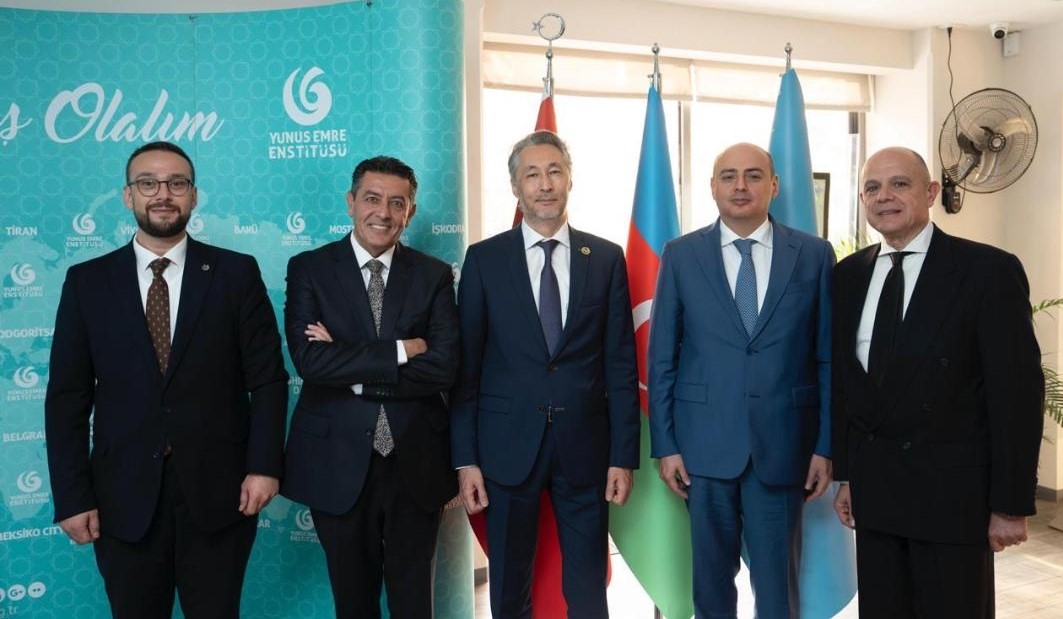
An event dedicated to the World Day of the Turkic Languages Family was held in the capital of Mexico. It was organized by the Yunus Emre Institute in Mexico with the participation of the diplomatic missions of Turkic states – Kazakhstan, Türkiye, and Azerbaijan.
Ambassador of Kazakhstan to Mexico, Almurat Turganbekov, as well as Ambassadors of Türkiye and Azerbaijan, Murat Salim Esenli and Seymur Fataliyev, took part in the event.
In his speech, Ambassador of Kazakhstan A.Turganbekov emphasized that Turkic languages are an integral part of the shared historical and cultural heritage of the Turkic peoples and an important factor in preserving their uniqueness and spiritual identity.
A. Turganbekov paid special attention to the growing role of humanitarian and cultural cooperation among Turkic states, as well as to the activities of the Organization of Turkic States (OTS) as a key platform for preserving and promoting Turkic languages and culture. He noted Kazakhstan’s active contribution to the implementation of OTS initiatives aimed at strengthening cultural ties and expanding international dialogue between the Turkic world and the countries of Latin America.
As part of the event, a lecture was delivered by Professor Mehmet Necati Kutlu, Doctor of Sciences, on the development and interconnection of the Turkic languages. In his presentation, the professor gave a detailed account of the historical origins of the Turkic languages and their Proto-Turkic roots, tracing them back to the Orkhon-Yenisei inscriptions, which are among the earliest recorded sources of the Turkic written tradition.
In addition, N.Kutlu highlighted the significance of the World Day of the Turkic Languages Family, which is celebrated on December 15 and was established by a decision of the UNESCO General Conference adopted in November 2025 in Samarkand. The professor emphasized that this initiative contributes to strengthening the linguistic and spiritual unity of the Turkic world, as well as creating conditions for expanding mutual communication among the peoples of Turkic countries and fostering their cultural integration.