Меню
Страницы
Статья
Kazhymukan Munaitpasuly
Kazhymukan Munaitpasov was born in the beginning of April 1871 (1886) in the Karaotkel village of Akmola region.
In 1904, on the recommendation of the famous Russian circus wrestler A.N.Zlobin, a very young Mukan Munaitpasov was admitted to the school of I.V.Lebedev in St. Petersburg, where he studied the circus art of classical wrestling from 1905 to 1907. Then he began performing in the circus troupe of the professional world champion wrestler Georg Lurich. Under the pseudonyms Yamagata Mukhanura, then Kara-Mustafa, Mahmut and so on, he participated in various international competitions in French and freestyle wrestling. A short time later, Munaitpasov became the winner and prize-winner of all-Russian tournaments in Saratov, Kazan, Omsk, Troitsk, Ufa and other cities, as well as international championships in Moscow, Kiev, Riga, Minsk, Paris, Warsaw, and Harbin. As part of a circus troupe, he toured the countries of South America and the Middle East. In 1909-1911, he successfully fought against the strongest Turkish wrestlers. The trip turned out to be fateful for the athlete – as a recognition of his strength and talent during the tour, his name gained a prefix – Kazhy (Khaji) – which means the one who made a pilgrimage to holy places. That is how his Russian compatriots of the same faith perceived the fact that Mukan singlehandedly conquered Turkey – a champion in wrestling at the time.
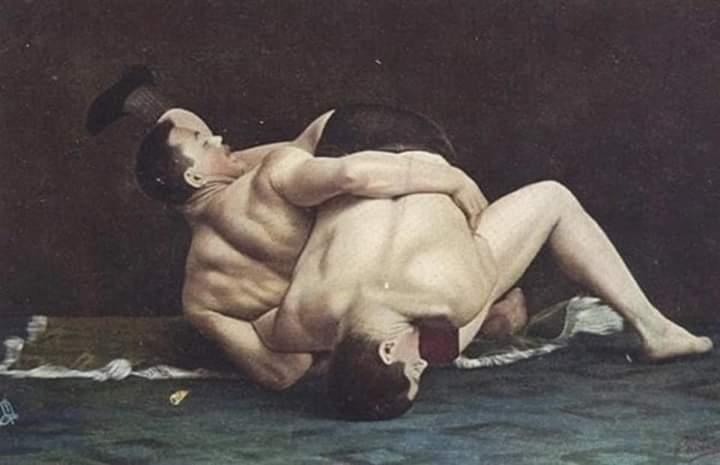
In 1909, Kazhymukan won a gold medal at the World Championship in French Wrestling in Gothenburg (Sweden). He also became the strongest at the World Championship in Warsaw (1911). In 1913, in Troitsk, Munaitpasov defeated 18 wrestlers from different countries. Under the name Kara Ivan Munaitpasov he represented Russia in Kabul, Tehran, Harbin and other cities. In 1927, the Central Executive Committee of the Kazakh Autonomous Socialist Soviet Republic awarded Kazhymukan the honorary title of the Hero of the Kazakh Steppes. Over the years of performance, he won 48 gold, silver, and bronze medals, as well as the famous Sigismund Belt (1913-1915).
From 1929 to 1931, the hero of the Kazakh steppes performed successfully in Petropavlovsk, Omsk, Novosibirsk, and Altai. It is a historical fact that Kazhymukan’s authority contributed to the release of his relatives who were de-kulakised and deported to the Omsk region. The tragedy of the 1930s – the ‘Goloshchyokin’ famine – deeply saddened Kazhymukan who did his best to help his fellow countrymen out of trouble. The Kazakh batyr also earned the love of the entire Soviet people with his civil act during wartime. During the Second World War, Kazhymukan conducted circus performances for people and transferred the proceeds to the Defence Fund. These funds were enough to build an entire fighter plane. And Kazhymukan was awarded the Badge of Honour.
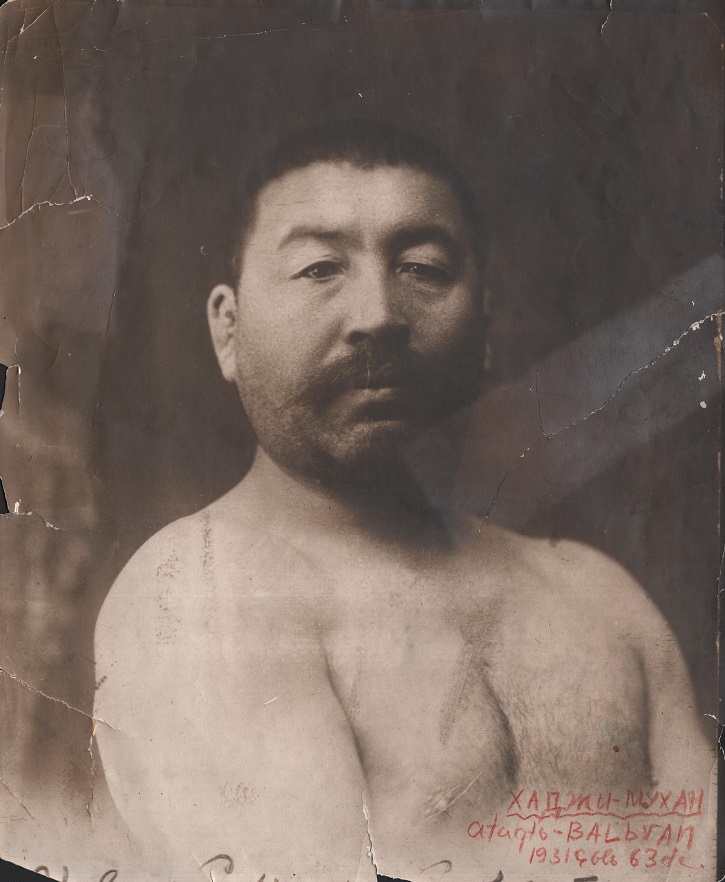
Munaitpasov died in 1948 in the village of Temirlanovka of the Arys district of the South Kazakhstan region. In 1980, a memorial museum of Kazhymukan Munaitpasov was opened in the South Kazakhstan Region. International tournaments in classical wrestling for the Kazhymukan Munaitpasov prize are being held since 1986.