Kazakhstan – Kenya: A Course towards Constructive and Mutually Beneficial Cooperation
Kazakhstan – Kenya: A Course towards Constructive and Mutually Beneficial Cooperation
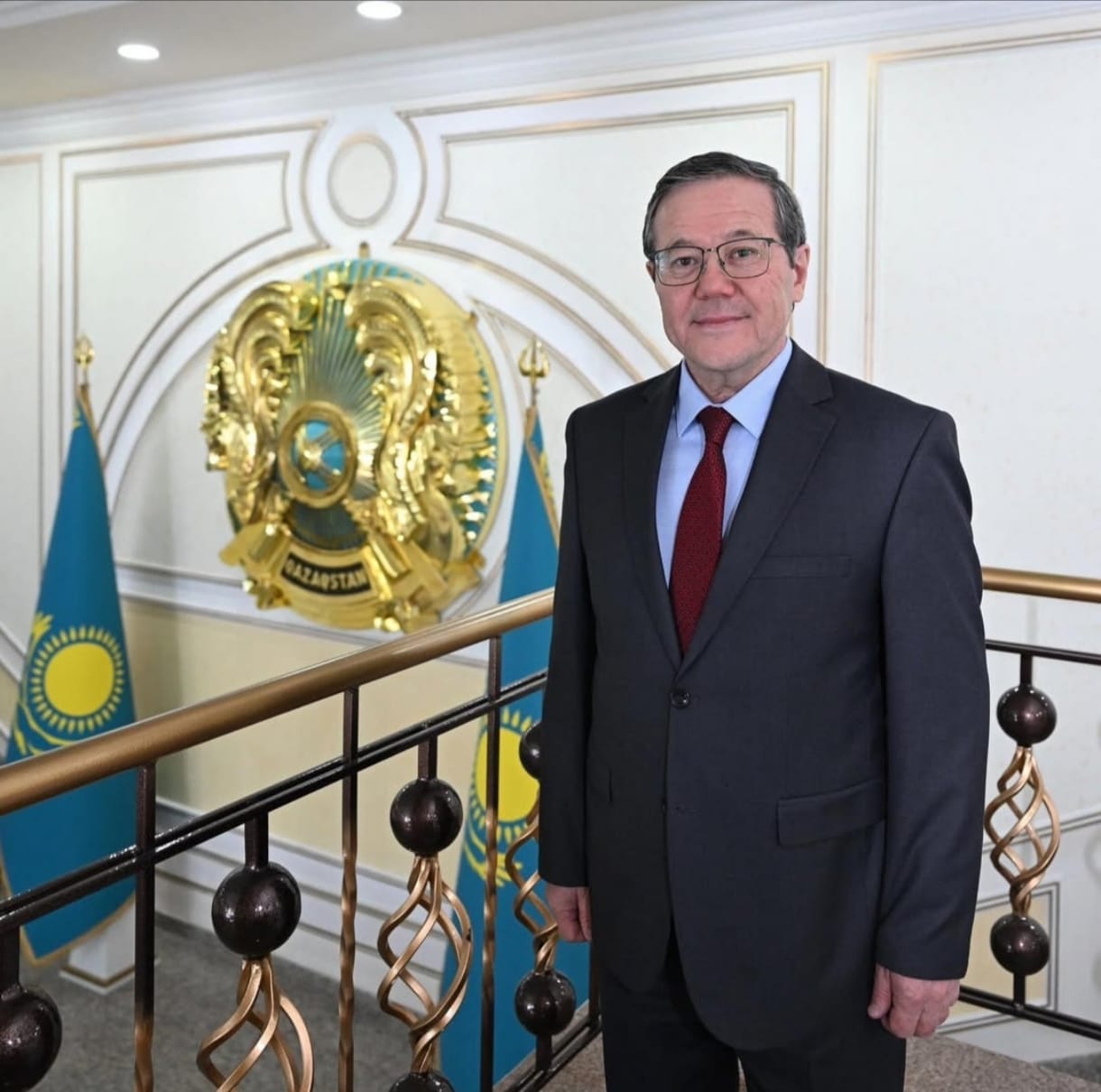
Astana is hosting a state visit from the President of Kenya. The ways of how bilateral relations between Kazakhstan and African countries are being developed is in an interview with Barlybay Sadykov, Kazakhstan's Ambassador to Africa.
Your Excellency Ambassador, Kazakhstan places great emphasis on cooperation with African countries. Please tell us how our republic's relations with the continent are currently developing.
First of all, I would like to note that Kazakhstan consistently pursues a foreign policy aimed at developing comprehensive and mutually beneficial cooperation with African countries. Today, Africa is the fastest-growing continent on the planet, possessing enormous trade and economic potential.
According to the UN, by 2050, Africa will be home to 25% of the world's population (more than 2.5 billion people). The total consumer market will be worth $16 trillion. The Continental Free Trade Area Agreement, which entered into force in 2021, unites 1.3 billion Africans in an economic bloc with a combined GDP of $3.4 trillion.
In addition, Africa contains up to 30% of the world's mineral reserves, including those critical to the development of modern industry and high technology. At the same time, its geographical location and access to the Indian and Atlantic Oceans, the Mediterranean and Red Seas make the continent a new center of global production and trade. It is playing an ever-increasing role in international politics and positioning itself as a global player. More than a quarter of all UN votes come from African countries, representing a unified and influential force.
For Kazakhstan, building long-term friendly political, trade, and economic relations with African countries is of particular importance due to the multi-vector and peaceful nature of our foreign policy, the importance of diversifying export markets, and the development of transit and transport potential.
African countries, in turn, are showing interest in Kazakhstan due to our political and economic stability, our skillful global positioning, our non-involvement in conflicts, and our energy, food, scientific, educational, and investment potential.
It was the support of African countries that was decisive in Kazakhstan's election as a non-permanent member of the UN Security Council for 2017-2018, as well as the host of EXPO-2017.
In order to further expand cooperation with the countries of the continent, in September 2025, President Kassym-Jomart Tokayev approved the Conceptual Approaches and Action Plan for the Development of Cooperation between Kazakhstan and African Countries for 2025-2030. This document provides for a set of measures of a political, legal, trade, economic, investment, cultural and humanitarian nature.
In addition, at the invitation of the Head of our state, visits to Kazakhstan by the presidents of the Republic of the Congo – Denis Sassou Nguesso, Guinea-Bissau – Oumarou Sisoku Embalo, the Republic of Rwanda – Paul Kagame, and the Democratic Republic of the Congo – Felix Tshisekedi took place in 2024–2025. Following the negotiations, a number of important bilateral documents on the development of cooperation were signed.
Thus, Kazakhstan's interaction with African countries is steadily developing and holds enormous potential. Expanding economic, political, scientific, technical, and cultural ties is a focus of the Ministry of Foreign Affairs. Work in this area will continue to be actively pursued.
Kenyan President William Ruto is making a state visit to Kazakhstan on May 19-20. What can you say about the level of cooperation between our countries?
Regarding the President of Kenya's visit, I would like to note that this country was one of the first African countries to establish diplomatic relations with Kazakhstan. This occurred in 1993.
On September 20, 2023, in the year of the 30th anniversary of their establishment, the leaders of the two countries met for the first time on the sidelines of the 78th session of the UN General Assembly in New York. Following the meeting, an agreement was reached to elevate bilateral cooperation to a qualitatively new level, expanding the full range of contacts, including in the areas of trade, investment, ICT, transport, logistics, and space.
The head of state emphasized that Kazakhstan views Kenya as an important partner in East Africa and is interested in developing cooperation. He invited William Ruto to visit our republic.
Kenya today is one of Africa's fastest-growing countries, a regional economic hub with well-developed infrastructure, services, tourism, and ICT sectors, as well as a major maritime trade hub on the East Coast. The ports of Mombasa and Lamu are strategically important for expanding exports and Kazakhstan's access to the markets of East and Central Africa.
In order to expand cooperation with Kenya, the Embassy of the Republic of Kazakhstan in the Republic of Kenya was opened in Nairobi on June 27, 2025.
It is important to note that Kazakhstan and Kenya, as middle powers, adhere to similar approaches on important international and regional issues. Both countries are strong supporters of a multilateral order based on UN principles and international law, with the central role of the United Nations in addressing global issues of security and sustainable development.
Kenya supported Astana's candidacy to host EXPO-2017 and Kazakhstan's candidacy for non-permanent membership in the UN Security Council for 2017-2018 and for the period 2039-2040.
Our republic's interest in Kenya is driven by pragmatic goals. As the world's largest landlocked country, Kazakhstan is extremely interested in creating new transport corridors. Kenya is the gateway to East Africa. The country boasts the region's largest seaport, Mombasa, through which our country can access the markets of several countries - Uganda, Rwanda, and South Sudan. Cooperation allows us to build new logistics chains linking Central Asia and Africa.
Trade and economic cooperation between Kazakhstan and Kenya is developing dynamically. Bilateral trade turnover in 2025 amounted to $52.2 million, a 23.3% increase compared to the same period last year ($42.4 million).
A business forum organized during the visit of the President of Kenya to Astana, attended by more than 70 Kenyan businessmen, aims to promote trade and economic cooperation between our countries and establish direct contacts between business communities. Taking this opportunity, I urge entrepreneurs of Kazakhstan to pay attention to the enormous opportunities for cooperation with this country.
Kazakhstan sees Kenya as a promising market for its products. Grain, fertilizers, metal products, and petrochemicals are in high demand on the African market.
Kazakhstan, in turn, is interested in direct supplies of high-quality Kenyan tea, coffee, and flowers (Kenya is one of the world's largest exporters of these products). The creation of a regional hub in Astana or Almaty would significantly reduce the cost of tea imported from Kenya.
Furthermore, Kenyan flowers traditionally reach Kazakhstan through auctions in the Netherlands, which significantly increases their cost and shortens the lifespan of the bouquet. Direct shipments would facilitate a year-round, uninterrupted supply.
Kenya is a recognized leader in Africa in terms of financial technology and mobile payments development. The country is also considered a «tech hub» (known as Silicon Savannah), creating an ideal environment for the exchange of experience in startups and cybersecurity. Kazakhstani IT solutions in the areas of e-government and fintech (Kaspi, e-Gov) could find keen interest in this country.
Overall, in a context of global instability, it is important for Kazakhstan to expand its circle of allies. Cooperation with Kenya, an influential player not only in Africa but also globally, will assist in advancing our national interests on the international stage.
You've highlighted Kenya's achievements in ICT. How advanced are new technologies there, and in what areas can we collaborate?
Kenya is a highly technologically advanced country. One of President William Ruto's policy priorities is developing the digital economy, and over a million people are already employed in innovation. The government's achievements in this sector are highly commendable: Google and Microsoft have campuses in Nairobi. Cisco launched the Country Digital Acceleration program and opened Africa's first Cybersecurity Training and Experience Center.
Kenya has developed and implemented the M-Pesa mobile finance system. By the end of 2025, mobile money penetration reached 93%. The Kenyan e-Citizen platform is similar to Kazakhstan's eGov. The platform offers over 20,000 digital government services. Citizens can apply for passports, renew licenses, and pay taxes online.
Kenya is also focusing on large-scale infrastructure projects. Konza Technopolis, a smart city and technology park currently under construction 60 km from Nairobi, is similar to our Alatau City. In 2026, it became a hub for cloud computing and data processing (data centers). 5G networks have been deployed throughout the country. The country is also a leader in the use of renewable energy (geothermal energy) to power its data centers, attracting giants like Microsoft and Google.
Since agriculture is the backbone of the economy, the IT sector is actively pursuing this niche. Farmers are using AI chatbots to obtain weather forecasts and soil advice. IoT sensors are also being implemented for precision farming, saving water and fertilizers.
Kenya has its own national space agency, which launched its first satellite, Taifa1, in 2023 to collect data for agriculture, environmental forecasts, floods, droughts, and forest fires.
Kenya also plans to begin construction of a nuclear power plant in 2027 and launch it in 2034.
During the visit, we will discuss prospects for our cooperation in these areas. I am confident we will find areas of mutual interest and expand our constructive and mutually beneficial partnership.
Kenya places particular emphasis on combating climate change and preserving biodiversity. Please discuss the prospects for cooperation between our countries in this area.
Kenya is rightfully considered a «green leader» in Africa. Its environmental policies have reached a level that makes the country an attractive partner for Kazakhstan, particularly in climate adaptation. Our countries face similar challenges, including desertification, land degradation, floods, and droughts.
Furthermore, the country has one of the cleanest energy systems in the world, with over 90% of its electricity generated from renewable sources. Kenya plans to transition to 100% green power generation by 2030. A national program is in place to plant 15 billion trees by 2032, which is in line with Kazakhstan's initiative to plant 2 billion trees.
In 2026, Kenya completed the development of new carbon market legislation. This creates a transparent emissions trading system, which is extremely relevant for Kazakhstan, which is also developing its own emissions trading system.
Kenya has implemented a National Biodiversity Coordination Mechanism, which brings together science, business, and communities to protect ecosystems. In 2026, the elephant population was announced to have increased to 36,000 individuals – the result of decades of anti-poaching efforts.
At the initiative of Kenya, the African Climate Summit was held in Nairobi from September 4-6, 2023. The summit adopted the Nairobi Declaration, which calls for funding and reforms to achieve climate change mitigation goals.
Kenya was one of the first African countries to positively respond to Kazakhstan's initiative to establish an International Water Organization within the UN, and we intend to closely collaborate with Nairobi on environmental issues. This will allow us not only to share experiences but also to present a united front on international platforms, advancing our shared interests in more equitable climate finance for developing countries.
Kenya is also a fairly popular tourist destination. How many Kazakh citizens travel there as tourists?
Indeed, Kenya attracts tourists from all over the world with its nature, wildlife, and excellent service. The country boasts over 40 national parks and reserves, home to rare animals and exotic plants. There are numerous hotels along the Indian Ocean coast.
According to statistics, not many Kazakh citizens visit Kenya as tourists, although there is a growing trend toward increased visitor numbers. As part of the bilateral dialogue, a joint tourism expert group has already been established, which is developing practical steps to increase tourist flows.
During the visit, a memorandum of cooperation between the tourism ministries of our countries is planned to be signed, and related projects will be implemented.
I am confident that the state visit of Kenyan President William Ruto will open new horizons for cooperation with this unique country.