London discussion platform focuses on independent Kazakhstan’s achievements in justice reform
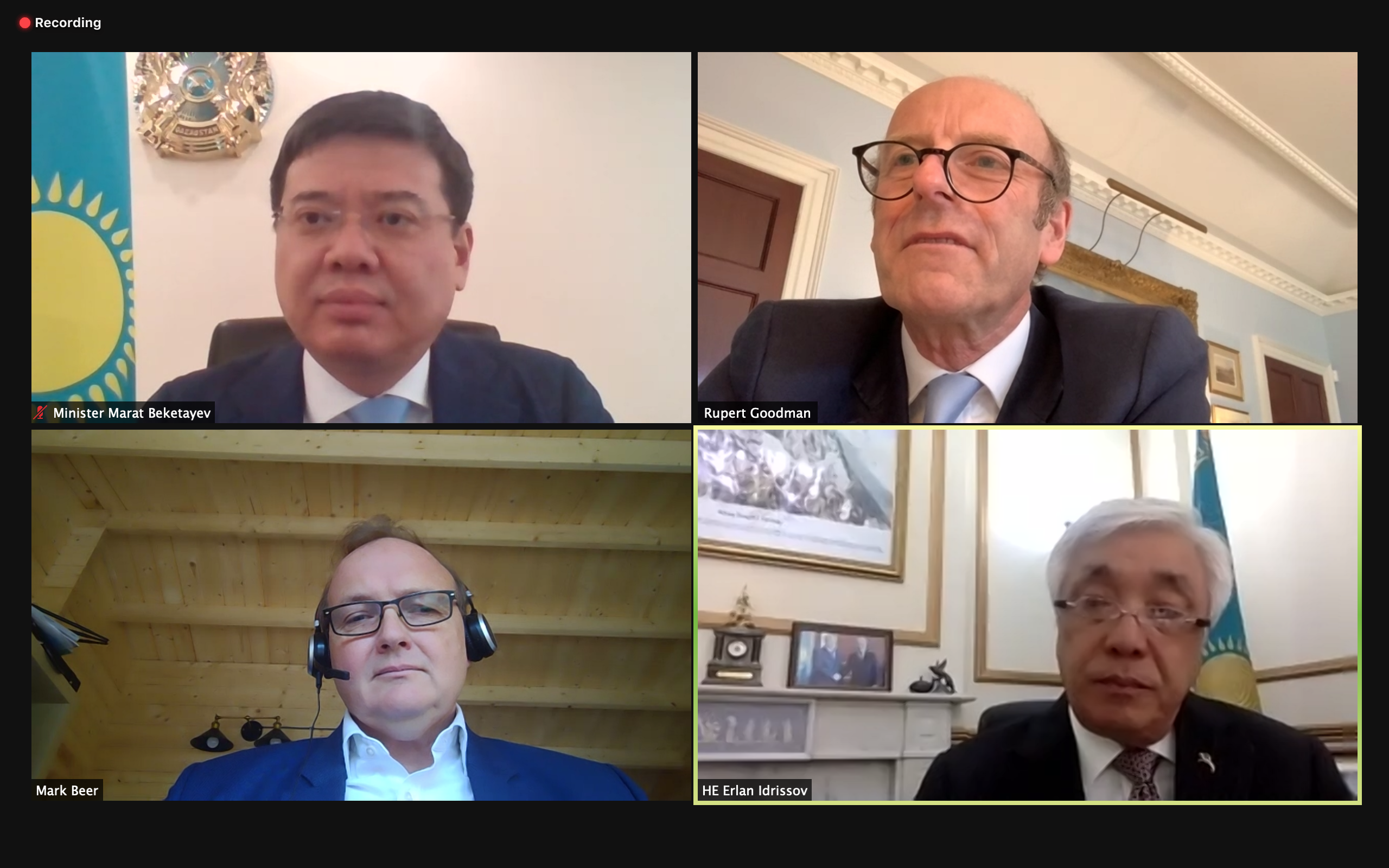
LONDON, 17 March 2021 – Marat Beketayev, Minister of Justice of Kazakhstan, took part in a webinar dedicated to the formation and development of the Kazakh justice system since gaining Independence. The British-Kazakh Society hosted the webinar as part of a series of events dedicated to the 30th anniversary of Independence of the Republic of Kazakhstan in 2021. Rupert Goodman, Chairman of the British-Kazakh Society, moderated the event.
As a keynote speaker, Minister Beketayev presented to the UK audience a brief history of legal reforms in Kazakhstan.
“It was challenging to start legal reforms, but when the process was launched, we achieved quick results. Now we are carrying out sophisticated, complex structural reforms. It is more challenging as the reform requires fundamental changes, including in mentality and work culture. The general trend set by the First President – Elbasy was carefully balanced – and that was a combination of strong political will and an understanding that such fundamental reforms require big resources – first of all, high-quality human capital and, of course, a considerable budget,” he stressed.
The Minister also elaborated on various topics including investment disputes and arbitration, intellectual property rights, development of forensic services and the institute of private court bailiffs. In particular, he noted the achievements in bringing procedures in line with international standards, increasing transparency, applying best foreign practice, including from the UK, employee training and internships abroad, and the digitalisation of public services. He particularly noted that Kazakhstan’s Ministry of Justice currently provides 98% of its services online, which directly allowed Kazakhstan to achieve high positions in the World Bank’s Doing Business 2020 report in such categories as registering property (24th place out of 190), starting a business (22nd place) and enforcing contracts (4th place).
Erlan Idrissov, Kazakhstan’s Ambassador to the UK, stressed that having inherited a cumbersome and outdated legal system from the Soviet Union 30 years ago, Kazakhstan chose the path of an open society and the development of modern legal institutions with a focus on the rule of law and liberal values. He highlighted the role of the young generation of Kazakh legal experts in creating and reforming legal institutions in Kazakhstan.
Mark Beer, Co-Founder of the British-Kazakh law company Seven Pillars Law (named after the Zheti Zhargy, 7 foundational pillars of the Kazakh legal system introduced in the 17th Century by Tauke Khan), also took part in the event and highlighted Kazakhstan’s achievements in reforming the judicial system.
“Kazakhstan has done remarkable progress in judicial reform. No other country that I know of has achieved the progress that Kazakhstan has achieved in such a short period of time”, he stressed, adding that the reforms focused primarily on citizens, transparency, justice and best practices have allowed Kazakhstan to improve its positions in the Global Competitiveness Index and the Rule of Law Index.
In the context of judicial reform, Mr Beer also spoke about the unique Astana International Financial Centre Court (AIFC Court), which operates in English based on common law. The lawyer stressed that the AIFC Court is independent from other courts in Kazakhstan and has an enforcement advantage, which serves an additional incentive for investors.