The development of opera and ballet has been a cultural priority for Kazakhstan. Today Kazakhstan is home to 52 state theatres, including seven puppet theatres, four children's theatres, three opera and ballet theatres, and two satirical theatres. There are also four theatres dedicated to Uyghur and Korean musical comedy, and German and Uzbek drama. Approximately 12,000 performances are produced in Kazakhstan annually.
In 2013, the state opera and ballet theatre 'Astana Opera' was founded at the initiative of President Nazarbayev. Since independence, about 100 new productions have been staged.
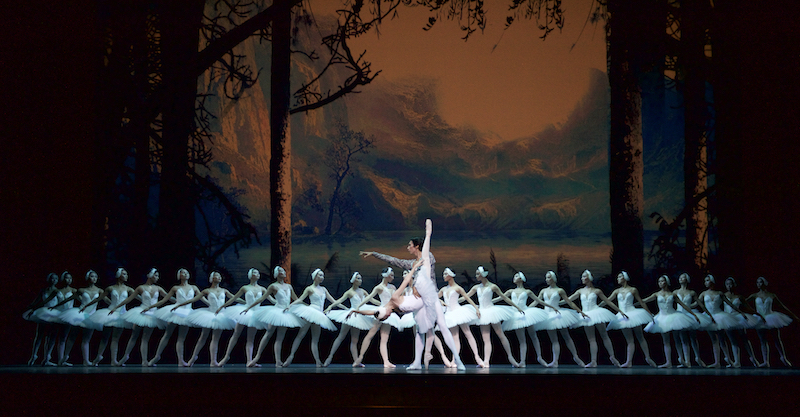
Pyotr Ilyich Tchaikovsky's Swan Lake at the Astana Opera
Large-scale ballet productions include:
- La Bayadère
- Le Corsaire
- Giselle
- La Sylphide
- Red Giselle
- Anna Karenina
- Romeo and Juliet
- Karakoz
Notable opera productions include:
- La Bohème
- Madame Butterfly
- Rigoletto, Aida
- Tannhauser
- Love drink
These productions were conducted under the guidance of world-famous choreographers Yuri Grigorovich, Boris Eifman and Vakil Usmanov.
The leaders of world opera, José Cura and Barbara Frittoli, and globally renowned ballerinas, Mélanie Hurel and Karl Paquette, participated in some of these performances.
Currently 31 state concert institutions operate in Kazakhstan, including:
- Kurmangazy Kazakh State Academic Orchestra of Folk Instruments
- Zhambyl Kazakh State Philharmonic
- Saltanat State Dance Ensemble
- State Academic Dance Theatre
- Camerata Kazakhstan ensemble of classical music
- Astana Ballet Theatre
- Kazakh Koncert state concert organization
Talented young people of Kazakhstan proudly represent their art both domestically and abroad. Kazakh opera and ballet soloists have become laureates and award winners of prestigious international competitions and festivals.
Leading opera soloists such as Sundet Baigozhin, Baurzhan Anderzhanov, Zhupar Gabdullina, Saltanat Akhmetova, Medet Chotabaev and leading ballet soloists Madina Basbaeva, Aigerim Beketaeva, Yerkin Rakhmatullaev and Bakhtiyar Adamzhan, regularly perform at world-renowned theatres.
In 2016 the Kazakh National Academy of Choreography, the new multi-level academy of choreography, was opened in Nur-Sultan.
It is the first institution of its kind in the Central Asian region designed to prepare students who are looking to pursue a career in ballet.

Astana Ballet theatre dancers performing
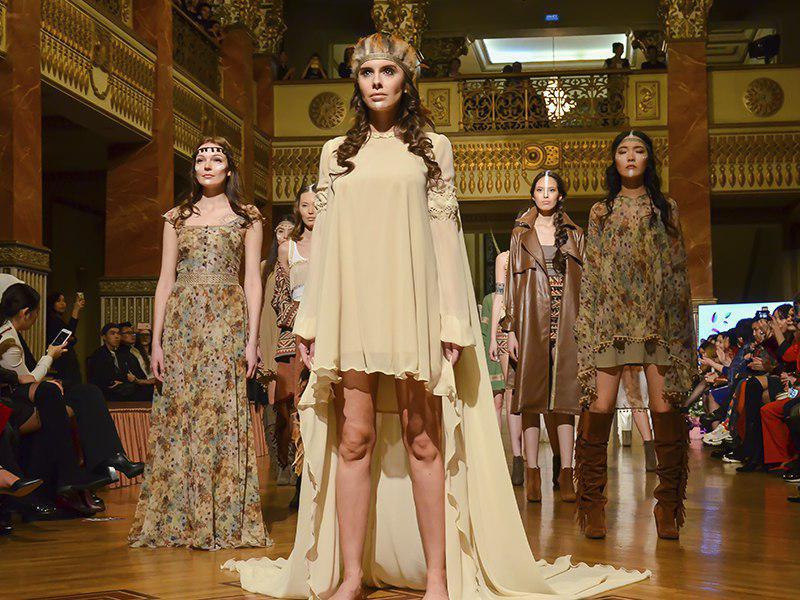
The Kazakh national dress varies by regions. Men wear chapans, a kind of dressing gown with a belt, made of velvet and richly embroidered. They cover their heads with a soft skullcap (tobetai), a tall felt cap (kalpak) or a fox-fur hat with earflaps (malakai).
The women's national costume consists of a white cotton or colored silk dress, a velvet waistcoat with embroidery and a cap or a silk scarf. Elderly women wear a hood made of white cloth with a hole for the face (the kimeshek).
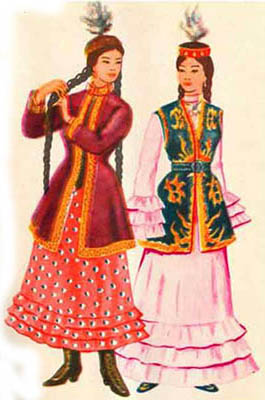

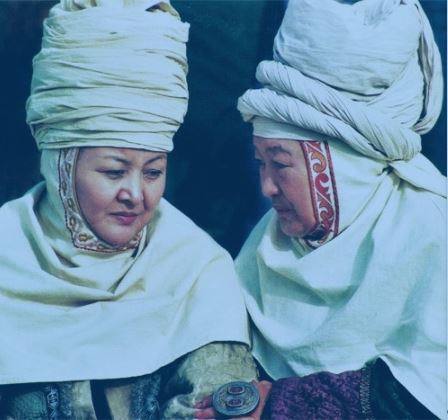
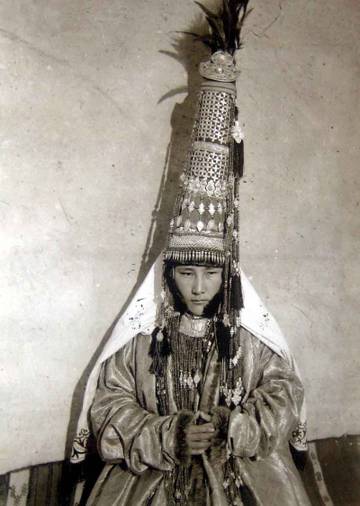
Brides wear a tall pointed, richly decorated hat, topped with feathers (saukele).

The yurt is one of the most sensible movable house. It is a comfortable and practical home, ideally suited to the local conditions and way of life – one of the greatest inventions of Eurasian nomads.
It is easily taken apart (it is said that a Kazakh woman can do it in half an hour) and carried on horses and camels. The yurt consists of three main elements: an extensible trellis base (the kerege), a dome made of poles (the uyk) and a round top (the shanyrak).
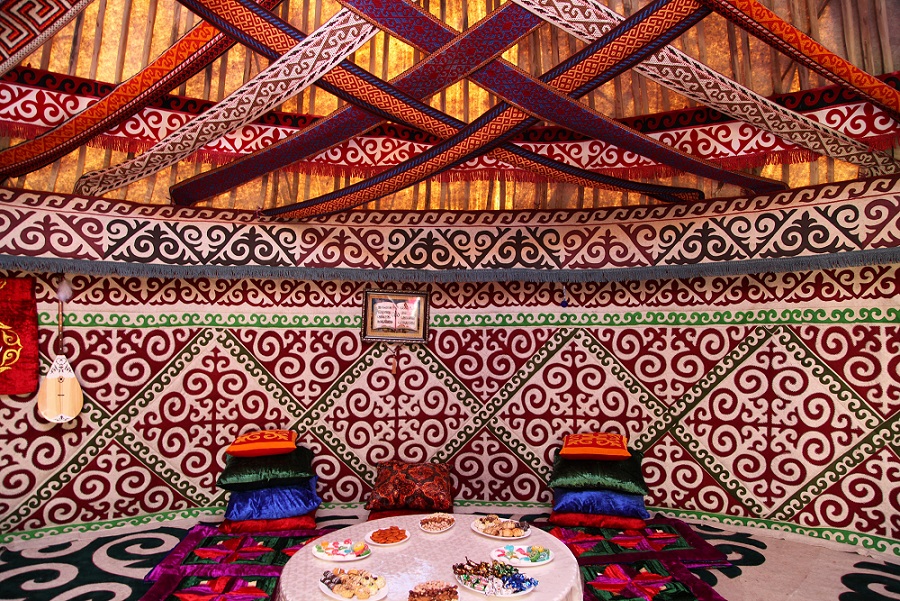
In ancient times Turks were reputed as the most skillful felt-makers of portable dwellings. Nowadays the Kazakhs use felt to cover the yurt and for its internal decoration, as well as to make carpets, dresses and shoes. The Kazakhs live in surrounded with ornaments. Each yurt is decorated with beautiful handmade wall carpets and multi-colored embroideries.
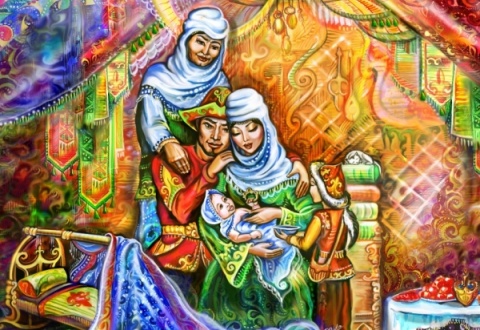
Kazakhstan's culture has been greatly influenced by the country's nomadic history. Its rich and diverse past is reflected in local cuisine, music, film, literature, theatre, fashion, arts, religion and traditions.
Kazakhstan is one of the most ethnically and religiously diverse countries in the world. This is in part a result of its unique geography, located at the centre of Eurasia, as well as the settlement of European and Asian migrants throughout the 20th century. Ethnic and religious tolerance is deeply embedded into Kazakh culture, and the country's nomadic heritage is based upon principles of hospitality and openness.
During Russian colonisation in the 19th Century, more than a million settlers from Russia, Ukraine, and Belarus came to the territories comprising modern day Kazakhstan. In the late 1920s and 1930s, Soviet collectivisation and industrialisation prompted the migration of an additional 1.4 million Europeans. In total, around 800,000 Germans, 185,000 Koreans, 102,000 Poles, 507,000 North Caucasians, and large numbers of Turks, Greeks, and Kalmyks were deported to Kazakhstan.
Kazakhstan's diverse society is an integral part of the national identity. The First President and Leader of the Nation Nursultan Nazarbayev has said that “the huge potential for integration into Kazakh culture for every ethnic group of the country may be realised only through the open character of the Kazakh culture itself".

It is in this spirit of cultural openness that the 'Seven Facets of the Great Steppe' initiative is being implemented. This is designed to commemorate and celebrate the Kazakhs' role in global history. Kazakhstan is the birthplace of apples and tulips and is where horses were first domesticated. Its people also played a key role in both the Great Silk Road and the development of the Turkic world.
As Kazakhstan looks to promote its rich history, it also has its eyes on the future, with the ambitious Ruhani Zhangyru programme aimed at modernising Kazakhstan's identity, to ensure its pivotal role in the global community is preserved.
Today, Kazakhstan is home to nearly 130 different ethnic groups and 17 different religions. Ethnic Kazakhs account for around 65% of the population, Russians constitute 26%, and the remaining population includes Uzbeks, Ukrainians, Germans, Tatars, Uyghurs, Belarusians, Azeris, Turks, Koreans, Dungans, Poles, and Greeks, among other ethnic groups. Around 70% of Kazakhstan's population identify themselves as Muslim, and about 26% are Christian, predominantly Russian Orthodox.
While historically divided into zhuzes and smaller tribal formations, Kazakhs have a strong and shared national identity, as “branches of the same Kazakh tree". This is a tree with rich cultural roots, which will continue to grow and flourish thanks to the joint efforts of both its people and government in promoting Kazakh culture.






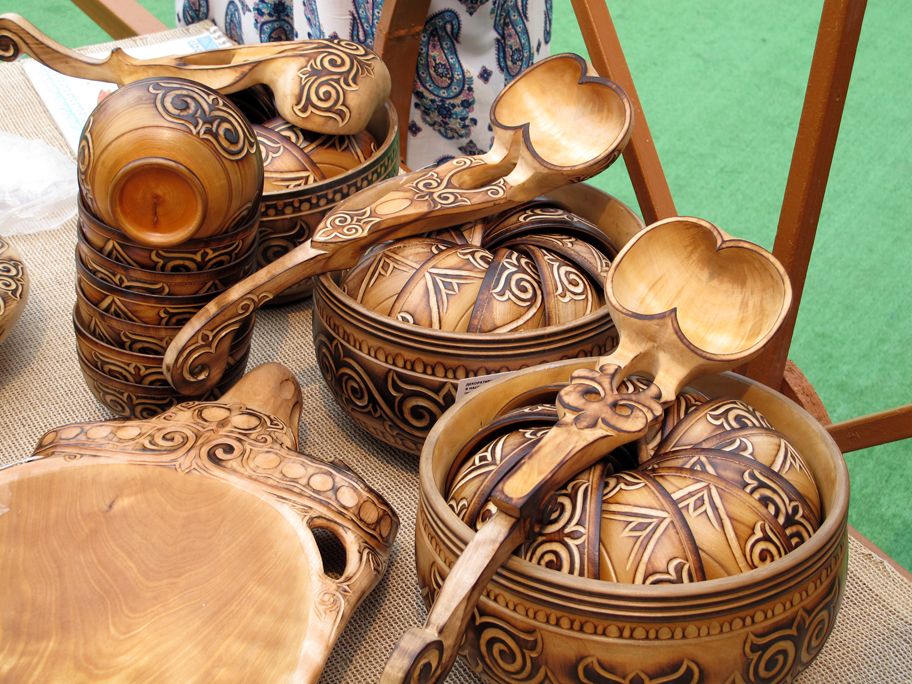

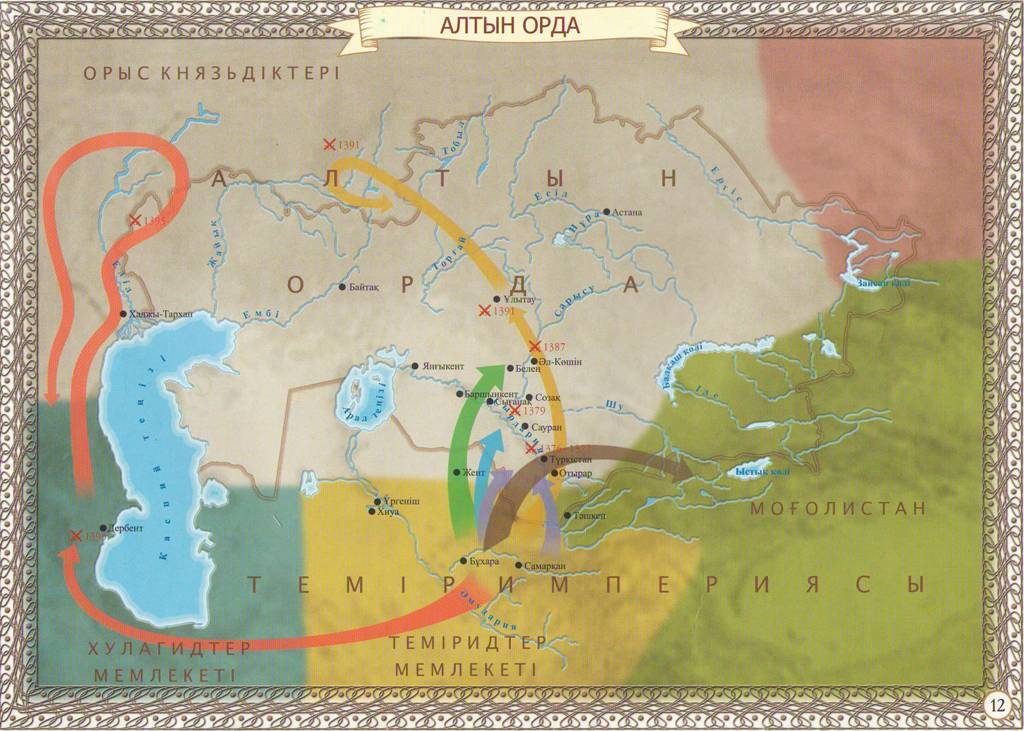
-

The official state language of Kazakhstan is Kazakh, however Russian is also used as a de facto official language, and is spoken almost universally. There are also a number of other languages that have substantial populations of speakers, including German, Turkish, Ukrainian and Uzbek.
Kazakh is a Turkic language in the same family as languages like Kyrgyz, Uzbek and Karakalpak.
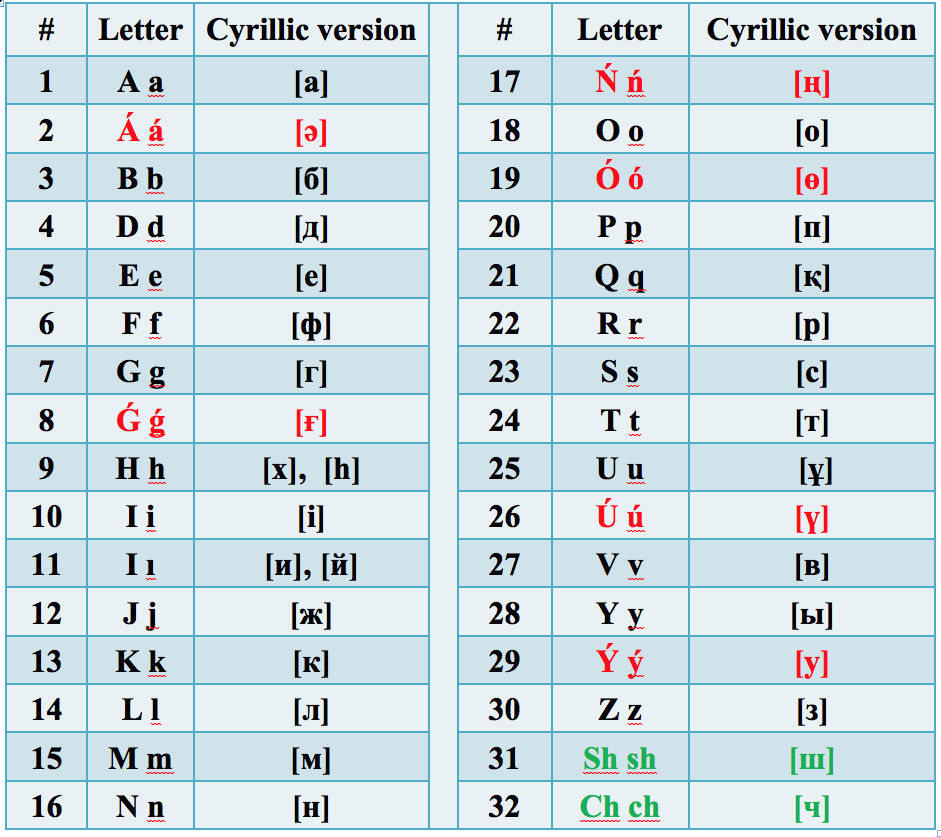
First President of Kazakhstan – Elbasy Nursultan Nazarbayev signed a decree 26 October 2017 to modernise the existing Kazakh alphabet to Latin-based script, and amended his decree in February 2018 to better modernise some characters. President Nazarbayev announced his intention to switch from the Cyrillic-based alphabet to Latin script in April 2012. The new alphabet consists of 32 letters and letters of the old Cyrillic alphabet will be replaced by Latin analogues based on their phonetic similarity. Kazakhs used Arabic script from the 10th-20th centuries. The Kazakh language was based on Latin script in 1929-1940. The transition to the Cyrillic alphabet occurred in 1940. The Latin alphabet is currently used by most Kazakh diasporas abroad.
Historical background
Music has been an integral part of Kazakhstan's culture for centuries.
Kazakh traditional music can essentially be divided into two genres - instrumental music and vocal music. Instrumental music is called Kuy and is performed by soloists using Kazakh traditional musical instruments, such as a dombra and a kobyz. The Kazakh traditional art of 'Dombra Kuy' was inscribed in the UNESCO Representative List of the Intangible Cultural Heritage of Humanity in 2014.

Nineteen-year-old dombra player Alexey Lodochnikov, one of Kazakhstan's '100 New Faces'
The dombra is perhaps the most famous Kazakh traditional music instrument. It is a 2-string long-necked lute-type instrument with 7 to 9 frets. The music is often accompanied by narrated stories and legends, and is traditionally performed at social gatherings and festive celebrations amid a rich variety of food and musical entertainment. One of the greatest dombra players was the folk musician and composer Kurmangazy, who had a great influence on the development of Kazakh musical culture, including music for the dombra. His musical compositions 'Adai', and 'Saryarka' are popular in Kazakhstan and abroad.
Other great traditional musicians include Dina Nurpeisova, Dauletkerei Shigaev, and Amre Kashaubayev.
Preserving traditional music
As part of the 'Madeni Mura' cultural heritage programme, an anthology of authentically-performed Kazakh traditional music and folk songs was compiled by the Government.
Furthermore, the Kazakhstan Museum of Folk Musical Instruments was opened in Almaty. Located in Panfilov Park, the museum displays more than 1,000 items of instruments, dating back to the 17th century.
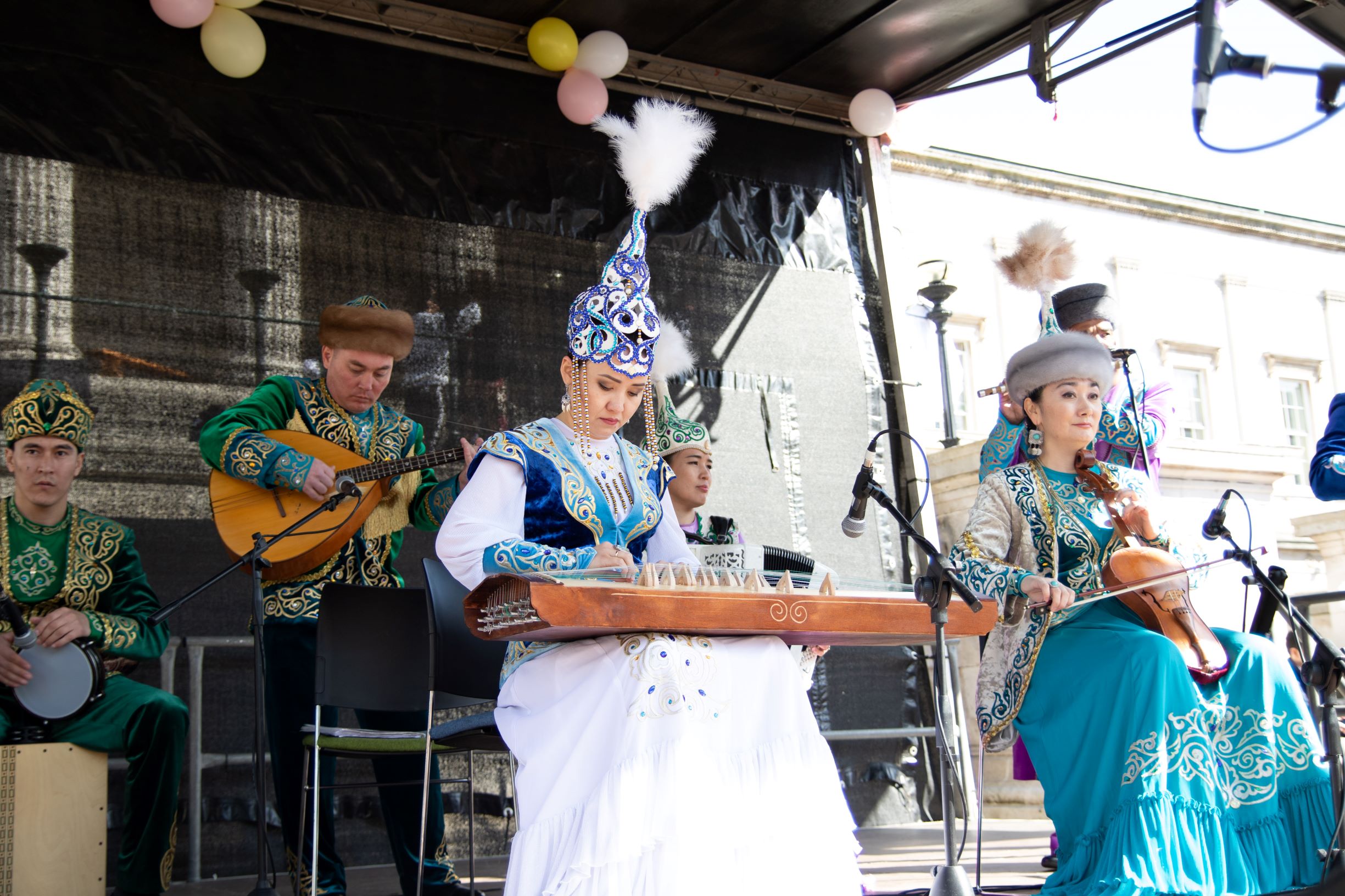
Classical performers at the Central Asian Spring Festival at the University College London in 2019
In order to preserve and promote Kazakh traditional musical art, festivals and competitions are regularly held to provide a platform to traditional performers.
Kazakh artists have regularly received recognition in prestigious international competitions, including the Cliburn International Junior Piano Competition, the New Wave international Contest of Young Performers of Popular Music, the Grand Prix of Slavic Bazaar, and the Moscow Conservatory's International Competition of Wind & Percussion Performers.
In 2018, a duet of dombra players from Kazakhstan won the grand prize at the International Festival of World Music held in Israel, featuring entries by over 80 musicians from across the world.
Classical music today
Traditional musical instruments undoubtedly continue to play an important role in the musical heritage of modern Kazakhstan. Nevertheless, Kazakhstan also mastered the polyphony and the whole genre repertoire of classical European music, such as opera, symphony, orchestral and choral performance, and has created a new school of professional composers.
Kazakhstan has been the home of a great number of talented and internationally- renowned classical musicians, including Kulyash Baiseitova, Bibigul Tulegenova, Yermek Serkebayev, Roza Baglanova, Alibek Dnishev, Aiman Musakhodzhayeva, Marat Bisengaliev, Mayra Muhammad-kyzy, and Alan Buribayev.
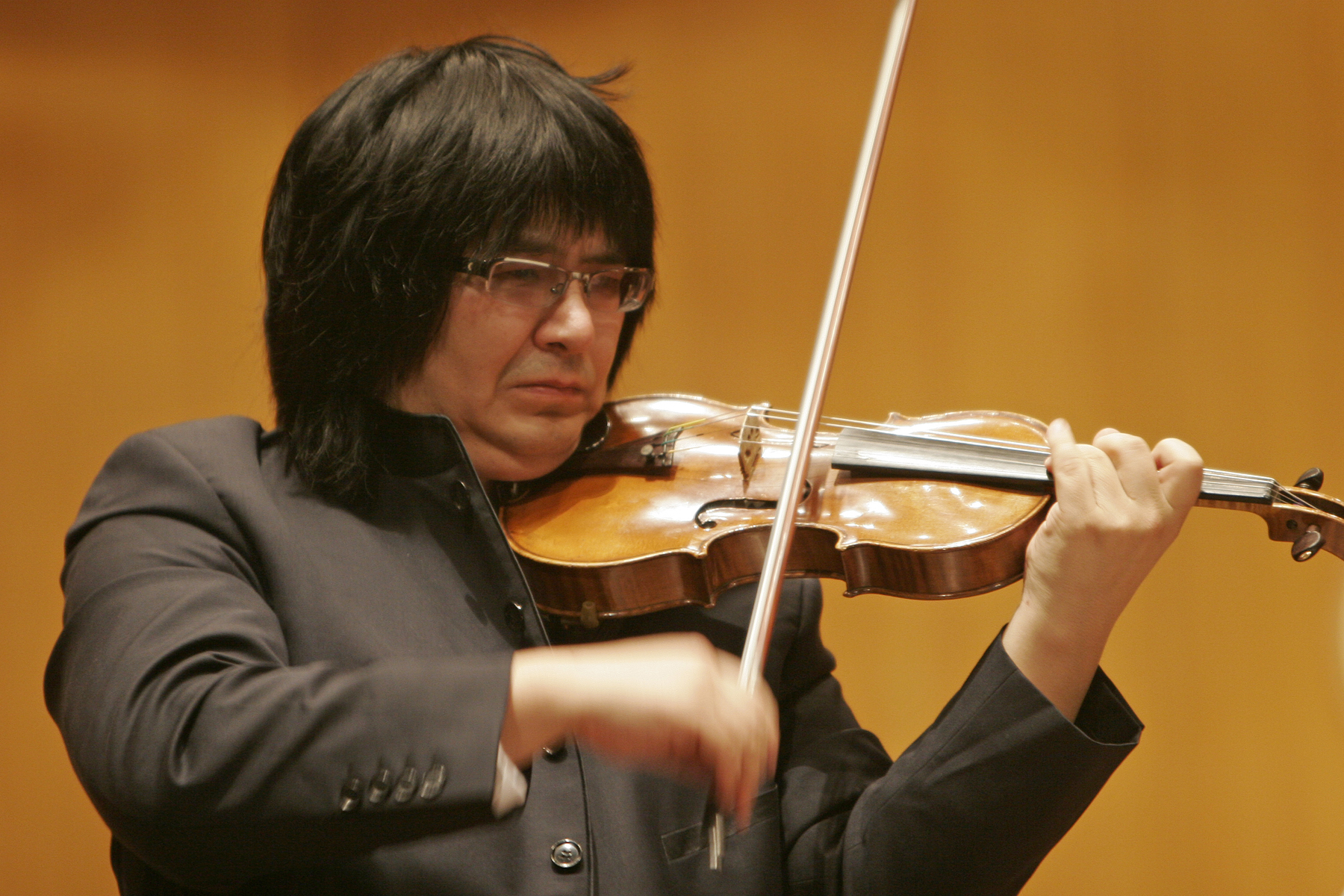
Internationally renowned Kazakh violin vistuoso Marat Bisengaliev
Based on the combination of national and European music, a number of classics of Kazakh opera were created, including 'Kyz Zhibek' by Yevgeny Brusilovsky, 'Abai' by Ahmet Zhubanov, and 'Birzhan and Sara' by Mukan Tulebaev.
Nowadays Kazakhstan is home to the following classical music institutions:
- The Astana Opera
- The Kazakh State Philharmonic Orchestra
- The Kazakh National Opera
- The Kazakh State Chamber Orchestra
- The Abai Kazakh State Academic Theatre of Opera and Ballet
- The Kurmangazy Kazakh State Orchestra of Folk Instruments
It is the ongoing preservation of Kazakh traditional music, coupled with the thriving Western classical music, which makes Kazakhstan so unique.
Jazz
Tahir Ibragimov is the founding father of the Kazakh jazz. In 1969, he formed his first jazz band “Boomerang" that included his friends, pianist Georgy Metax and counter-bassist Farhat Ibrahimov. By that time, jazz has already gained tremendous popularity in the Soviet Union, but was prohibited as a Western cultural influence. “Boomerang," the first Kazakh jazz band ever, started from underground concerts in Almaty and grew into one of the most popular jazz bands in the entire Soviet Union.
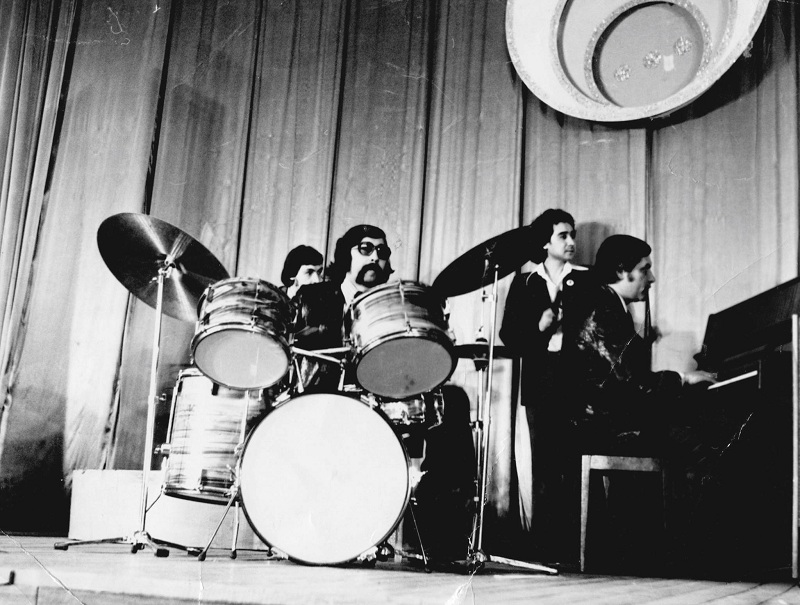
"Boomerang" jazz band
By the early 1980s, jazz was fully rehabilitated in the Soviet Union, and jazz festivals appeared here and there throughout the country. The group "Boomerang" began to form a unique style, which was later called Oriental Jazz. From 1983 to 1986, the band released three albums in the company "Melody" ("Boomerang", "Ornament" and “Mirage").
The jazz scene of Almaty was gradually developing and growing into an avant-garde cultural movement. The main venues included the hotel "Alma-Ata" with the restaurant "Issyk", the hotel "Otrar", the cafe "Akku" and, of course, the music school named after P. I. Tchaikovsky.
The Jazz Rock Café played an important role in Kazakhstan's jazz culture in the late 1990-s. It was the place that brought together Victor Khomenkov, Zhanna and Gaukhar Sattarovas, Irene Aravina.
Zhanna Sattarova became the key figure, who played a major role in the formation of the genre in the country. She had classical music education and a passion for jazz. Zhanna Sattarova was instrumental in the popularization of jazz. She devoted almost 25 years of life to music. During her career she released only two albums. The first, “2012," was dedicated to her favorite director Takeshi Kitano. The second one, “Sketches for the Mood," was released with the support of French colleagues in 2015.
Since “Boomerang," the Kazakh jazz scene has developed significantly. Jazz festivals take place all over the country, including the famous Jazzystan that brought together musicians from the UK, Israel, Europe and more.
Video of Zhanna Sattarova's performance
Kazakh pop music
Besides folk and classical music, Kazakhstan has become a music centre due to its location. Artists that are superstars in Russia, China, Japan, and even Europe play concerts in Kazakhstan and have fan bases. Kazakhstan even has its own versions of popular music TV shows “The X-Factor" and “American Idol" (called Superstar KZ).
However, Kazakhstan has its own superstars as well that pull their influences from popular music. Artists like Dimash Kudaibergen, Mika, Rin'Go, Luina, NG, Amir Franc, and others are big artists in Central Asia and beyond.

Dimash Kudaibergen performing at The World's Best TV show on CBS channel
Ancient storytellers
Kazakh literary tradition has historically been rich in spoken literature expressed through a variety of genres, among them songs, poems, proverbs, tales and epics. As the population used to be predominantly illiterate, professional storytellers and musical performers – akyns – brought communities together, delighting audiences with the works of great authors, and often sharing their own improvised poems, stories and songs. The songs were often about heroic horsemen or lonely shepherds, and about battles between Kazakhs and Kalmyks and other rivals in the 16th century. Famous akyns include Birzhan-sal, Bukhar-zhyrau, Jambyl Jabayev, and Makhambet Otemisuly.
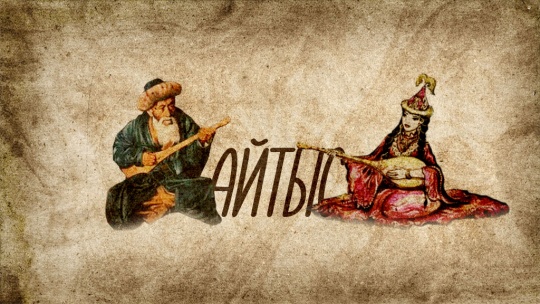
The earliest mention of aitys as a folklore genre can be found in the chronicles of the 11th- 12th centuries
Epic poems and songs have traditionally been handed orally from generation to generation. Older performers would teach and transmit their knowledge and skills to younger generations. Recitals and contests, known as aitys, have been popular forms of entertainment since at least the 11th century, and continue to be featured events at many festivals and gatherings today.
In 2015, aitys were added to UNESCO's List of the Intangible Cultural Heritage of Humanity. UNESCO noted that this art of improvisation continues to be a very popular cultural component of Kazakhstan's multi-ethnic society, and constitutes a vital part of the identity of bearer communities.
19th and 20th century literature
In the 19th century, Abai Kunanbaev was a poet and cultural reformer who played a large role in shaping modern Kazakh literary culture. His own work also helped to document and preserve traditional Kazakh culture, while his impressive translations allowed many Kazakhs to enjoy the works of various Russian and European authors for the first time. His major work, 'The Book of Words', was a philosophical treatise and collection of poems in which he encouraged fellow Kazakhs to embrace education and literacy. A monument commemorating his life was erected in front of the Palace of the Republic in Almaty in 1960.
The great writer Mukhtar Auezov grew up under the spiritual influence of Abai. He wrote numerous essays, short stories, and plays, published many articles and lectured at universities. In 1959, he was awarded the Lenin Prize for the novel 'The Way of Abai'.
Ilyas Yesenberlin looked to tell the history of Kazakhstan in his works, researching in depth the history of the nation. He studied scientific monographs, visited archives, and carefully studied primary sources. His is most known for his trilogy 'The Nomads', an epic which tells the story of some of the great battles that swept the territory now known as Kazakhstan in the 18th century. National pride and identity are central themes of the book.
Other famous Kazakh writers and poets include Ybyrai Altynsarin, Akhmet Baitursynov, Saken Seifullin, Shoqan Walikhanov, to name a few.
Kazakhstan has also provided inspiration to some of the greatest novelists across the world. Dostoyevsky was exiled to Kazakhstan, spending five years doing forced military service in the city of Semey. It is here that he began writing 'The Brothers Karamazov'.
Modern Kazakh literature
A common theme uniting traditional and modern Kazakh literature is a fascination with travel and exploration. Nomadic culture has had a significant impact on the stories that are told. Nomads are characterised by an intense curiosity and desire to explore, and this is reflected in Kazakh stories. Characters across prose and poetry are often on the move, exploring new localities and meeting new people.

Olzhas Suleimenov
Popular recent literary works include 'The Language of the Letter' by Olzhas Suleimenov, and 'Last Duty' by Abdizhamil Karimuly Nurpeisov. Nurpeisov is the current People's writer of Kazakhstan.
Along with his own original works, Nurpeisov has translated into Kazakh writings by Anton Chekhov, Maxim Gorky, and Nazim Hikmet.
Kazakhstan continues to cherish and promote literature written by, and about, Kazakhs. As part of the Madeni Mura state programme designed by President Nazarbayev, 600 books were published, covering history, archaeology, ethnography and culture. Titles included 'World Philosophical Heritage', 'History of Kazakh Literature', and the 'Philosophical Heritage of the Kazakh People from Ancient Times to the Present Day'. The total number of books published exceeded 1.5 million.
In 2018, Nur-Sultan was home to the Eurasian Book Fair. The event brought together more than 155 publishing houses, international book sellers, and cultural and study centres from across the Commonwealth of Independent States, Europe and Asia.
Kazakh literature has also been gaining recognition at international book fairs. Fascinating works by the renowned Kazakh authors Herold Belger and Oralkhan Bokeev were presented earlier this year at the London Book Fair. The translations were carried out in association with the Kazakh PEN-Club, which has launched the 'Wethe Kazakh People' campaign, promoting English translations and publications of works by the most prominent Kazakh writers.
Libraries
The National Academic Library was opened in Nur-Sultan (then Astana) in 2005. It is home to around 150,000 books. Meanwhile, the electronic libraryKazNEB has more than 23,000 electronic copies of documents, and is increasing every year.
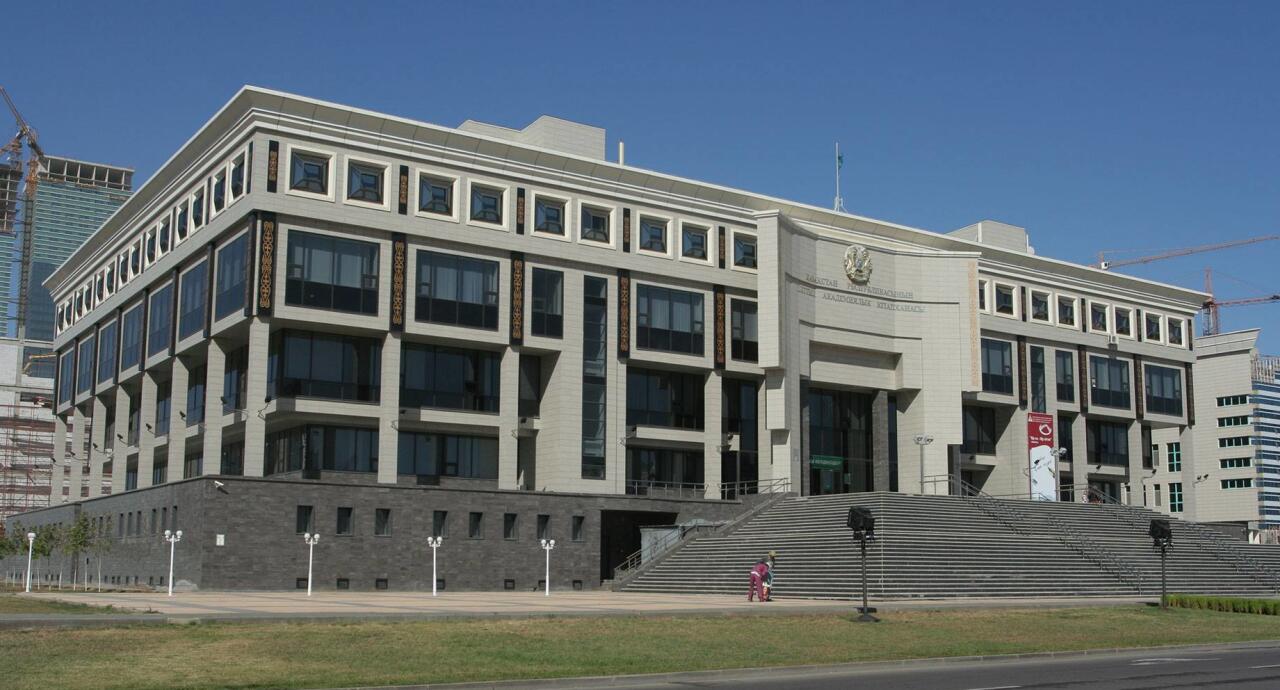
National Academic Library of Kazakhstan
An important cultural project for Kazakhstan is the promotion of national film production.
From 1991 to 2015, Kazakhfilm, the leading film company in Central Asia, completed the production of 479 feature, documentary and animation films. Kazakhfilm has also signed Memorandums of Cooperation with the world's leading cinematographic organisations to increase Kazakhstan's global cinematic impact, including the Cinema Foundation of Russia, the National Centre for Cinematography of France, the New York Film Academy, and the Ministry of Culture of the People's Republic of China.
There are on average 12 domestic film releases per year in Kazakhstan, increasing every year, more than half of which are produced by Kazakhfilm. Beyond Kazakhfilm, there are over 30 private film studios in Kazakhstan, including Satayfilm, Eurasiafilm, Tanasis, Zhas Ulan, and MG Production.
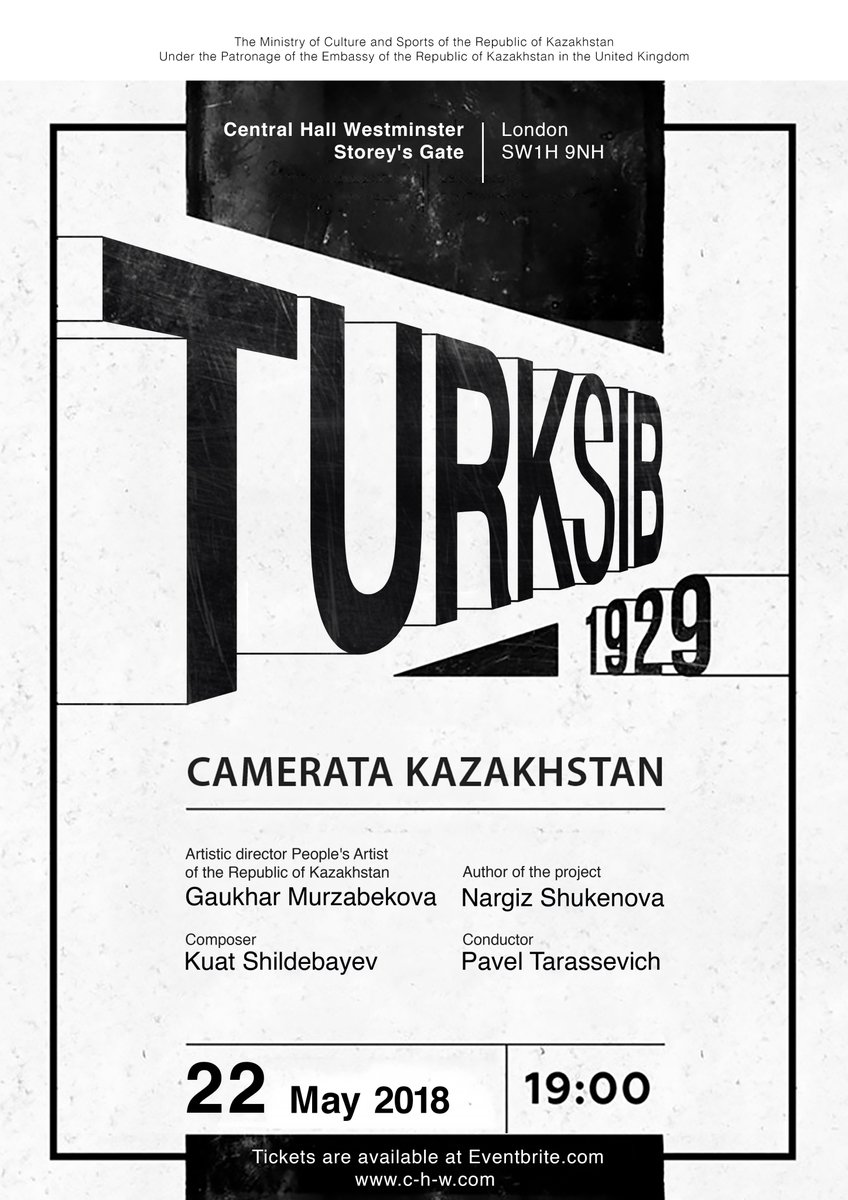
A viewing of Turksib wasrecently held in London in 2018, featuring the Camerata Kazakhstan orchestra
Kazakhstan has also recently adopted a new law on cinematography. According to the new law, all non-Kazakh filmmakers are eligible for a reimbursement of up to 30% of goods, works and services related to the production of a film in Kazakhstan.
Kazakhstan's box office has grown along with its domestic releases, with around 300 releases annually, grossing $70 million. Furthermore, between 2008 and 2015, 206 Kazakh films were included in 208 festivals and international screenings in 52 countries.
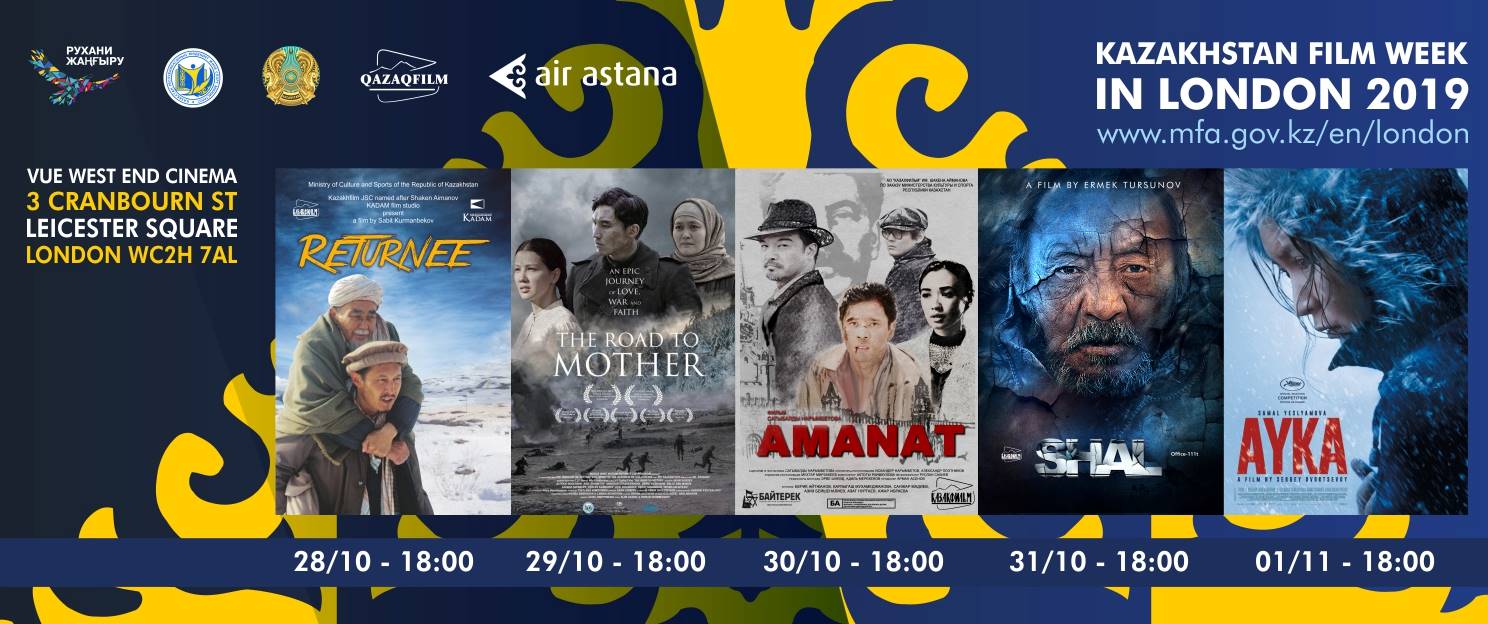
The Kazakhstan Film Week took place in London in 2019, showcasing the best of Kazakh cinematography
Noteworthy Kazakh films include:
- Turksib (1929): One of the first films ever shot in Kazakhstan, which has recently been restored by the British Film Institute.
- Amangeldy (1939): The first Kazakh feature film, about the leader of the 1916 revolution, Amangeldy Imanov.
- Kyz Zhibek (1970): One of the most popular romance films in Kazakhstan. The plot's origin is from a traditional folk poem, and the story was first performed in the theatre in 1934.
- The Needle (1988): Known for being one of the first Kazakh new wave films, the main character is played by the famous Soviet rock musician Viktor Tsoi.
- Nomad (2005): A historical epic film, which was Kazakhstan's official entry for Best Foreign Language Film at the 79th Academy Awards.
- Mongol (2007): A semi-historical epic film co-produced between companies in Russia, Germany and Kazakhstan. The film was nominated for an Academy Award for Best Foreign Language Film.
- Wanted (2008): Russian-Kazakh director Timur Bekmambetov has created a name for himself in Hollywood, with titles including 'Wanted' and 'Abraham Lincoln: Vampire Hunter'.
- The Old Man (2012): Inspired by Ernest Hemingway's 'The Old Man and the Sea', a Kazakhstani drama film written and directed by Ermek Tursunov.
- Harmony Lessons (2013): A Kazakh-German film which premiered at the 63rd Berlin International Film Festival, where it won the award for outstanding cinematography.
- Kunanbai (2015): Starring the famous Kazakh actor Doskhan Zholzhaksynov, the film is about the fate of Kunanbai, the father of the great Kazakh poet Abai.
- Tar Zaman (2018): A historical drama directed by Murat Bïdosov.
- Amre (2018): Filmed across Latvia, the US and Kazakhstan, the film tells the story of the famous singer and musician Amre Kashaubayev, who was called 'Kazakh nugget' since he once presented the national folklore of the Kazakh people in Europe.
- Ayka (2018): Director Sergey Dvortsevoy's documentary-drama tells the story of a young homeless single mother in Moscow. The Kazakh actress in the leading role, Samal Yeslyamova, won the best actress award at Cannes Film Festival.
- The River (2018) is a drama film, directed by Emir Baigazin and released in 2018. The completed film premiered at the 75th Venice International Film Festival in September 2018, where Baigazin won the award for Best Director in the Horizons programme. Its second screening was in the Platform programme at the 2018 Toronto International Film Festival, where it received an honourable mention from the Platform Prize jury.
- Tomiris (2019) is the story of the life of the great queen of of the steppe - legendary Tomiris. She is destined to become a skillful warrior, survive the loss of close people and unite the Scythian/Saka tribes under her authority.
There are multiple film festivals held in Kazakhstan, including the Eurasia International Film Festival, and Shaken's Stars.

Samal Yeslyamova won the best actress award at the Cannes Film Festival for her role in 'Ayka' in 2018