Меню
Страницы
Статья
Music
Since the old days, music and its main tools, i.e. folk instruments (kobyz, domybra, sybyzgy, dauylpaz, sazsyrnay, sherter, zhetigen, kerey, asatayak, kogyrau, etc.) have occupied a significant place in traditional Kazakh culture.
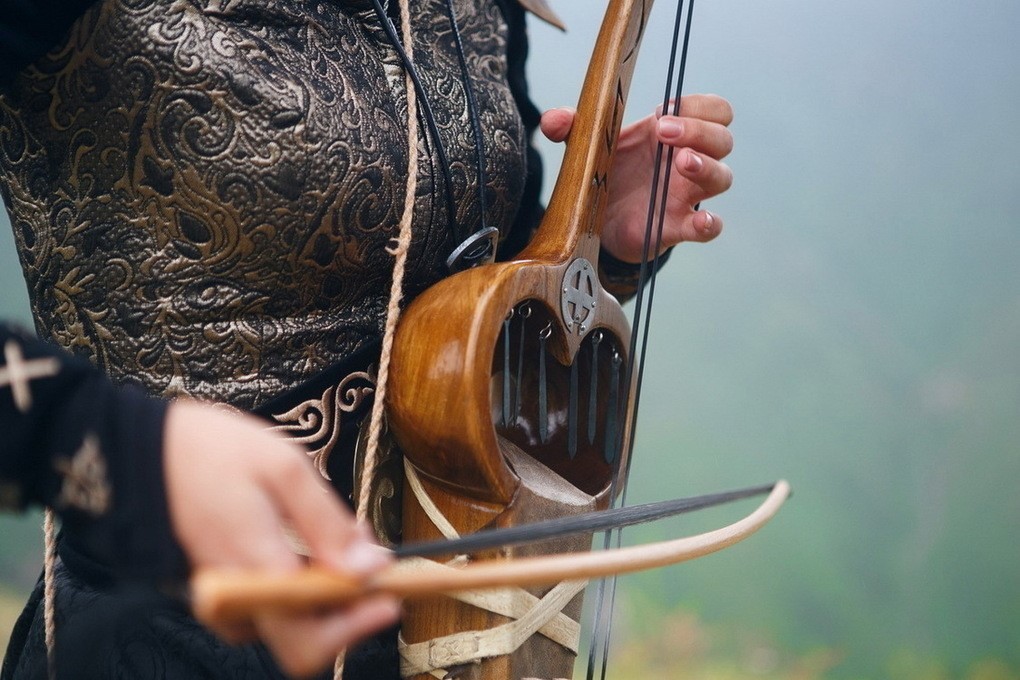
Kobyz is a bowed instrument of an unusual shape. It is made from a single piece of wood in which a hemispherical resonator with two compartments is hollowed out. Kobyz strings are made from horsehair. Usually, kobyz kyuis (musical pieces) are characterized by an amazing sound quality. Thus, they can imitate howling of wolves, cry of swans, running of horses and even sound of an arrow fired.
Dombyra remains the most favourite and widespread musical instrument among the Kazakhs. Dombyra was not difficult to make amidst a nomadic life and the history of its origin goes back to centuries. This instrument can still be found in Kazakh families and parents willingly send their children to dombyra lessons.
In the past, “sybyzgy” instrument was popular in traditional music which is made from a hollow stalk of Bashkir reed pipe. The simple form and availability of the material contributed to its popularity among Kazakh musicians. In terms of timbre coloring, sybyzgy emits a trembling sound, as if in awe or excitement, a sound that resembles the high sounds of a flute.
Asatayak is an ancient Kazakh and ancient Turkic percussion musical instrument. The shape resembles a wand or cane with a flat head decorated with ornamental patterns and metal rings, pendants. Asatayak has an open and harsh sound. To enhance the sound of the instrument, bucks used konyrau (bells), which were attached to the head of asatayak. When shaking the instrument, konyrau complemented the sound with tinkling.
Sazsyrnay is a wind instrument made of clay. Found on the territory of Kazakhstan during excavations of the ancient settlement of Otrar. It has a transparent and light timbre. In ancient times sazsyrnay was a popular instrument among children and adolescents.
Zhetigen is a Kazakh and Turkic ancient stringed pizzicato musical instruments resembling gusli or recumbent harp in shape. The classic zhetigen has seven strings, the modern one has fifteen.
Shankobyz is a reed folk instrument. It refers to self-sounding reed musical instruments. When playing, shankobyz is pressed against the teeth or lips and oral cavity serves as a resonator. Changing the articulation of the mouth and breathing makes it possible to change the instrument timbre. Besdies, new tones in the sound are introduced by changes in the positions of the diaphragm, numerous pharyngeal, laryngeal, lingual, labial and other methods of sound production. The instrument is usually made of metal or wood.
Dabyl (Daulpaz) is Kazakh national percussion instrument. It is a rim wire with a handle covered with leather on both sides and looks like a frying pan with a handle from a distance. Having a very loud sound, the instrument has served to give military signals in the past.
Folk songs occupy a special place in the musical culture of the Kazakhs. All folk performers - akyns, zhyrshi, dombyra players had an exceptional associative instinct, a subtle perception of the world and a unique memory thanks to which many types of traditional art have been preserved in the musical history of Kazakhs.
Since the dawn of time it has become customary that Kazakhs called singers as akyns who having dombyra in their hands performed in front of the audience or competed in “aitys”, i.e. song and poetic “disputes”.
In the 19th century, integration of Kazakh music into the culture of the world takes place: Kazakh musical traditions are studied by Russian and European musicologists, and at the same time, Kazakh musicians get acquainted with the music of the world. Mutual enrichment of cultures takes place, new names appear in the history of music of Kazakhstan such as Abai Kunanbayev, Kurmangazy Sagyrbayuly, Ykylas Dukenuly and others. Today, Kazakh folk music is considered the heritage of Kazakhstan, composers and musicians create new works with an abundance of folk motives, and the history of musical creativity is also preserved. One of the best ways to get a closer look at the history of Kazakh music is to visit the Museum of Musical Instruments in Almaty.
"Photo taken from open sources"