1992: flag and coat of arms of Kazakhstan, prices and army
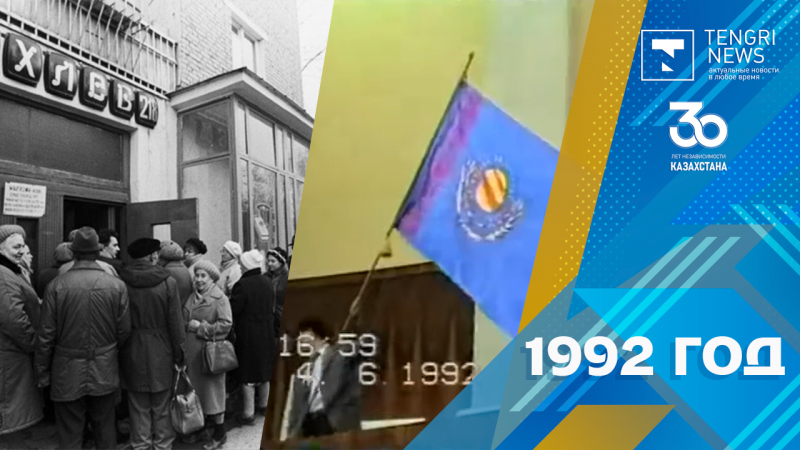
In the chronicle of a sovereign state, 1992 is called one of the most crucial periods. Due to the collapse of the Soviet system, the economy became useless, and the country needed to think over a new strategy and make a number of important fundamental decisions on which society would develop.
Their own state symbols and the first international partners appeared, Armed Forces and internal troops were created. What else happened in 1992? Let's remember together.
Symbols of a sovereign State
In 1992, a competition was announced in the country for the best project of state symbols. 453 sketches and 142 written proposals on the flag project took part in the competition.
On June 4, 1992, the coat of arms, flag and anthem of independent Kazakhstan were approved for the first time. This event will forever remain in the history of the country as the birthday of the new state symbols. Exactly 15 years later, President Nursultan Nazarbayev signed a decree recognizing June 4 as a holiday - the Day of state Symbols.
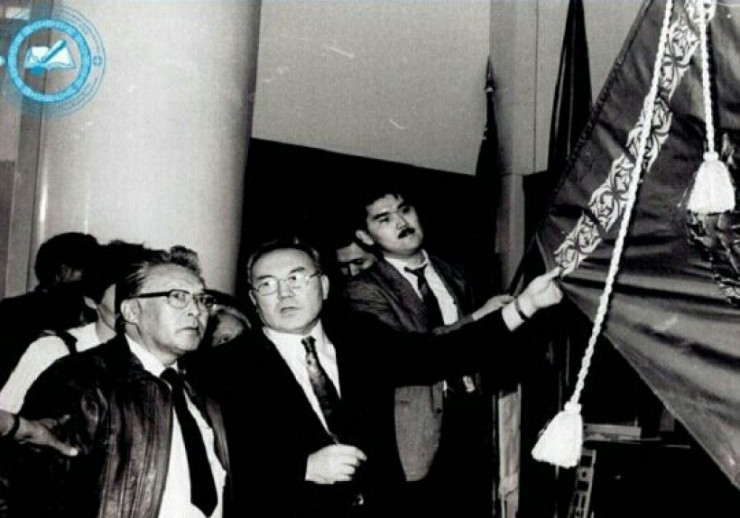
Shaken Niyazbekov and Nursultan Nazarbayev in the first minutes of the approval of the national flag.
The blue flag with the golden national ornament on the left, the golden sun and the silhouette of a soaring eagle in the center is a symbol of freedom, independence and sovereignty of our republic. This symbol is the result of creative searches, selfless work of the artist Shaken Niyazbekov. He is also the author of the coat of arms of Almaty.
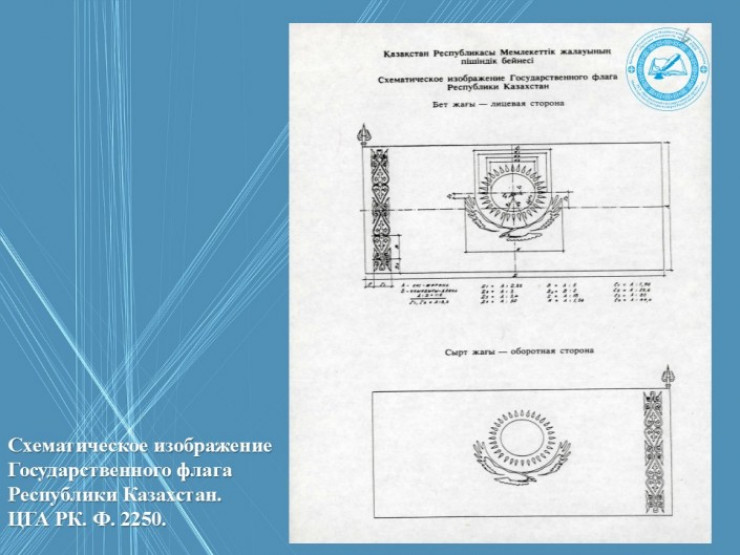
Photo of the Central State Archive of the Republic of Kazakhstan
About 750 drafts of the anthem were also sent. After much discussion, it was decided to keep the music of the previous anthem. The words of poets Muzafar Alimbayev, Tumanbai Moldagaliyev, Kadyr Myrzaliyev and Zhadyr Daribayev will become the basis of the first anthem of Kazakhstan. As for the coat of arms of the new country, the work of architects Zhandarbek Malibekov and Shot-Aman Ualikhanov won this competition.
"I still remember with trepidation the moment when I saw our flag flying in front of the UN headquarters in New York among the flags of other independent states of the world. Or when our anthem finally sounded at the Olympic Games in Atlanta, announcing the victories of Kazakhstani athletes to the whole world. And when we first saw our coat of arms on a minted coin and a printed banknote of our national currency tenge," Nursultan Nazarbayev said in 2007, speaking at the Republican Youth Forum of the Nur Otan Party dedicated to the 15th anniversary of the state symbols.
Price liberalization
Until 1991, prices for products, goods and services in the Soviet Union were set according to official standards approved at the central level.
On January 2, 1992, without any prior consultations with the CIS neighboring countries and without notification, Russia released prices. There was an instant transition from state regulation of prices to a market pricing system.
During one year in 1992, prices jumped many times. All the savings of the population have depreciated. Most of the citizens thus found themselves below the poverty line. Price liberalization has caused a sharp increase in transportation tariffs, energy prices, and raw materials. The decline in industrial production in 1992 was more than 20 percent.
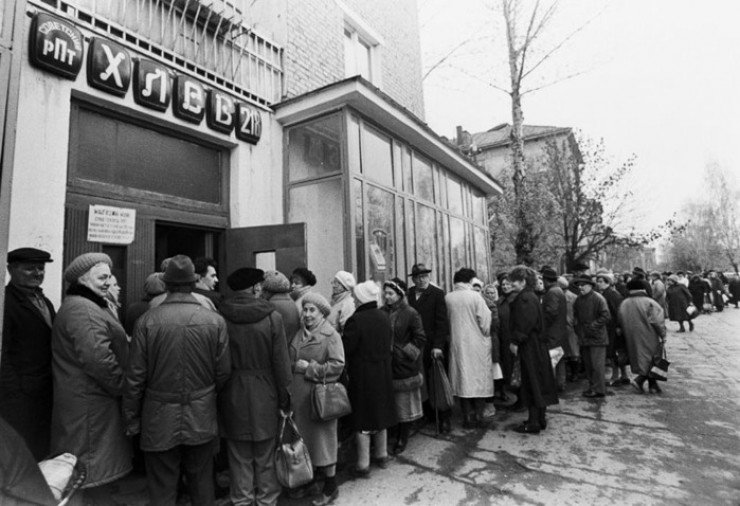
The price liberalization that has begun has turned into a significant economic loss for Kazakhstan. Goods from Kazakhstan flowed into the territory of Russia in large flows, and a huge money supply flooded the market of Kazakhstan in a rapid flow, increasing the price of consumer goods and household items.
In this situation, the leadership of the republic was also forced to liberalize prices for various categories of goods. On January 3, 1992, Nursultan Nazarbayev signed a decree "On measures to liberalize prices".
At the retail level, the government kept control over the prices of basic foodstuffs (bread and flour, dairy products, salt, sugar, vegetable oil, alcoholic beverages), petroleum products, rent, utilities and passenger transport services. With the exception of tariffs for rent, prices for these regulated goods and services have increased from 3 to 5 times.
"In order to pay wages, pensions, benefits, we had to buy money in Russia," Nursultan Nazarbayev noted in his book "Kazakhstan's Way".
"Until the first half of 1992, we received money from the Central Bank of Russia for free. But after the division of budgets, the ruble already had to be bought. And since there were not enough funds to buy money in the budget of Kazakhstan, the country immediately felt a shortage of cash."
Foreign policy and recognition
On January 2, 1992, Norway recognized the independence of the Republic of Kazakhstan. Soon the United Kingdom, China, France, Sweden, Cuba, Austria and Iran joined this country.
Thus, on October 1, 1992, Kazakhstan established diplomatic relations with 61 countries, 106 countries of the world recognized Kazakhstan as a sovereign state.
On January 30, Kazakhstan became a full member of the Organization for Security and Co–operation in Europe (formerly the CSCE - Conference on Security and Co-operation in Europe). On July 8 of the same year, the Republic signed the Helsinki Final Act of the CSCE, and on September 23 - the Charter of Paris for a New Europe.
Creation of the Armed Forces
The first step in the creation of the army of sovereign Kazakhstan was the Constitutional Law on the State Independence of the Republic of Kazakhstan, which determined that "The Republic of Kazakhstan, in order to protect its independence and territorial integrity, has the right to create its own Armed Forces."
The starting point of the history of the Kazakh army is the day of May 7, 1992, when the President of the country — the Supreme Commander-in-Chief Nursultan Nazarbayev signed a decree "On the creation of the Armed Forces of the Republic of Kazakhstan".

The State Defense Committee was transformed into the Ministry of Defense. The first head of the department was the Hero of the Soviet Union Sagadat Nurmagambetov.
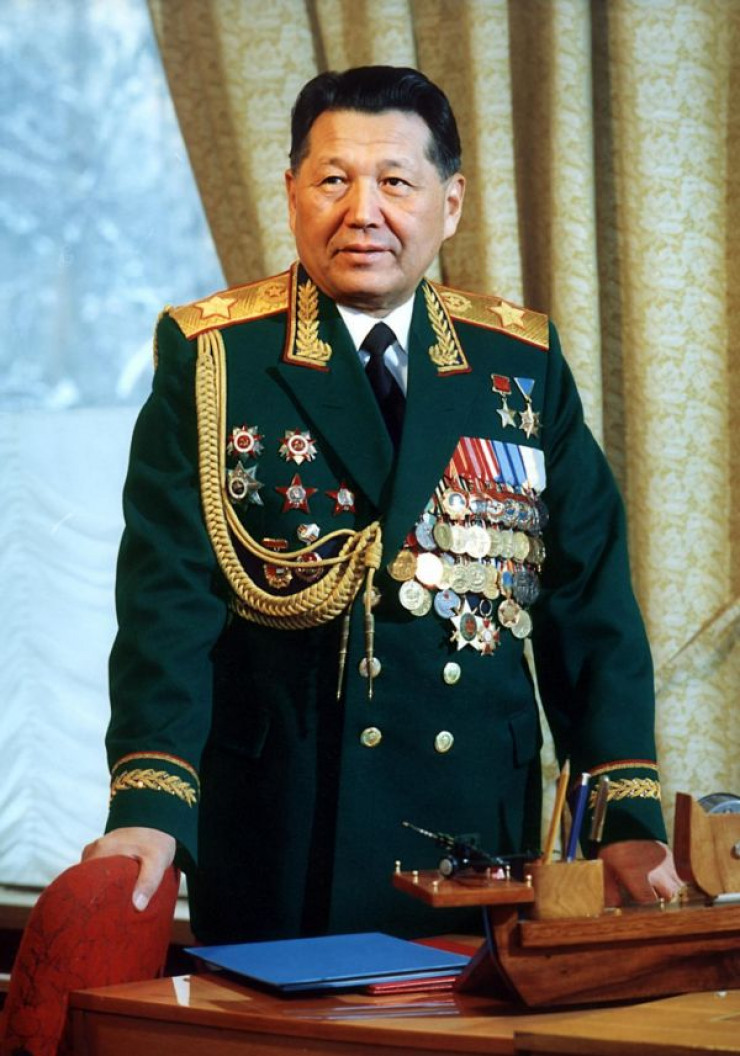
At the most difficult time, at the first stage of the construction of the Armed Forces, the most important task was to preserve the existing personnel, weapons and military equipment, to create structures of the Ministry of Defense and management bodies of the Armed Forces. As a result of the reforms carried out, the structure and size of the Armed Forces were optimized. Their composition, deployment and purpose were clarified based on the tasks of ensuring the military security of sovereign Kazakhstan. On the basis of the existing military educational institutions, the training of officers was organized.
"The task was not only large-scale, complex, but first of all it was relatively new for the Supreme Commander of the Armed Forces. After all, before that, our state had no experience of military construction, therefore, the formation of our Armed Forces is associated with the name of Nursultan Nazarbayev. Creating an army required a thoughtful, balanced approach. The situation itself put questions on the agenda: "What kind of army is needed? What will be her perspective? What should be the organizational structure? Where to get the necessary professional staff? Who are our strategic allies?" In addition, in the conditions of the transition of troops under the jurisdiction of Kazakhstan, the task was to ensure the safety of weapons, military equipment, and material assets. Strategic troops demanded close attention. At the same time, it was impossible to allow a decrease in the level of combat readiness of the troops. With the collapse of the centralized supply system, in fact, we had to organize the financial, logistical and medical support of the troops anew," the first head of the defense department shared his memories.
In June 1992, the law "On Internal Affairs Bodies of the Republic of Kazakhstan" was adopted. One of the documents signed by Nursultan Nazarbayev in those years was the decree of August 18, 1992 "On the formation of border troops". On June 20, 1992, the "Law on National Security Bodies of the Republic of Kazakhstan" signed by the First President of the Republic of Kazakhstan was put into effect. A month later, a decree was signed on the transformation of the KGB of the Republic of Kazakhstan into the National Security Committee.
World Kurultai of Kazakhs
The first World Kurultai of Kazakhs opened in Alma-Ata on September 30. It was attended by 1,200 people, including delegates from 13 countries: Turkey, Iran, Mongolia, USA, China, Australia, Germany, England, America and so on.
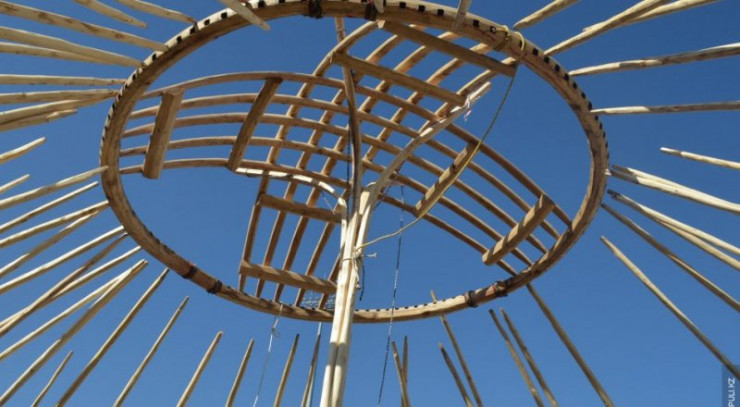
During the Kurultai, the World Association of Kazakhs was established by his decision. The kurultai participants visited the ancient political, historical and cultural centers of the country — Turkestan, Zhezkazgan, Ulytau. In addition, they adopted an appeal to the people of Kazakhstan, to all states and peoples of the world and their governments.
As a result of the decisions taken and on the basis of the Law "On Immigration" No. 1437 of June 26, 1992, the First World Kurultai determined socially significant state goals, one of which was the need to develop and solve the problem of ensuring the resettlement of foreign Kazakhs to their historical homeland.
Another important event in 1992 was the official return of the Nauryz holiday. In 1991, by Decree of the First President, the spring holiday became a state holiday for the first time. And already in the second year of independence, on March 22, 1992, it was widely celebrated throughout the country with mass celebrations, games and a rich dastarkhan. By the way, in the same days, the first postage stamp of Kazakhstan appeared, on which the "Golden Man" was depicted. And in April, Nazarbayev was presented with the first credential by a representative of the diplomatic corps forming in the republic – the Ambassador Extraordinary and Plenipotentiary of Turkey to Kazakhstan.
The work on renaming cities and regions of the country, which is important for the new country, continued in 1992. This year, the Ural region received a new name, becoming West Kazakhstan. In addition, Kokchetav was renamed Kokshetau, Shymkent - Shymkent and Tselinograd - Akmola.
On May 15, the heads of six CIS states - Armenia, Kazakhstan, Kyrgyzstan, Russia, Tajikistan, and Uzbekistan - signed a collective security treaty.
"The Collective Security Treaty of 1992 was the response of the states that wanted to preserve the defense space after the collapse of the Soviet Union. If you remember, it was in 1992 that we signed this agreement for the first time. And it is defensive from the very beginning. And today it actually meets the new challenges of the time, such as terrorism, drug trafficking and smuggling," President Nazarbayev said in one of his interviews.
It was 1992 that was the first experience of medium-term planning. And as Nursultan Nazarbayev emphasizes in the book "Kazakhstan's Way":
"This was the first attempt to comprehend the path of development in the confusion of those years, and it can confidently be called the first three-year nationwide plan. Now, looking back, we can definitely say that this plan has fulfilled its purpose, being more of a survival strategy. It was she who determined who we are and who we will become in the near and distant future."