The Choice Begins with Participation: CEC Chairman Meets with Young Voters
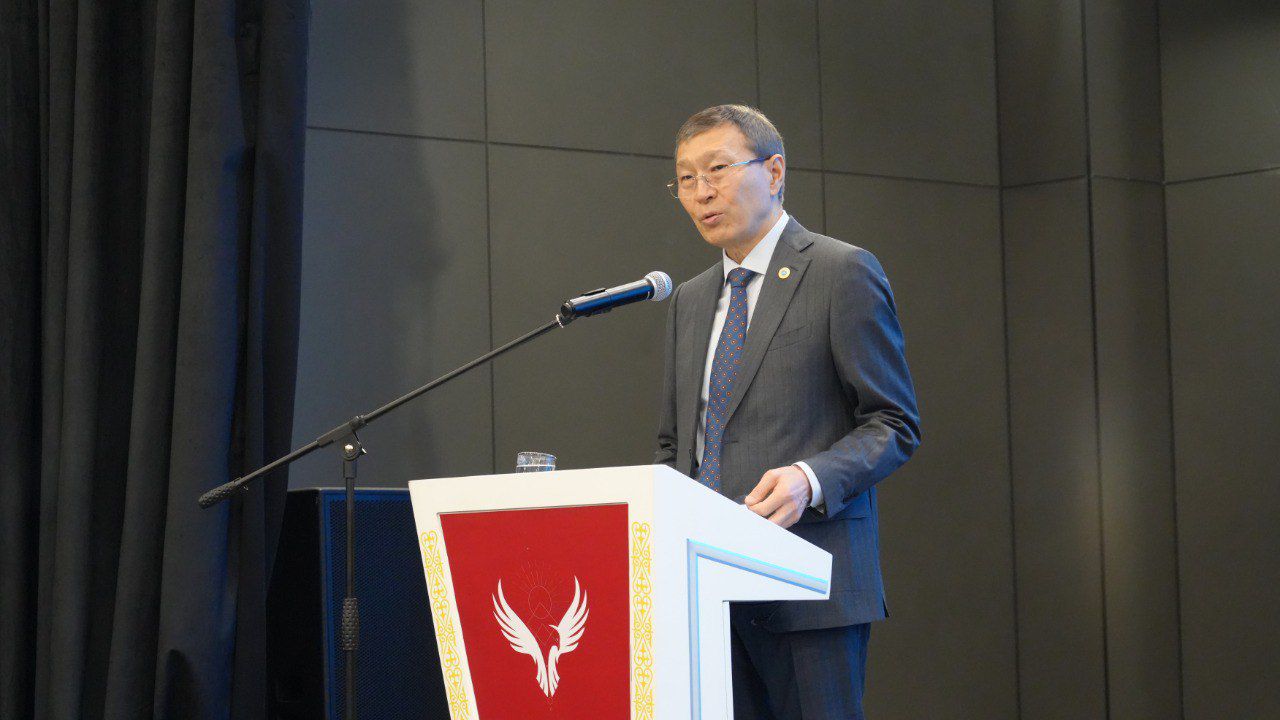
As part of Global Elections Day, Nurlan Abdirov, Chairman of the Central Election Commission of the Republic of Kazakhstan, held a meeting with students of Kunayev University. The dialogue brought together around 400 young voters and leaders of youth organizations.
The meeting was attended by members of the Central Election Commission of the Republic of Kazakhstan, as well as representatives of the Expert Council under the CEC, the CEC Working Group on Ensuring Electoral Rights of Persons with Disabilities, the Young Voter Club, members of the territorial election commissions of Almaty, and deputies of the city maslikhat.
The programme included an open, interactive Q&A session, during which key aspects of the development of Kazakhstan’s electoral system were discussed.
Nurlan Abdirov spoke about the structure of the electoral system, the dialogue platforms operating under the CEC, international cooperation, upcoming publications by the Central Election Commission, and efforts to develop electoral culture among young people.
Examples of youth participation in elected and representative bodies were also highlighted. Today, a 26-year-old akim heads the Irtysh Rural District of the Zhanasemey District in the Abai Region. The youngest maslikhat deputy is 23 years old (Kamyshinsky Distric, Kostanay Region), while the youngest Mazhilis deputy is 28.
The meeting continued with an interactive Q&A session, where students actively engaged in the discussion and raised topical questions.
Participants asked whether the Central Election Commission maintains a staff reserve and what requirements apply to candidates. A question was also raised about the reliability and transparency of electronic voting systems in light of international experience. In addition, participants asked about the possible application of international practices that impose responsibility for non-participation in elections.
Special attention was given to the image of the leader of the future in the context of digitalization, measures to foster a more conscious and informed attitude toward elections among young people, opportunities to expand youth participation in electoral processes, and the modern profile of a member of the Young Voters Club.
Thanks to the systematic and consistent work of election authorities, youth engagement in the electoral sphere is steadily increasing. Today, at the initiative of young citizens themselves, 248 Young Voters Clubs operate across the country.
The Chairman of the RK noted that it is important not to limit efforts to formal awareness-raising, but to explain clearly and consistently why elections are needed, what role they play in the system of governance, and why every citizen’s participation matters. In this regard, peer-to-peer communication plays a special role — when young leaders themselves speak to their peers about the importance of elections.