Wild horses will return to Kazakhstan
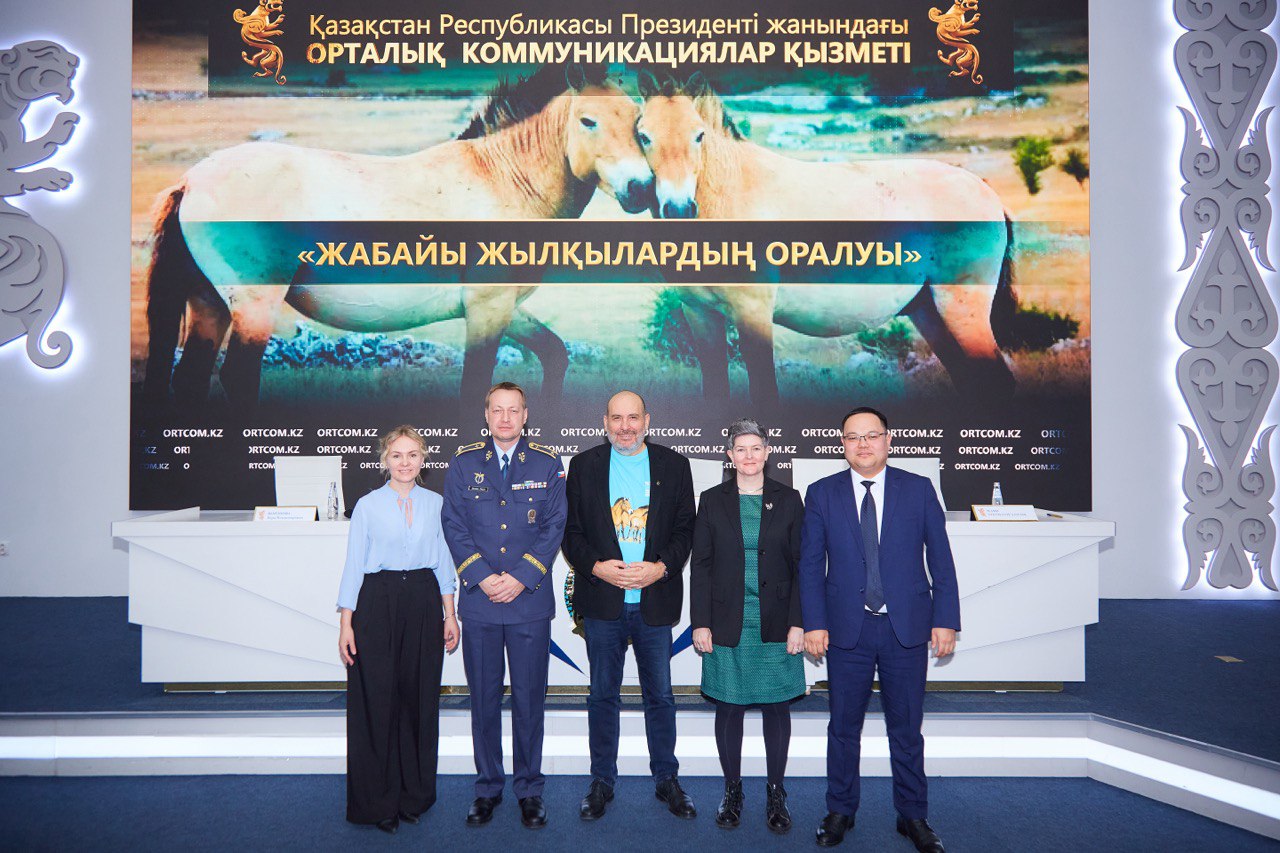
The transports of Przewalski's horses from Europe to Kazakhstan will take place this year as part of a new international project “Return of Wild Horses”. Two CASA C-295 aircrafts of the Czech Air Force with a total of eight horses on board will take off on 2th June from Prague, Czech Republic and from Berlin, Germany. After two stopovers they will land in Arkalyk in Central Kazakhstan.
“We have just started writing the new chapter of the return of the last wild horse to the wilderness,” stated the Prague Zoo director Miroslav Bobek. “After its successful reintroduction to Mongolia where the population thrives, we were contacted by the government of Kazakhstan with this same goal. Our plan is to transport about 40 horses to the Altyn Dala steppe during the next five years.”
“It's honor for us as the leading authority for biodiversity conservation in Kazakhstan to spearhead such an important moment in the restoration of the natural history of our country, and we are committed to the realization of our original vision, as set out during the Kazakh-Czech Business Forum in Astana, where on April 24, 2023, the Committee of Forestry and Wildlife and Prague Zoo signed a memorandum to jointly return the wild horses to the steppe.” – stated Daniyar Turgambayev the Chairman of the Committee of Forestry and Wildlife
The Przewalski's horse completely disappeared from the wild in the late 1960s, but is also one of the greatest success stories of species recovery under human care. Dedicated breeding programs of European zoos have managed to build up a population strong enough to be reintroduced to the countries where they used to live. The wild horses will be reintroduced to Kazakhstan using the successful experience from Prague Zoo’s previous reintroductions to Mongolia.
For reference: Przewalski's horse (Equus przewalskii Poljakov) was included in the list of rare and endangered species of plants in 2021, also included in the II Annex of the Convention on International Trade in Endangered Species of Wild Fauna and Flora (CITES).
The steppe territory of the Altyn Dala State Nature Reserve in the Kostanay region has been chosen as the release area. The reserve was established in 2012 and its total area is 489,766 hectares. The animals will be accommodated for the first year before release at the Wild Ungulate Reintroduction Center inside the reserve. This center was created as part of the Altyn Dala Conservation Initiative, and is managed by the Association for the Conservation of Biodiversity of Kazakhstan (ACBK). Since 2017 it has been the location for restoration activities such as the reintroduction of the Kulan or Asiatic wild ass. The centre therefore has all the necessary infrastructure and personnel already available to host the new equid species.
The Przewalski's horse reintroduction project is implemented in partnership between the Committee for Forestry and Wildlife of Ministry of Ecology and Natural Resources, Prague Zoo, ACBK, Frankfurt Zoological Society, Nuremberg Zoo, Tierpark Berlin and Hortobágy National Park. A Memorandum of understanding between partners was signed on the 28th February outlining the commitment to reintroducing at least 40 wild horses from Europe to Kazakhstan within the next 4-5 years.
Download the official presskit, photos and other materials in Czech, English or Russian from www.zoopraha.cz/kazachstan-2024 or from here:
Institutions and subjects cooperating in the project:
The Committee of Forestry and Wildlife is a state body and agency within the competence of the Ministry of Ecology and Natural Resources of the Republic of Kazakhstan, carrying out implementation, control and supervisory functions in the field of forestry, protection, reproduction and use of wildlife and specially protected natural areas.
The Prague Zoo manages the international breeding book of Przewalski's horses, as well as the EEP (EAZA Ex situ) program, which is a program of the European Association of Zoos and Aquariums (EAZA) for the management and conservation of wild animal populations living in European zoos. The program was formerly known as the European Endangered Species Program. Prague Zoo organized and conducted the reintroduction of Przewalski's horses in western Mongolia in 2012 - 2019.
Association for the Conservation of Biodiversity of Kazakhstan (ACBK) is the largest Kazakhstani non-governmental organization working in the field of biodiversity conservation and environmental education.
Frankfurt Zoological Society (FZS) is an international organization that coordinates projects to protect endangered species and ecosystems in 18 countries around the world. In 2005, it co-founded the Altyn Dala Conservation Initiative. In 2017, ADCI began supporting the reintroduction of the kulan to the steppes of Central Kazakhstan.
ACBK and FZS are part of The Altyn Dala Conservation Initiative (ADCI), which is a large-scale partnership program of national and international conservation organizations. Since 2005 ACBK together with the Forestry and Wildlife Committee, Frankfurt Zoological Society (FZS), Fauna & Flora (F&F) and the Royal Society for the Protection of Birds (RSPB) have been implementing this Initiative. It aims to conserve and study Kazakhstan's unique steppe ecosystems and restore key species, e.g. saiga antelope, Kulan and Przewalski's horse. In 2023, the Altyn Dala Conservation Initiative was recognized as a Flagship Restoration Project under the UN Decade for Ecosystem Restoration.
Tierpark Berlin in the German capital already participated in the past in the breeding, management, and reintroduction of various animal species, and it cooperated on the protection of Przewalski’s horses as well. Within the project Return of the Wild Horses, it provides horses from its own breeding, collects candidates from other European institutions to its own breeding facility, and it will directly participate in their transport to Kazakhstan.
The Nuremberg Zoo is a public non-profit zoological park specializing in ex situ conservation of endangered species and their in situ conservation in cooperation with partners in their countries of origin. In the past it has been involved in the reintroduction of Przewalski's horses to Central Asia.
Hortobágy is a Hungarian national park providing environmental education services. It is currently home to the largest population of Przewalski's horse under human care. Selected horses from this park are suitable candidates for reintroduction programs.