About corruption risks in public procurement
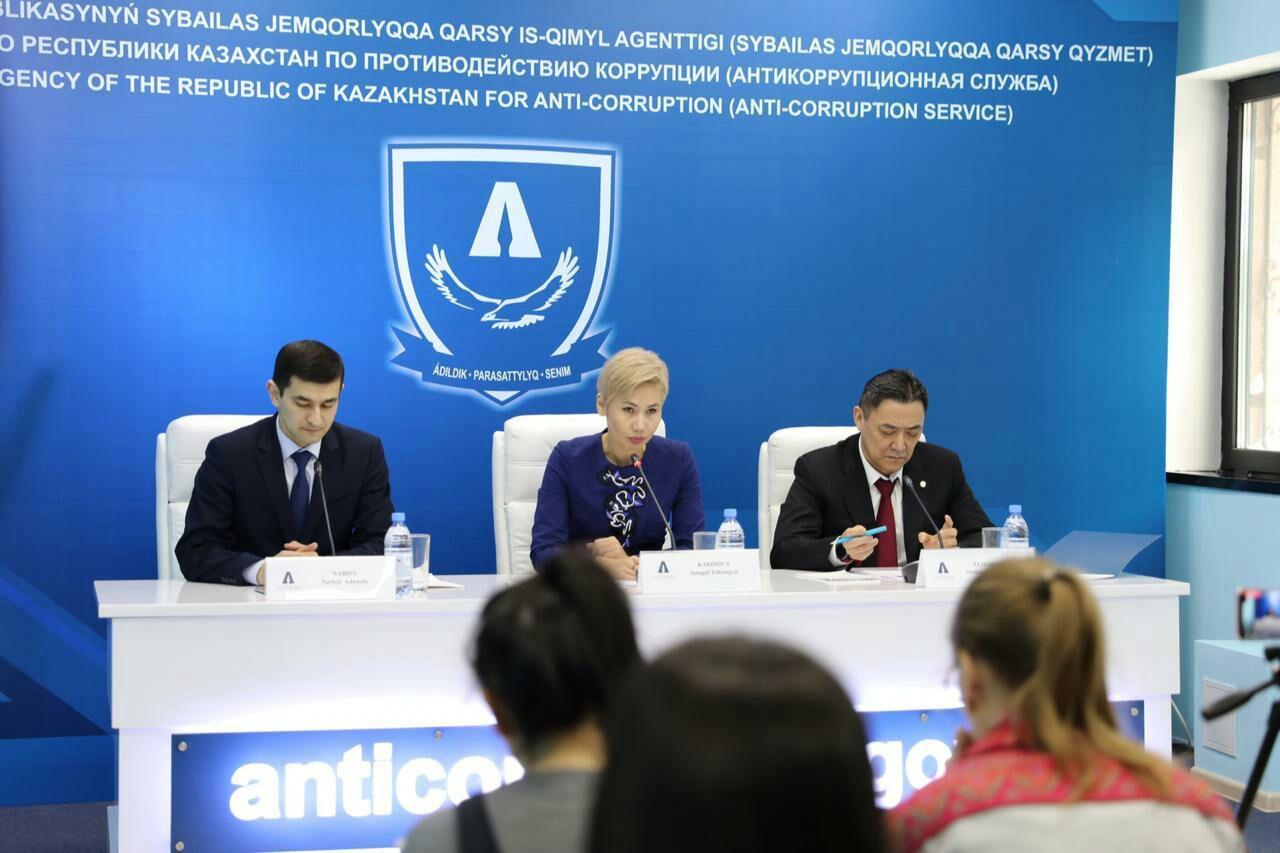
Today, during a briefing by the Anti-Corruption Agency of the Republic of Kazakhstan, Ainagul Karipova, an officer for particularly important cases of the Agency’s Prevention Department, spoke about the results of monitoring in the field of public procurement.
At the end of 2019, the Agency, together with the Atameken NPP, in a pilot mode tested the Single Procurement Window (EPC) system. As a result, inappropriate budget expenditures of about 800 million tenge were prevented.
“In 2019, the Agency identified more than 300 corruption crimes in this area. 70% of the acts committed by employees of local executive bodies, 20% - employees of central government agencies and their subordinate organizations. The amount of damage amounted to about 2.5 billion tenge. The maximum number of facts was recorded in Atyrau (46), Pavlodar (34), Kyzylorda regions (32), ”said Ainagul Karipova.
According to the Single Procurement Window, the Agency compiled a rating of customers with a high level of corruption risks in procurement.
“The top 10 included 7 government agencies through education. These are the departments and education departments of the cities of Shymkent, Nur-Sultan, Aktobe, Taraz, Atyrau, Uralsk, Almaty region, ”the speaker said.
The anti-rating, he said, was headed by the state corporation Government for Citizens.
“In 2019, this customer made a purchase of 37.7 billion tenge. More than 70% of the amount is direct contracts from a single source. In addition, the three leaders included two educational departments of the cities of Shymkent and Nur-Sultan. The validity of the rating is confirmed by investigative practice, ”Ainagul Karipova informed.
She also added that preventive work with administrators of budget programs will be taken under special control. In order to minimize corruption risks in the procurement sphere, the Agency, together with NPP Atameken, continues to develop the Single Procurement Window analytical system.
“By the end of the year, a joint effort will develop a methodology for forecasting corruption in procurement. In fact, the system will be able to form a risk group with a high probability of committing a corruption crime in the process of conducting a specific purchase, ”Karipova concluded.